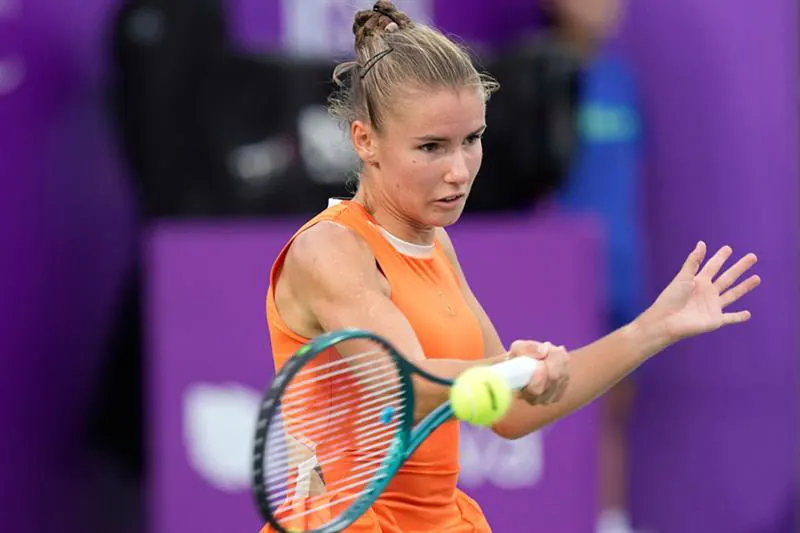
Russian tennis player Tatiana Prozorova expressed frustration after being withdrawn from her semifinal match at the Singapore Open due to a physician's concerns about a concussion. The decision, made on Saturday, September 26, 2026, ended Prozorova's chances of advancing to the final and potentially securing her first singles title on the WTA Tour. Prozorova, ranked 180th in the world, was set to face Australia's Talia Gibson in the semifinal match.
Prozorova had been struck in the face by a ball during her doubles quarterfinal match on Friday, prompting a clinical assessment by the WTA's on-site medical team and the tournament physician. The assessment led to her withdrawal from the semifinal match. Prozorova took to Instagram to express her disappointment, stating that her "dream week came to an end." She urged the WTA to reconsider its rules, feeling that the system rendered players "absolutely helpless."
According to Prozorova, the concussion test was not easy, especially given that she had spent over three hours on court each of the last three days and was fatigued. She struggled with some of the exercises, such as standing on one leg with her eyes closed. Prozorova, who retired from the doubles match alongside partner Sofya Lansere, said this was the only test she did not pass. Her team had a long discussion with the organizers, but the physio's assessment led to her withdrawal.
The WTA stated that player health and safety is its "highest priority." Under the tour's concussion protocol, a player diagnosed with a concussion is not permitted to compete and will be ruled physically unable to do so. The player may only return to competition once they have successfully completed the required graduated return-to-play protocol and have received appropriate medical clearance. This process aims to protect the player's health and safety and reduce the risk associated with returning to competition before adequate recovery.
Prozorova's withdrawal sent Talia Gibson to the final by walkover. Gibson will face the winner of the other semifinal match. The Singapore Open is an important tournament for players looking to gain experience and ranking points. Prozorova's early exit means she will not be able to capitalize on this opportunity, at least not in this tournament. The 22-year-old Russian player had been performing well in the tournament until her withdrawal.
The WTA's concussion protocol is designed to prioritize player safety, and the organization has a responsibility to follow established guidelines when determining a player's return to competition. While players may want to continue competing, the medical team's primary concern is the player's health and welfare. The WTA's statement emphasized that the concussion protocol is in place to protect players from the risks associated with returning to competition too quickly.
Prozorova's situation highlights the challenges faced by tennis players when dealing with injuries and medical assessments. The incident has sparked a discussion about the WTA's concussion protocol and its impact on players' careers. As the tennis community continues to prioritize player safety, incidents like Prozorova's will likely remain a topic of conversation. The Russian player's experience serves as a reminder of the complexities involved in balancing player safety with the competitive aspects of professional tennis.
Key points
- Tatiana Prozorova was withdrawn from her Singapore Open semifinal match due to a physician's concerns about a concussion.
- The WTA's concussion protocol prioritizes player safety and requires players to complete a graduated return-to-play protocol before returning to competition.
- Prozorova's withdrawal ended her chances of advancing to the final and potentially securing her first singles title on the WTA Tour.