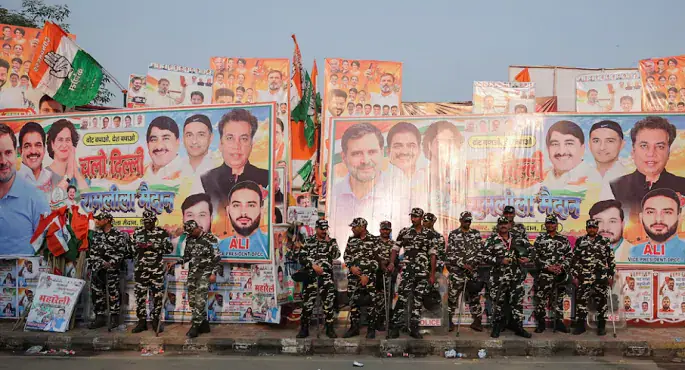
Thousands of people took to the streets in New Delhi on Sunday, November 1, 2026, to demand the resignation of the chief of India's Election Commission. The protests, led by Rahul Gandhi, a leader of the Congress party, are against the revision of voter lists, which the opposition claims will benefit the ruling Bharatiya Janata Party (BJP). The protesters say the revisions will disenfranchise millions of voters, particularly Muslims and other minorities.
The protests are part of a series of demonstrations that have been ongoing for a month, challenging Prime Minister Narendra Modi's government. The opposition claims that the voter list revisions are biased and will help the BJP in the general elections. The government has tightened security measures and warned of traffic diversions ahead of the protests. Hundreds of security personnel, some carrying batons and shields, were deployed in the area.
The protests began with a march from central Delhi to a designated gathering site, where hundreds of thousands were expected to participate. The opposition leaders, including Gandhi, led the march on an open-top jeep. The protesters waved national flags and party flags as they made their way to the gathering site. The police and security personnel were on high alert to prevent any untoward incidents.
One of the protesters, Rina Mahto, a member of the Congress party's student wing, said that her family's names had been deleted from the voter lists without their knowledge. She claimed that the family had been living in Jagdalpur, Chhattisgarh, for a long time, but their names were suddenly removed from the lists. Mahto said that the family was demanding accountability and wanted the Election Commission chief to resign.
The voter list revisions have resulted in the deletion of over 130 million names. The opposition parties claim that the deletions have disproportionately affected Muslim and minority voters, who are likely to oppose the BJP. The protests have been seen as a major challenge to Modi's government, which has been in power since 2014.
The government has denied any wrongdoing and claims that the voter list revisions are a routine exercise. However, the opposition parties have demanded an investigation into the matter and the resignation of the Election Commission chief. The protests have also raised concerns about the credibility of the electoral process in India.
The protests are a significant development in the run-up to the general elections, which are due in 2029. The opposition parties are likely to continue their agitation on the issue, demanding reforms in the electoral process and greater transparency in the voter list revisions.
Key points
- The protests in India are demanding the resignation of the Election Commission chief over voter list revisions.
- The opposition claims that the revisions will benefit the ruling BJP and disenfranchise millions of voters.
- The protests are seen as a major challenge to Prime Minister Narendra Modi's government.