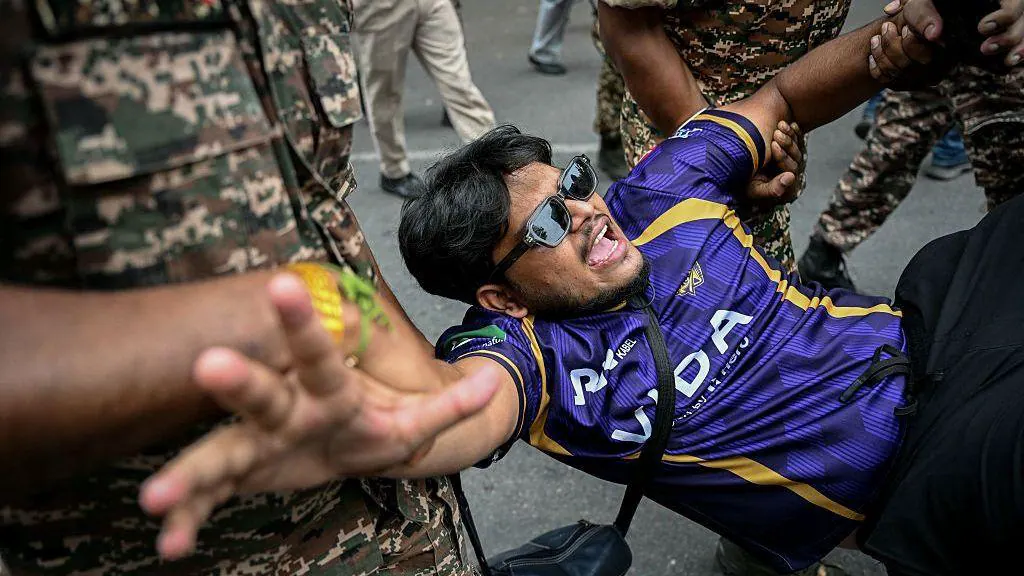
Protests intensified in Delhi on Sunday, October 11, 2026, as leaders of the 'Cricket Party' (CJP) vowed to continue their agitation. The party, led by individuals from Generation Z, demands electoral reforms and the resignation of the Chief Election Commissioner, Gyanesh Kumar. Thousands of security personnel were deployed, and barricades were erected on roads as the city witnessed widespread protests for the second consecutive day.
Abhijit Debk, the founder of the Cricket Party, was arrested on Saturday along with other leaders, including Surav Das and Ashutosh Ranka. They were released on Sunday after a court order, with the condition that they not indulge in any activities that could disrupt peace for a year. However, the leaders clarified that this did not mean they would stop organizing peaceful protests.
The Cricket Party, an unregistered political party in India, demands electoral reforms ahead of crucial state elections. The party also seeks the resignation of Gyanesh Kumar, citing allegations of manipulating voter lists, which the Election Commission denies. The protests began after the party called for a gathering in Jantar Mantar on Saturday, which was denied permission by the police.
The city witnessed a near-total shutdown on Sunday, with at least 45 metro stations and major railway stations closed, and several train services canceled. Internet services were restricted in central Delhi throughout the day. Despite the heavy security presence, groups of protesters attempted to breach barricades and were chased by police, resulting in several arrests.
The Supreme Court of India held a special hearing on Sunday to consider petitions related to the protests and restrictions. The court ordered the government to restore internet services and ensure that metro and railway services operate normally, unless there is a breakdown in law and order. The court also emphasized that people's right to movement should not be restricted and that no illegal arrests should be made.
The Cricket Party gained prominence as a major protest movement during weeks-long demonstrations in the summer, demanding educational reforms and the resignation of the Education Minister. The party was born out of a remark by the Chief Justice, Surya Kant, comparing unemployed youth to 'crickets,' which was misinterpreted by Abhijit Debk. The party has since gained momentum, capitalizing on anger related to unemployment, exam paper leaks, and government accountability.
The protests have sparked concerns about the upcoming state elections and the credibility of the electoral process. The Election Commission and the ruling Bharatiya Janata Party have denied allegations of bias, while the opposition parties have supported the Cricket Party's demands. The situation remains tense, with protesters vowing to continue their agitation and the government maintaining a strong security presence.
Key points
- The protests in Delhi are demanding electoral reforms and the resignation of the Chief Election Commissioner.
- The Cricket Party, led by Generation Z individuals, has gained momentum as a major protest movement in India.
- The situation remains tense, with protesters vowing to continue their agitation and the government maintaining a strong security presence.