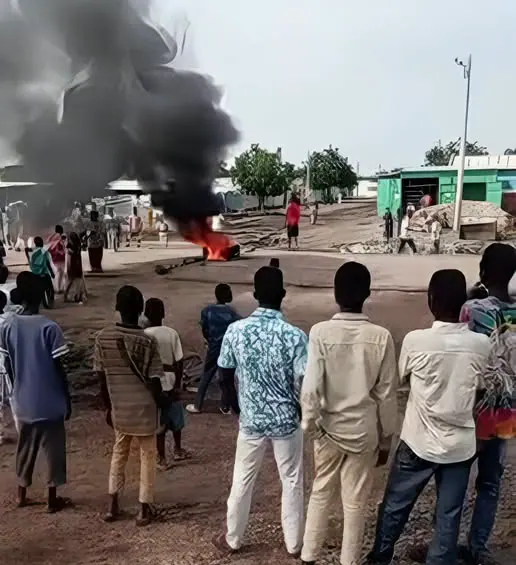
Protests broke out in the city of Gedaref, Sudan, on September 20, 2026, as residents took to the streets to express their frustration over the rising cost of living. According to eyewitnesses, protesters blocked a main road in the city's Al-Tadamun neighborhood by setting fire to tires, denouncing the worsening economic situation. The protests were sparked by a significant increase in commodity prices, which has left many struggling to afford basic necessities.
The Resistance Committees of Gedaref State warned the security authorities against cracking down on the peaceful protests or using violence and intimidation. In a statement, the committees emphasized that the citizens' decision to take to the streets was a natural and legitimate expression of their anger and frustration over the rising prices and declining value of the local currency. They also stressed that the right to protest against living conditions did not require justification and should not be used as a pretext for repression or persecution.
A local resident told Radio Dabanga that Gedaref State has witnessed a significant surge in commodity prices, with many essential items becoming unaffordable for ordinary citizens. The price of a "salad plate" containing three tomatoes, one cucumber, and some parsley has risen to 10,000 Sudanese pounds, while a plate of lemons now costs 5,000 pounds. The resident also reported that the price of a small sack of potatoes had doubled to 10,000 pounds, and a small bunch of vegetables now costs 5,000 pounds.
The price hikes have also affected the construction and automotive sectors, with the price of a bag of cement rising from 60,000 to 110,000 pounds. The resident reported that trading had come to a standstill in many shops and markets due to the rapid fluctuations in prices. Additionally, the price of three loaves of bread has risen to 1,000 pounds, with many bakeries accused of tampering with weights and measures.
The protests have also highlighted the struggles faced by commuters, with the cost of transportation increasing significantly. The fare for short-distance trips has risen to 3,000 pounds from 2,000 pounds, while the monthly transportation cost for students has increased from 250,000 to 400,000 pounds. The resident also reported that the city is experiencing a severe water shortage, with frequent power outages exacerbating the situation.
The Resistance Committees have urged citizens to maintain the peaceful nature of their protests and avoid damaging public or private property. They also called on the authorities to respect the right to peaceful assembly and expression, warning against the use of force or infiltration by provocateurs to discredit the protests.
The situation in Gedaref remains tense, with many residents struggling to cope with the rising cost of living. The protests are a reflection of the growing frustration and discontent among the population, who are demanding action from the authorities to address the economic crisis.
Key points
- The protests in Gedaref were sparked by a significant increase in commodity prices, which has left many struggling to afford basic necessities.
- The Resistance Committees of Gedaref State have warned the security authorities against cracking down on the peaceful protests or using violence and intimidation.
- The price hikes have affected all sectors, including construction, automotive, and food, with many essential items becoming unaffordable for ordinary citizens.