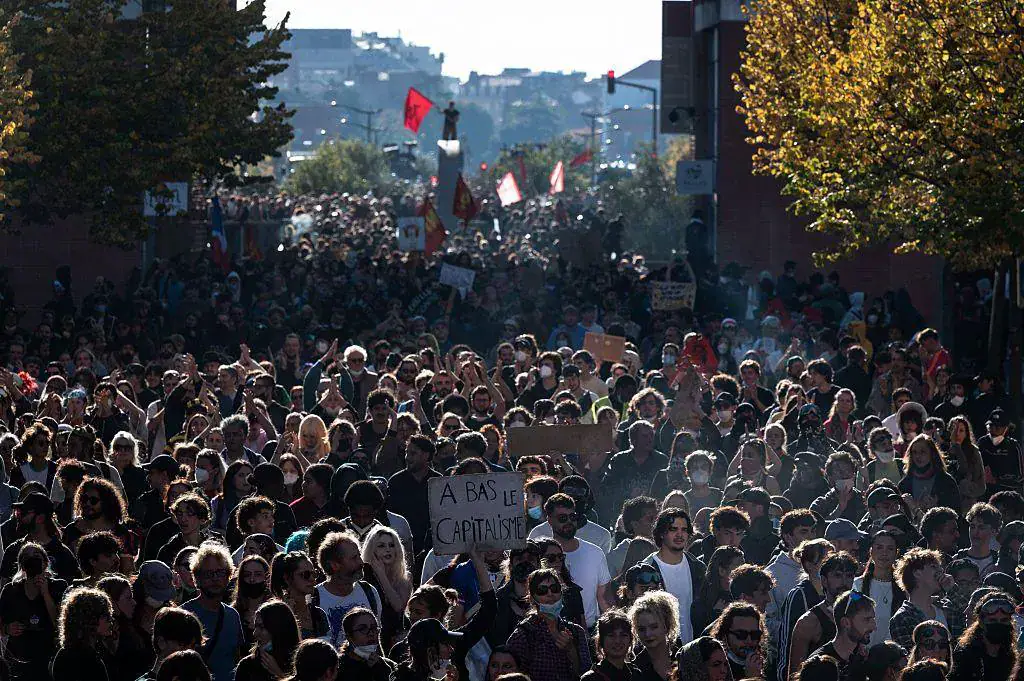
Hundreds of thousands of people took to the streets in Germany, France, and Portugal on Saturday, October 31, to protest against the rising cost of living, housing shortages, and deteriorating public services. In France, approximately 320,000 people participated in demonstrations across the country, with 70,000 taking part in Paris, according to the Ministry of Interior. This marks the third consecutive Saturday of protests against rising costs and public services.
The protests in France were largely peaceful during the day, but turned violent in the evening as clashes broke out between police and groups of protesters in several French cities and German cities. Police used tear gas to disperse protesters, and by evening, authorities had arrested around 300 people, according to the Ministry of Interior. The protests began with student movements against deteriorating school buildings and a shortage of teachers, which were later joined by unions and other groups dissatisfied with living conditions.
In Germany, around 120,000 people participated in demonstrations across the country, according to the GenZ regelt initiative, which organized the protests. The initiative demands increased spending on schools, action to address rising living costs, and promotion of social justice and climate protection. Protesters also oppose increased military spending and a new model of voluntary military service, which they fear could lead to the reintroduction of compulsory military service.
The protests in Germany were largely peaceful during the day, but turned violent in the evening as clashes broke out between police and groups of protesters in several cities. Police used water cannons and pepper spray in Frankfurt, and water cannons in Hamburg and Cologne, after protesters threw stones, bottles, and fireworks at police and emergency services. Several police officers were injured, and arrests were made.
In Portugal, thousands of people gathered in Lisbon's Rossio square, demanding that the government withdraw a proposed law on rental prices, which they claim will exacerbate the housing crisis. The law, which has passed its first reading in parliament, would make it easier for landlords to evict tenants and abolish rent caps for new contracts. Protesters argue that the law will further increase housing costs, which have more than doubled since 2017.
The housing crisis in Portugal has had a significant impact on young people, who are among the hardest hit. The protests in Portugal have been ongoing for several weeks, with police facing criticism for using batons against protesters and arresting dozens during a demonstration in Rossio square last week. The government has refused to withdraw the proposed law but has expressed willingness to amend it before the final vote.
The protests in Europe reflect a growing discontent among citizens with the rising cost of living, housing shortages, and deteriorating public services. The demonstrations have been marked by clashes between police and protesters, and have resulted in several injuries and arrests. The protests are expected to continue, with many citizens demanding action from governments to address their concerns.
Key points
- Hundreds of thousands of people protest in Germany, France, and Portugal over rising costs and housing shortages
- Protests turn violent in several French and German cities, with police using tear gas and water cannons
- Portuguese protesters demand withdrawal of proposed law on rental prices, which they claim will exacerbate housing crisis