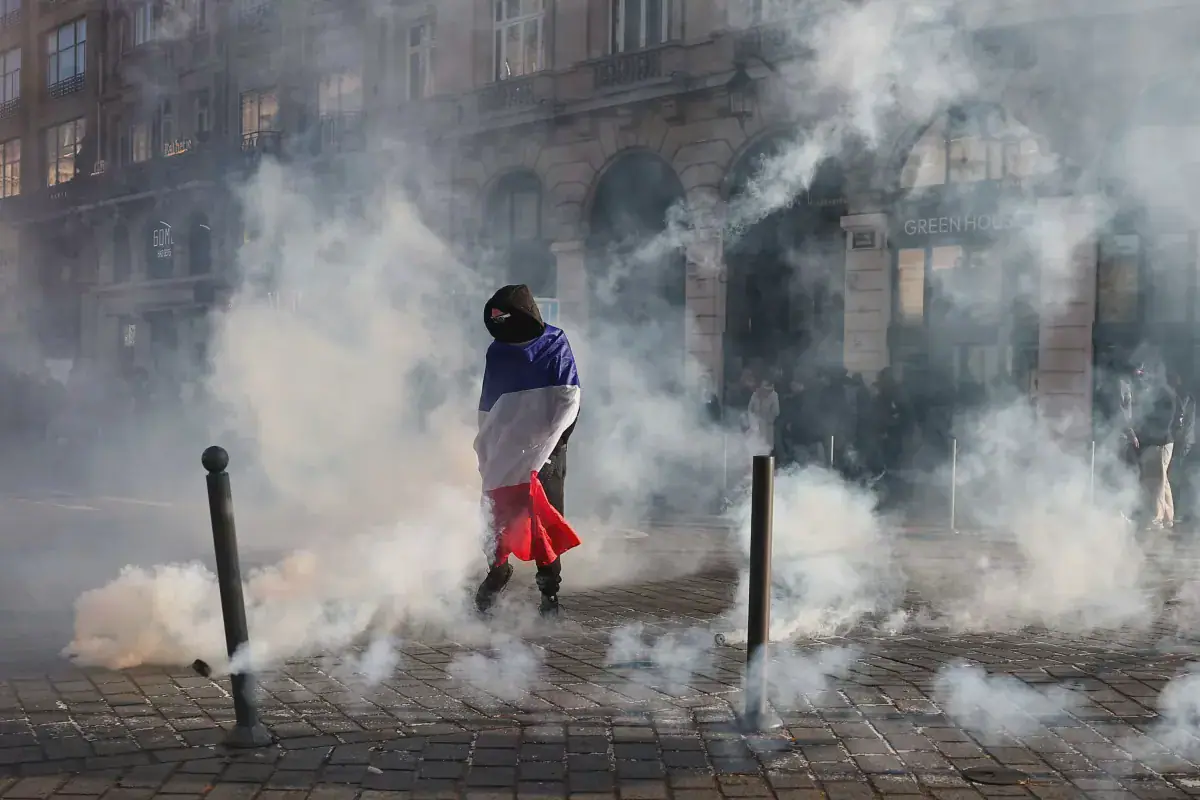
Lucas Petit, a 19-year-old French student, recalls the 2018 Yellow Vest protests that began when he was 11. The clashes between police and protesters left a lasting impression on him. Now, Petit is part of a movement demanding better school conditions, which has evolved into a broader cry of anger against social and institutional oppression. He believes that violence has become normalized due to the perceived need to respond to physical and symbolic oppression.
On October 17, a largely peaceful nationwide protest in France turned chaotic, with looting and destruction reported in several cities, including Limoges, where the historic town hall was set on fire. According to a Justice Ministry document, 68% of the 186 people jailed between October 18 and 21 were 25 or younger, and 52% had no previous criminal record. Nearly half were classified as looters, indicating that opportunistic individuals joined the protests alongside young demonstrators from various backgrounds.
The protests have seen the emergence of Black Bloc tactics, which originated in Germany in the 1980s and are associated with anarchist and anti-capitalist movements. These tactics involve small, highly mobile groups breaking away from the main march, forcing police to spread their forces thin. This approach has been adopted by young protesters in France, who often dress in black, mask their identities, and target symbols of capitalism, such as luxury stores.
Expert Thierry Vincent notes that many young people who aren’t originally from the ultra-left are now adopting Black Bloc tactics, which no longer shock many young people. Historian and left-wing activist Hugo Melchior has observed a similar trend in Rennes, where small groups of students, apparently unconnected to militant organizations, have decided to demonstrate with the intention of fighting. This shift towards confrontation has been seen since the 2006 student riots.
Police tactics are also changing in response to the evolving protests. Former riot police officer Olivier Cappe notes that officers now face threats from various projectiles, including Molotov cocktails and fireworks mortars. Staff shortages compound the problem, with France lacking around 800 specialist riot police officers. Cappe suggests that outnumbered officers may resort more quickly to weapons, such as rubber bullet launchers, which can lead to injuries and deepen the problem.
The consequences of the violent protests have been severe, with several young people injured or maimed for life. A 14-year-old boy suffered smashed teeth and a fractured jaw after a police officer fired a tear gas canister at close range. The interior minister temporarily suspended the use of stun grenades after a 15-year-old lost a hand to one. The debate around violence in protests has become complex, with Petit arguing that attacks on symbols of capitalism can serve a political purpose.
As protests continue in France, concerns remain about the normalization of violence and the police response. The interior minister has faced criticism for the deployment of officers without specialist crowd control training. With the protests showing no signs of abating, the French government faces a significant challenge in addressing the underlying social and institutional issues driving the unrest.
Key points
- - 68% of those jailed during the protests were 25 or younger. - Black Bloc tactics, originating in Germany, have been adopted by young protesters in France. - Staff shortages and police tactics have contributed to the escalation of violence during protests.