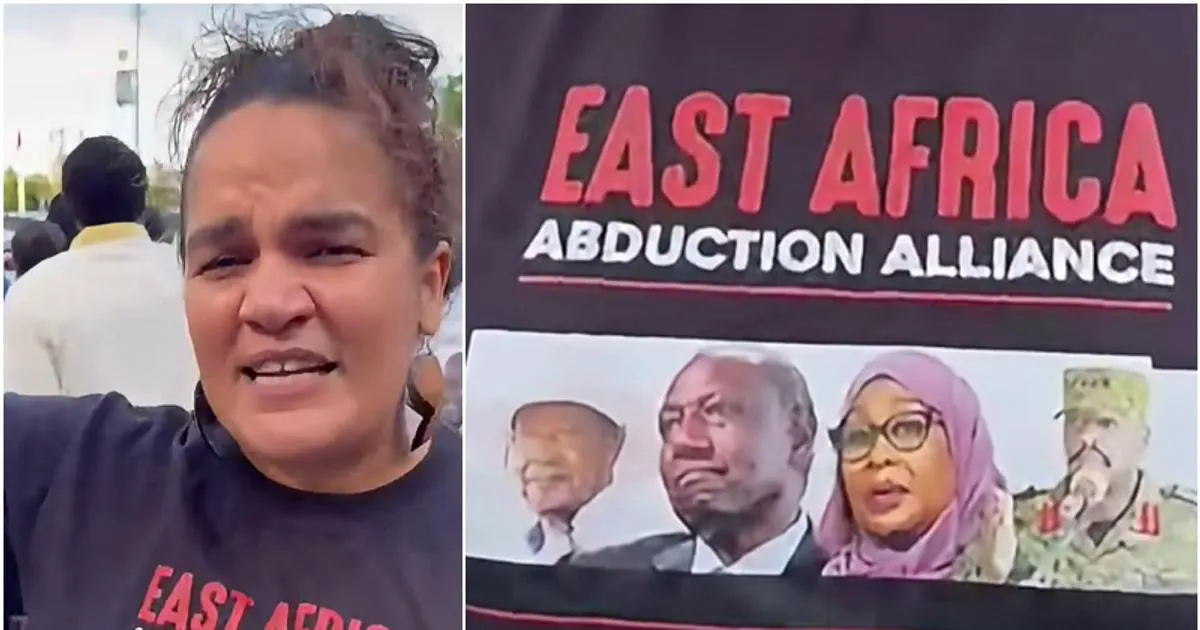
A protest took place outside the United Nations headquarters in New York during the 81st session of the UN General Assembly, targeting several East African heads of state. Demonstrators accused Kenyan President William Ruto, Ugandan President Yoweri Museveni, his son and Uganda People's Defence Forces chief Gen. Muhoozi Kainerugaba, and Tanzanian President Samia Suluhu Hassan of human rights abuses, enforced disappearances, and authoritarian rule. The protesters carried placards and wore branded merchandise condemning the four leaders.
The demonstration was marked by emotional speeches and creative expressions of dissent. One protester wore a black T-shirt with images of the accused leaders and the message "East Africa Abduction Alliance. End Transnational Repression." Another protester addressed the crowd, condemning the leaders as "terrorists" responsible for torture, killings, and extrajudicial activities. The protester emphasized the need for accountability, stating that the leaders must be held accountable for their crimes.
This is not the first time these leaders have faced public pressure over human rights concerns. The protest is part of a growing trend of demonstrations and advocacy campaigns targeting Ruto, Museveni, Suluhu Hassan, and Muhoozi. Civil society groups have raised concerns over the past year about alleged cross-border abductions, enforced disappearances, and crackdowns on dissent in Kenya, Uganda, and Tanzania. The accusations have sparked concern over the treatment of political dissidents in the region.
The protest comes amid growing concern over the health and well-being of Ugandan opposition leader Kizza Besigye. His wife, Winnie Byanyima, recently accused Ugandan authorities of putting his health and life at risk by returning him to prison despite his weak condition. Besigye's health concerns follow an earlier scare in July, when he was admitted to an intensive care unit in Kampala after collapsing during his treason trial.
The demonstration reflects a broader trend of activism and advocacy targeting East African leaders. The protesters' demands for accountability and human rights are part of a growing movement to hold leaders responsible for their actions. The protest also highlights the challenges faced by civil society groups in promoting human rights and democratic values in the region.
The accused leaders have not publicly responded to the allegations. However, the protest has drawn attention to the human rights concerns in the region and the need for greater accountability. The UN General Assembly provides a platform for world leaders to discuss global issues, but it also serves as a reminder of the challenges faced by human rights defenders and activists.
The protest serves as a reminder of the importance of continued activism and advocacy for human rights in East Africa. The region faces significant challenges in promoting democratic values and protecting human rights, and the protest highlights the need for sustained efforts to hold leaders accountable for their actions.
Key points
- The protest targeted several East African heads of state, including Kenyan President William Ruto and Ugandan President Yoweri Museveni.
- The protesters accused the leaders of human rights abuses, enforced disappearances, and authoritarian rule.
- The demonstration reflects a growing trend of activism and advocacy targeting East African leaders over human rights concerns.