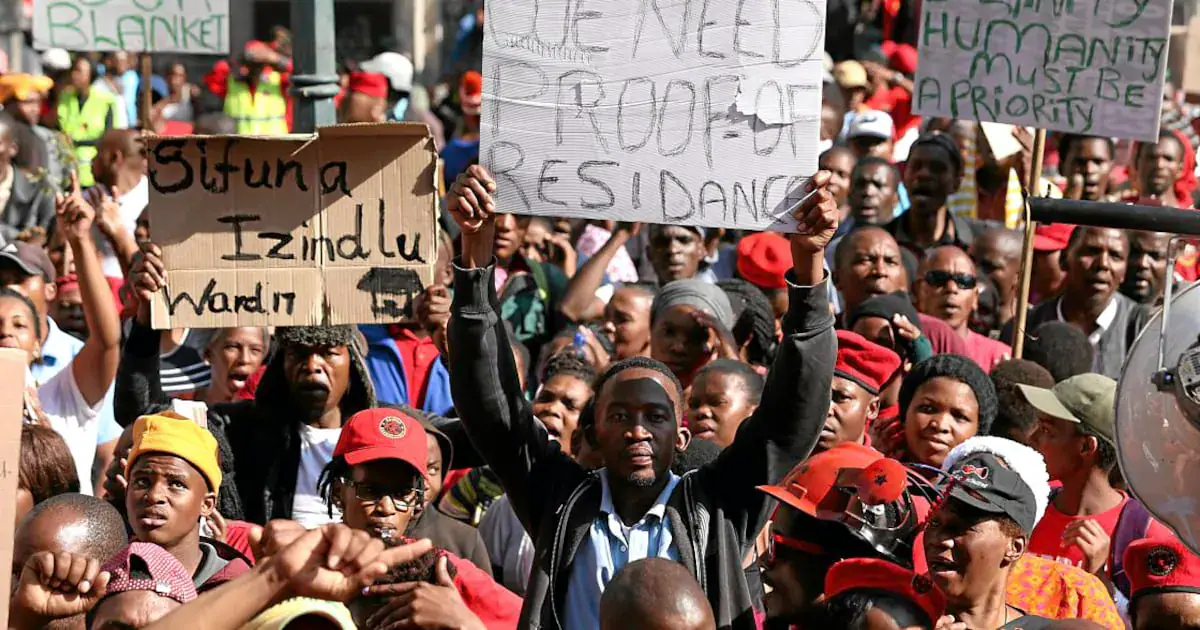
In South Africa, individuals and community movements that organise, advocate, and demand accountability are increasingly being confronted by efforts to delegitimise their work. This is often done through polarising political rhetoric, misinformation, and attempts to cast civic action as a threat rather than a democratic necessity. As a result, activists are frequently portrayed as obstacles to development rather than defenders of constitutional rights.
The narrowing of public discourse poses a profound challenge not only to environmental and social justice movements but also to democracy itself. When those who speak out in defence of their communities are silenced, undermined, or demonised, it is not only their rights that are under threat but also the very principles of participation, transparency, and accountability on which the country's constitutional order depends.
Civil society needs to chart an alternative by employing more solid collective organising based on meaningful solidarity and push back against the weaponisation of the state for ulterior motives. The rise of authoritarian elements within the government, driven by corporate and capitalistic intentions, is a concerning trend. Powerful actors often take centre stage in defining the narrative, seeking to establish a situation that perpetuates societal discord against civil society.
A clear collusion between the state and private corporations' interests sometimes manifests in the sophisticated use of lawfare. In South Africa, this is led by the political and ruling elite, who punt narratives that project civil society as "anti-development" and "regime change agents". In some cases, this takes the form of legal and administrative strategies, including the introduction of restrictive legislation, such as the General Intelligence Amendment Bill.
The key drivers and tactics used to target public participation include philanthropic protectionism, stigmatisation and smear campaigns, and the use of lawfare through strategic litigation against public participation. Direct violence, arbitrary arrests, harassment, and killing of human rights defenders and activists are also employed. Furthermore, an uncritical fourth estate and the complicity of media can contribute to the problem by not holding public representatives and private voices accountable for their utterances.
The impact of shrinking civic space on communities' ability to build movements, organise, and mobilise for sociopolitical and economic change is significant. Protecting democratic values should be embedded within how movements envision their evolution. In the face of repression, communities must continue to organise, mobilise, and agitate for social change.
Thami Nkosi, an activist support and training programme coordinator at the Centre for Environmental Rights, emphasises the importance of protecting the right to organise. Communities cannot afford to submit their will to private and political interests that supersede their ability to protect and enforce their rights. The struggle for social justice and democracy depends on the continued organising and mobilisation of communities.
Key points
- The weaponisation of the state and lawfare are significant threats to civil society and democracy in South Africa.
- Restrictive legislation, philanthropic protectionism, and stigmatisation are key drivers and tactics used to target public participation.
- Communities must continue to organise, mobilise, and agitate for social change in the face of repression.