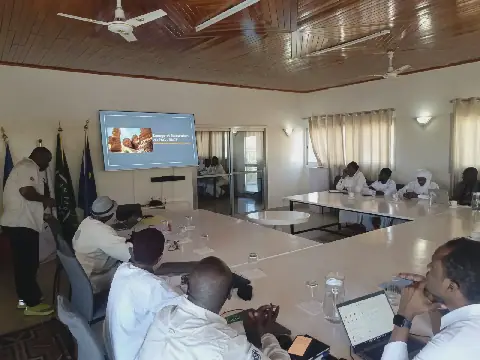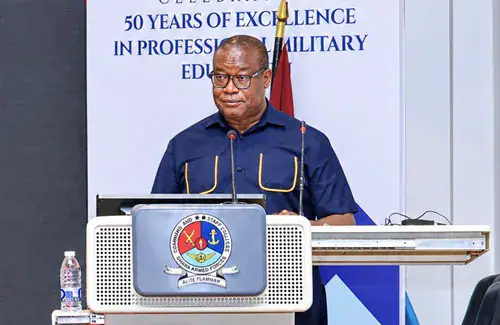
The Editor of Graphic, Theophilus Yartey, has called on the Ghana Armed Forces to protect media freedom and respect the work of journalists. He emphasized that this commitment is crucial for safeguarding the constitutional order, strengthening democratic governance, and promoting national security. Speaking at a seminar for officers of the Ghana Armed Forces Command and Staff College in Accra, Mr. Yartey highlighted the importance of a free press in a democracy.
Mr. Yartey noted that the military's responsibility to defend the constitutional order requires respect for the freedoms guaranteed under the Constitution, including freedom of speech and independence of the media. He warned that attempts to intimidate journalists, restrict access to public interest information, or prevent coverage of public events undermine the transparency and accountability necessary for democracy to thrive.
The seminar, which focused on the topic "Legitimate Requirements of the Media and Its Importance to Democracy," was part of the training program for Senior Course 48, comprising 100 participants, including 67 officers from the Ghana Armed Forces and others from allied African countries. Other speakers at the seminar included a journalist with the Ghana Broadcasting Corporation, Joyce Anim-Ayekoo, and Deputy Director of Corporate Affairs for the GAFCSC, Lieutenant Colonel Sena Affanyi.
Mr. Yartey emphasized that journalists need a safe environment, free from intimidation, unlawful arrests, and physical attacks, to discharge their constitutional responsibilities. He referenced Article 21 of the 1992 Constitution, which guarantees freedom of speech and expression, including freedom of the press and other media. He cautioned that attacks on journalists by security personnel, even when undertaken with good intentions, can erode public confidence in the state.
On access to information, Mr. Yartey stressed that journalists need timely access to public interest information to report accurately on the activities of state institutions, including the military. He cited Ghana's Right to Information Act as an important tool for journalists and commended the Directorate of Public Relations of the Ghana Armed Forces for its cooperation with the media.
A Senior Lecturer at the University of Media, Arts and Communication, Dr. Tim Quashigah, noted that media freedom must be accompanied by responsibility and accountability to ensure that journalism contributes positively to democratic governance. He emphasized that journalists have a responsibility to report accurately and fairly, and that freedom of expression does not give media practitioners the license to publish misleading or biased information.
Lieutenant Colonel Sena Affanyi highlighted the importance of information, public perception, communication, and institutional legitimacy in determining military operational success. She emphasized that military commanders must develop professional relationships with journalists while protecting operational security, sustaining public confidence, and upholding democratic principles.
Key points
- The Editor of Graphic urges the Ghana Armed Forces to protect media freedom, citing its importance for constitutional order, democratic governance, and national security.
Reporting sources
- Daily Graphic · Daily Graphic