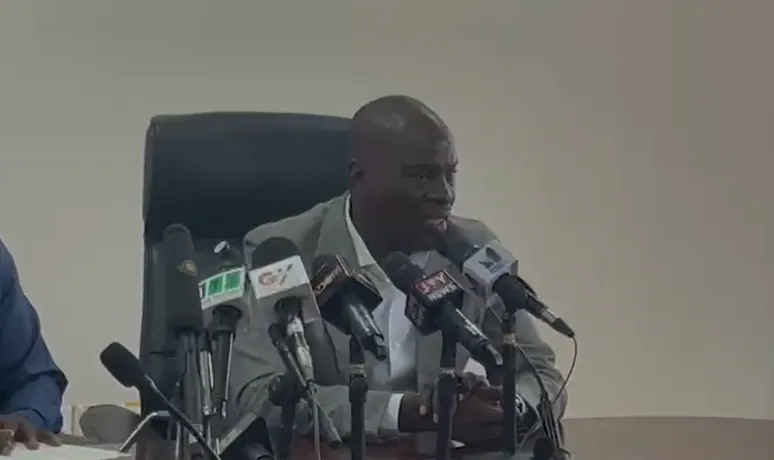
Ghana's Education Minister, Haruna Iddrisu, has appealed to striking teacher unions to return to the classroom while their concerns are being addressed. The Minister made this appeal during a meeting with the leadership of the teacher unions at the Ministry of Education. He emphasized the need to protect the school calendar, which has only recently been restored to the September-to-July cycle.
The meeting, currently underway, brings together the Ghana National Association of Teachers (GNAT), the National Association of Graduate Teachers (NAGRAT), and the Pre-Tertiary Teachers Association of Ghana (PRETAG). The strike, which began on September 25, 2026, has resulted in empty classrooms nationwide, with some schools in the Ashanti Region forced to close entirely due to teacher absenteeism.
The strike is centered on three critical issues: the delay in negotiating a new Collective Agreement, the failure to automatically place newly promoted teachers on their appropriate salary scales, and the non-implementation of the Deprived Area Allowance. The existing Collective Agreement expired in June 2026, and negotiations for a replacement remain outstanding despite several engagements with the Fair Wages and Salaries Commission.
According to the teacher unions, about 80,000 teachers are affected by the delay in placing newly promoted teachers on their new salary scales, with arrears dating back to January 2026. The unions also cite Section 17(2) of the 2024 Collective Agreement, which requires a review of the Deprived Area Report before negotiations on the allowance.
Press Secretary and Spokesperson for the Ministry of Education, Hasmin Mohammed, expressed deep concern about the strike's impact on the academic calendar. He noted that it took the intervention of the Education Minister and the Director-General of the Ghana Education Service to restore the academic calendar to the September-to-July cycle.
The National Association of Graduate Teachers (NAGRAT) has accused the government of acting in bad faith, citing sustained efforts to engage the government that have been met with continued delays. NAGRAT President Jacob Anaba said the unions' action is a direct response to what they describe as prolonged delays and failure to honour commitments made to teachers.
The Ministry of Education has assured that all outstanding issues will be addressed at the meeting. The Education Minister, alongside the Controller and Accountant General's Department (CAGD), the Fair Wages and Salaries Commission (FWSC), and the Ghana Education Service (GES), is engaging the teacher unions to find a solution to the issues.
Key points
- The Ghanaian government is working to address the concerns of striking teacher unions, including the delay in negotiating a new Collective Agreement and the non-implementation of the Deprived Area Allowance.
- The strike has resulted in empty classrooms nationwide, with some schools forced to close entirely due to teacher absenteeism.
- The Education Minister has appealed to the teacher unions to return to the classroom while their concerns are being addressed.