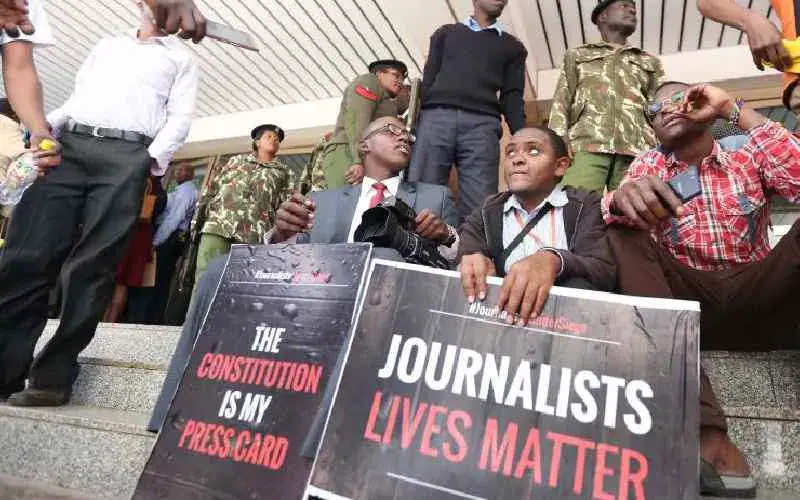
Journalists play a crucial role in holding governments accountable, exposing corruption, and defending public interest. However, a recent report reveals that most journalists in African countries, including Kenya, face exploitation, underpayment, and insecurity. This has led to a disturbing reality where journalists struggle to meet basic household expenses, with many reporting moderate to severe depressive symptoms. The Kenya Union of Journalists and the Media Council of Kenya have conducted a survey, which paints a dire picture of the profession.
The survey found that about 65 per cent of journalists reported moderate to severe depressive symptoms, including thoughts of self-harm, while 25 per cent acknowledged suicidal thoughts. The reported average monthly salary of Sh63,000, against a national average of Sh86,000, exposes the economic vulnerability of the profession. Furthermore, over half of those surveyed earned less than Sh50,000, making it challenging for them to work professionally while constantly worrying about rent, school fees, food, and mounting debts.
The media industry demands accuracy, independence, sacrifice, and commitment from journalists but often fails to provide decent remuneration, medical support, job security, and retirement protection. Journalism cannot thrive where fear of losing employment becomes stronger than the courage to question powerful interests. Financially desperate and psychologically distressed journalists are more vulnerable to manipulation, corruption, and editorial interference. This ultimately compromises the quality of reporting and weakens accountability.
The proposed pension arrangement by the Retirement Benefits Authority for non-permanent journalists is a welcome move, but it cannot substitute for decent employment conditions. Employers must stop treating journalists as disposable labour and provide better working conditions. Salaries must be paid on time, contracts respected, workloads made reasonable, and mental health support provided. The government and media regulators must also strengthen enforcement of labour protections to ensure that media ownership comes with responsibility, not merely commercial ambition.
A society that depends on journalists to expose wrongdoing cannot afford to abandon them. The watchdogs cannot effectively guard the public while being left vulnerable to exploitation, poverty, and despair. It is time the media industry cleaned up its own house and prioritized the welfare of journalists. By doing so, journalists can continue to play their critical role in holding governments accountable and defending public interest.
The media industry's failure to prioritize journalist welfare has significant consequences for the public. When journalists are not able to work professionally, the quality of reporting suffers, and accountability is weakened. This can lead to a lack of trust in the media and a decrease in the public's ability to make informed decisions. Therefore, it is essential that the media industry takes concrete steps to address the challenges faced by journalists.
Ultimately, supporting independent journalism is crucial for promoting press freedom and ensuring that journalists can continue to hold governments accountable. By investing in quality journalism, the public can benefit from accurate, factual, and impactful stories that promote transparency and accountability. It is time for the media industry to prioritize journalist welfare and for the government and media regulators to strengthen enforcement of labour protections.
Key points
- Journalists in Kenya face exploitation, underpayment, and insecurity, compromising their ability to hold governments accountable and defend public interest.
- The media industry must prioritize journalist welfare and provide better working conditions, including decent remuneration, medical support, job security, and retirement protection.
- Supporting independent journalism is crucial for promoting press freedom and ensuring that journalists can continue to hold governments accountable.