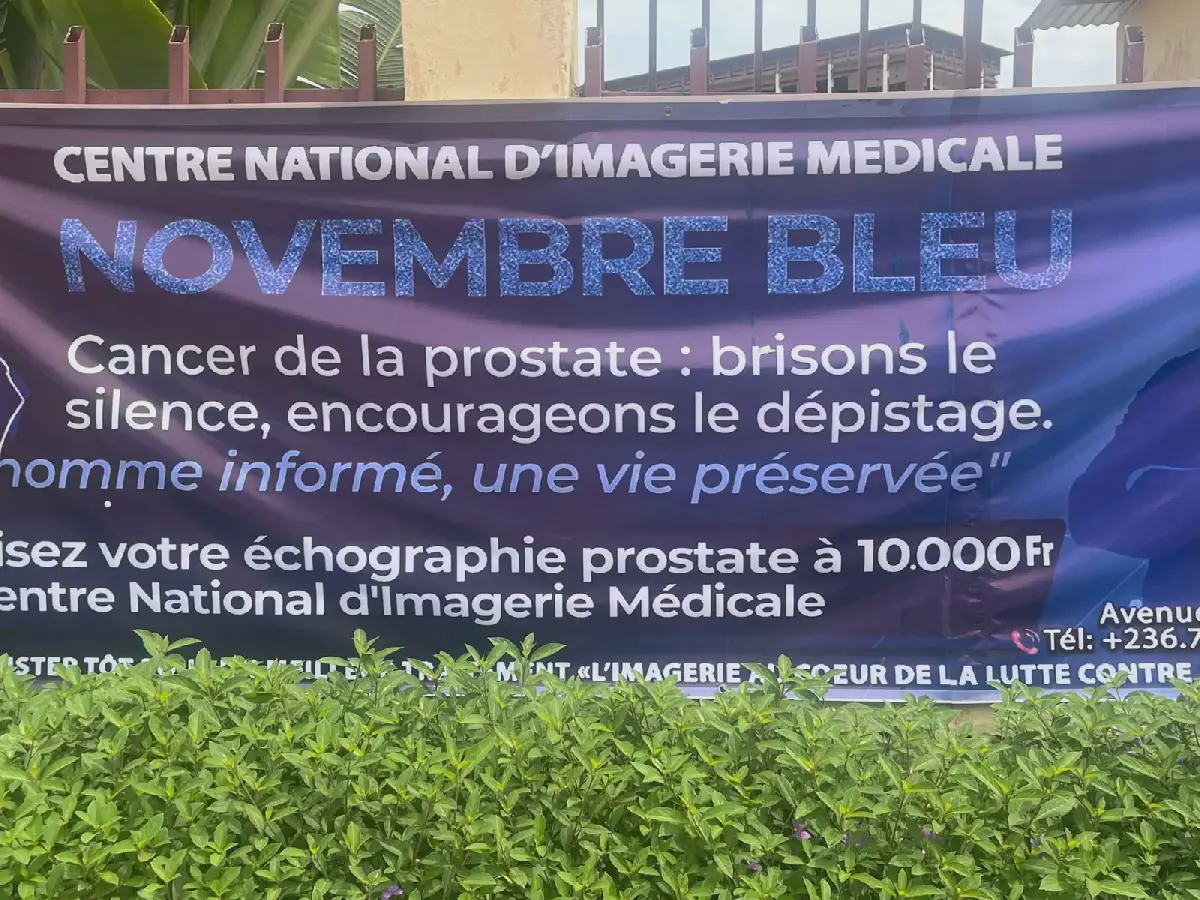
As part of "November Blue," a campaign to raise awareness about prostate cancer, misinformation has been circulating on social media platforms in Central African Republic. Some online users claim that a rectal exam is a necessary step for screening, which is not accurate. According to health professionals, a blood test to measure Prostate-Specific Antigen (PSA) levels can be proposed as a first step. This test measures the amount of a protein produced by the prostate in the blood.
A high PSA level may lead doctors to request a new dosage or further examinations. However, an elevated PSA level can also be caused by a urinary infection, inflammation, or a benign increase in prostate volume. Conversely, a normal result does not always rule out cancer. Dr. Yannick Héritier Soulé Sombot, a radiologist at the National Center for Medical Imaging in Bangui, notes that rectal exams can provide valuable information, even when PSA levels are normal. This exam involves palpating part of the prostate with a gloved finger to check for abnormalities.
While a rectal exam can detect anomalies, such as hard areas, a normal exam does not exclude the possibility of cancer. Additional imaging tests, like ultrasound and MRI, can be used to obtain detailed images of the prostate and identify suspicious areas. Dr. Guy Cyril Ndotamo, a doctor at the National Gendarmerie Hospital in Bangui, mentions that an MRI can help orient doctors towards suspicious areas. If previous exams suggest cancer, a biopsy may be performed to confirm the presence of cancer cells.
A biopsy involves taking small fragments of the prostate to examine under a microscope. This anatomopathological exam usually confirms the presence of cancer cells. Dr. Ndotamo also mentions that a thoraco-abdomino-pelvic CT scan is available in Bangui, which can help determine if the disease has spread beyond the prostate. However, this exam is not used for initial screening. Other techniques, such as bone scintigraphy or PET-Scan, may be used in certain contexts to search for metastases.
Health experts stress that prostate cancer can develop without symptoms at first. Dr. Ndotamo advises discussing screening options from age 50 or 45 if there is a family history. The European Association of Urology recommends offering PSA tests to men of African descent from age 45, after discussing the benefits and limitations of screening. If there are persistent difficulties urinating or blood in the urine, it is essential to consult a doctor, regardless of age.
If the rectal exam causes anxiety, patients can discuss their concerns with a doctor at the beginning of the consultation. Patients can ask why the exam is proposed and if a blood test can be a first step. They can also inquire about where to have the exams done, their cost, and possible follow-up. In conclusion, the idea that rectal exams are the only means of detecting prostate cancer is based on partial knowledge.
There are other methods, such as PSA tests, MRI, and prostate biopsy. A normal PSA level or a normal rectal exam does not always rule out cancer. European recommendations confirm that PSA and rectal exams have complementary roles, but a biopsy is usually necessary for a definitive diagnosis. Men are encouraged to consult a healthcare professional to discuss exams adapted to their situation, without fear or shame.
Key points
- Rectal exams are not the only method for prostate cancer screening.
- PSA blood tests and imaging exams like MRI can be used for screening.
- A biopsy is usually necessary for a definitive diagnosis of prostate cancer.