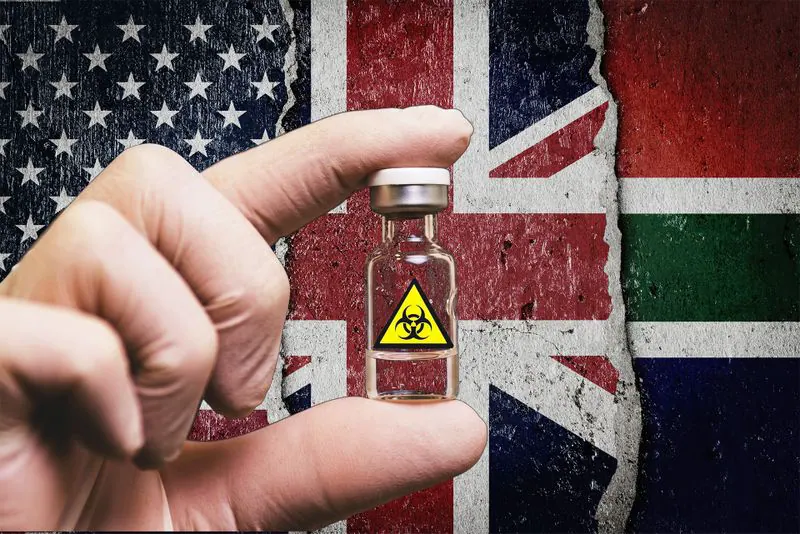
South Africa signed the Biological and Toxin Weapons Convention on April 10, 1972, and ratified it in November 1975, committing to ban biological and toxin weapons. However, the apartheid government covertly developed Project Coast, a biological weapons programme, under the leadership of PW Botha and Minister of Defence Magnus Malan. This programme was a significant concern for the international community, particularly as Nelson Mandela and the African National Congress prepared to take power in the country's first democratic elections in 1994.
On April 11, 1994, the British and US ambassadors to South Africa, Sir Anthony Reeve and Princeton Lyman, delivered a formal diplomatic démarche to President Frederik Willem de Klerk, demanding the full and complete dismantling of Project Coast. The UK and US were fearful that the programme's lethal technology and secrets would proliferate to rogue states or terrorist groups. De Klerk ordered the dismantling of the programme, as well as the country's six completed and one partially completed nuclear weapons, in an effort to return South Africa to the Western family of nations.
The dismantling of Project Coast and South Africa's nuclear weapons programme was part of a broader effort to normalize the country's relations with the international community. De Klerk's government signed the Chemical Weapons Convention on January 14, 1993, and South Africa acceded to the Nuclear Nonproliferation Treaty on July 10, 1991. The country also passed the Non-Proliferation of Weapons of Mass Destruction Act in 1993, establishing a Council for Non-Proliferation to oversee the control of weapons of mass destruction.
Nelson Mandela, who became South Africa's first black president in 1994, was a strong advocate for non-proliferation and disarmament. He supported the termination of Project Coast and the country's nuclear weapons programme, and worked to return South Africa to the United Nations as an active and principled member state. Mandela's leadership on these issues earned him international recognition, including the Nobel Prize.
The transition to democracy in South Africa was a complex and challenging process, involving a negotiated settlement between the apartheid government and the anti-apartheid movement led by Mandela's African National Congress. The balance between maintaining momentum for democratization and avoiding a backlash from the security forces was delicate, and Mandela's successor Thabo Mbeki would later face challenges related to the "arms deal" scandal.
The legacy of Project Coast and South Africa's biological weapons programme serves as a reminder of the importance of effective governance and oversight of high-consequence programmes. The country's experience highlights the need for transparency, accountability, and international cooperation in preventing the proliferation of weapons of mass destruction.
Today, the Council for Non-Proliferation, established under the Non-Proliferation of Weapons of Mass Destruction Act, continues to play a critical role in overseeing South Africa's commitments to non-proliferation, and the country remains committed to its obligations under the Biological and Toxin Weapons Convention.
Key points
- Nelson Mandela and FW de Klerk played crucial roles in dismantling South Africa's biological and nuclear weapons programmes.
- The country's experience with Project Coast highlights the importance of effective governance and oversight of high-consequence programmes.
- South Africa's transition to democracy involved a delicate balance between maintaining momentum for democratization and avoiding a backlash from the security forces.