Professor Christopher Mensah, Pro Vice-Chancellor of Ho Technical University (HTU) and Professor of Hospitality and Tourism Management, has raised concerns about the prevalence of toxic workplace cultures in Ghana's higher education and hospitality sectors. In his inaugural lecture, Prof. Mensah highlighted that mistreatment and harassment are widespread, affecting academic progress, professional development, and psychological well-being. He emphasized that these issues are often perpetuated by lecturers and industry professionals, creating a culture of silence and obedience.
According to Prof. Mensah's studies, 92.2 per cent of students at a Ghanaian technical university have experienced some form of mistreatment, with hospitality students reporting the highest levels of abuse, primarily from lecturers. Another study found that 93.5 per cent of students had suffered lecturer bullying. Furthermore, nearly half of employees surveyed in Accra's hotels admitted experiencing harassment, most commonly from guests. These findings underscore the need for institutions to address these issues and create safer environments for students and employees.
Prof. Mensah identified various forms of toxic socialisation, including humiliation, intimidation, discrimination, exclusion, bullying, and sexual harassment. He highlighted quid pro quo harassment and hostile-environment harassment as major forms, often used to assert power, reinforce gender stereotypes, and discourage women from pursuing certain academic programmes and careers. The professor stressed that institutions often inadvertently teach "silence, obedience, and endurance" by what they allow, rather than through the curriculum.
To address these issues, Prof. Mensah urged lecturers, administrators, hotels, the Ghana Tourism Authority, and students to work together to dismantle toxic cultures. He emphasized the need to create safer, more respectful environments where students and employees can thrive without fear of humiliation, discrimination, or harassment. Prof. Mensah called on students and employees to be equipped with the confidence to challenge abuses of power, rather than accepting mistreatment as an unavoidable part of education or professional life.
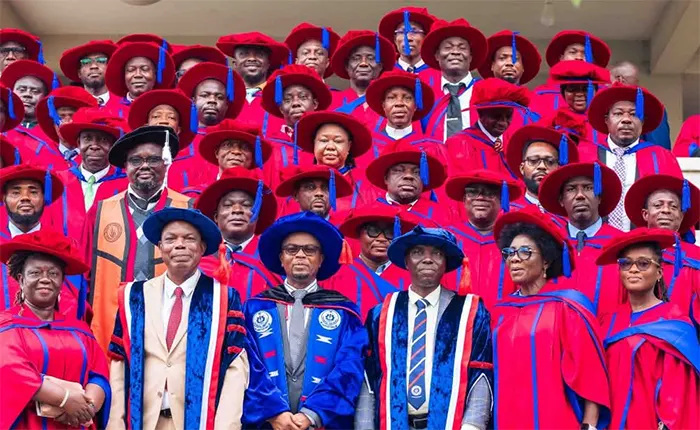
The Vice-Chancellor of HTU, Prof. Ben Q. Honyenuga, commended Prof. Mensah for his dedication to scholarship and for advancing the university's reputation as a hub of academic excellence. He urged faculty and students to draw inspiration from such milestones and to deepen their commitment to research, innovation, and professional development. The ceremony, which featured the donning of the professorial gown by Prof. Mensah, was attended by management, faculty, staff, and students of HTU, as well as family members and invited guests.
The event was attended by notable figures, including the Minister of Tourism, Arts and Culture and Member of Parliament for Ketu South Constituency, Abla Dzifa Gomashie. The colourful ceremony featured the presentation of various gifts from stakeholders and family members in celebration of Prof. Mensah's achievement. The professor's call to action places responsibility on both institutions and individuals to ensure that Ghana's universities and hospitality organisations nurture environments where students and employees can thrive.
With over 65 peer-reviewed publications, Prof. Mensah has conducted extensive research in tourism development, hospitality management, human resource management, and student development. His research has contributed significantly to the understanding of toxic workplace cultures and the need for institutions to address these issues. By speaking out against toxic socialisation, Prof. Mensah aims to inspire change and promote a culture of respect and inclusivity in Ghana's education and hospitality sectors.
Key points
- Prof. Mensah's studies found that 92.2 per cent of students at a Ghanaian technical university have experienced some form of mistreatment.
- The professor identified quid pro quo harassment and hostile-environment harassment as major forms of toxic socialisation.
- Prof. Mensah urged institutions and individuals to work together to create safer, more respectful environments for students and employees.