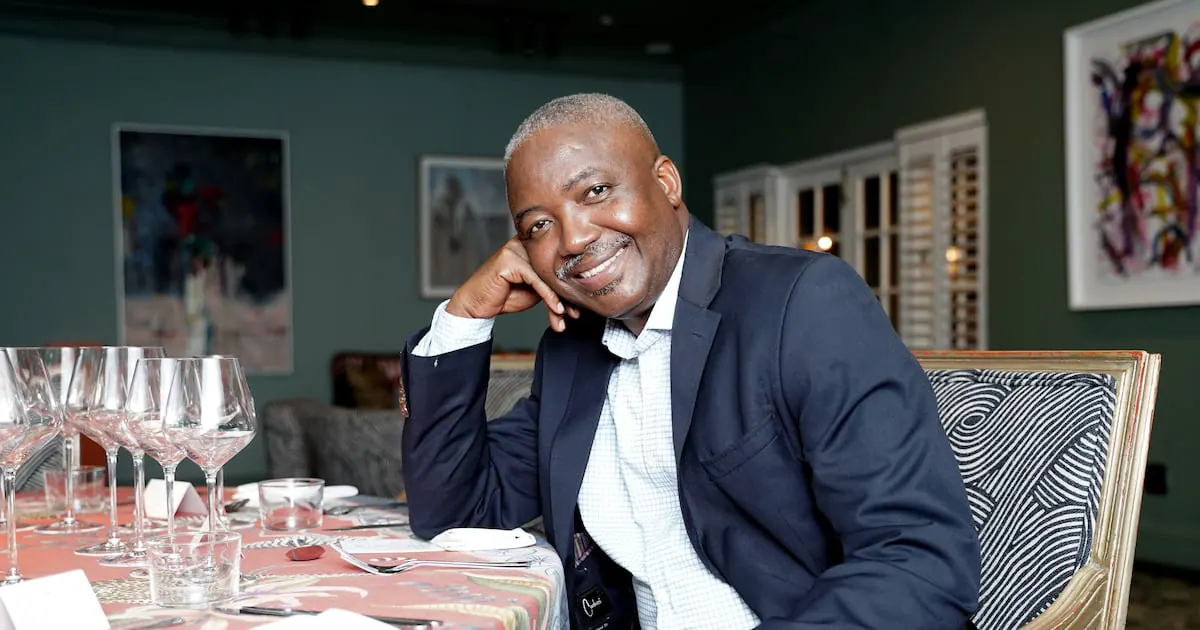
Prof Mcebisi Ndletyana's life has been shaped by his grandmother's prayers and values. Growing up in Gqeberha, she instilled in him a sense of social justice and the importance of education. Her prayers for men imprisoned on Robben Island sparked his interest in politics. Ndletyana, a professor of politics at the University of Johannesburg, credits his grandmother with raising his consciousness and encouraging him to think critically about the world around him.
Ndletyana's childhood city was a hotbed of resistance against apartheid. He was exposed to radical literature and neighbours who had served time on Robben Island. He joined the Communist Party, drawn to its intellectual tradition, and was influenced by African nationalism and thinkers like Walter Rodney. Ndletyana's commitment to intellectual honesty was shaped by a university mentor who emphasized the importance of expressing oneself authentically in writing.
Ndletyana's new book, The Zuma Effect, co-authored with Mashupye Maserumule, examines how Jacob Zuma's presidency became possible. Ndletyana argues that Zuma's rise to power was not solely the result of his own actions, but a collective project of the ANC. He refuses to attribute Zuma's presidency to a single factor, instead highlighting the complex interplay of factors that enabled his ascension.
Ndletyana compares Zuma to Donald Trump and Vladimir Putin, seeing elements of both in the former president. He notes that Zuma, like Trump, is an egocentric person who blurs the lines between his public and private persona. However, Zuma's charisma, Ndletyana argues, was a key factor in his ability to connect with ordinary people and make them feel seen.
Despite his criticisms of the ANC, Ndletyana is cautiously optimistic about the government of national unity, particularly the relationship between the ANC and the DA. He believes that both parties represent powerful interests in the country and have a stake in stability. The parties have also discovered the benefits of working together, with Ndletyana noting that they have developed a sense of chemistry and mutual understanding.
Ndletyana acknowledges that historical wounds, such as the controversy over land and racial redress, remain a challenge for the country. He believes that political leadership must acknowledge the centrality of memory to trust, particularly among black voters. However, he is hopeful about the future, citing the emergence of a new generation that is comfortable inhabiting multiple identities and perspectives.
Ndletyana's children, he says, are harbingers of the future, inhabiting a different social world than their parents. He believes that the task is to give this generation room to create something new, and that leaders must permit this process to unfold. The creation of a hybrid society, where different racial and cultural groups converge, is a positive development that requires honest leadership to flourish.
Key points
- Ndletyana's life has been shaped by his grandmother's values and prayers, which instilled in him a sense of social justice and critical thinking.
- Ndletyana argues that Jacob Zuma's presidency was a collective project of the ANC, rather than the result of a single individual's actions.
- Ndletyana is cautiously optimistic about the government of national unity, citing the benefits of cooperation between the ANC and DA.