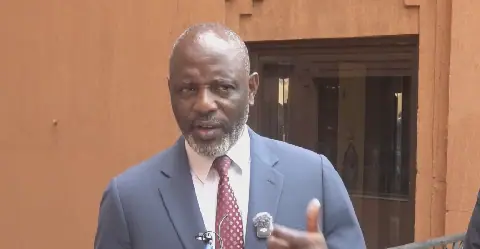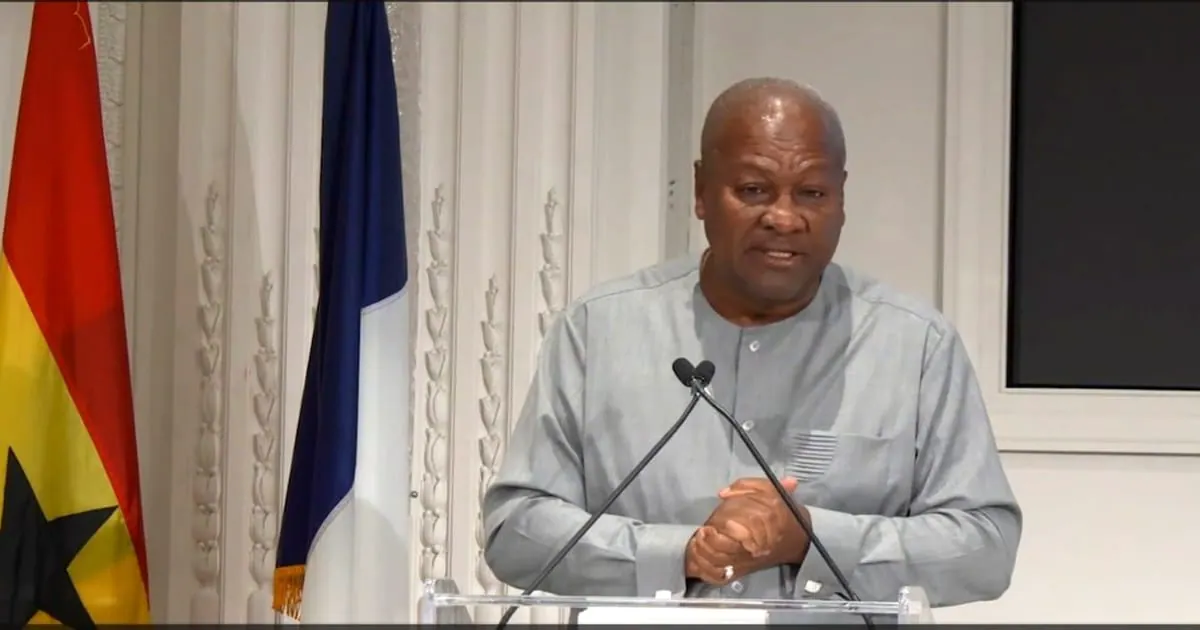
President John Dramani Mahama of Ghana has emphasized the need for reparative justice, describing the transatlantic slave trade as the gravest crime against humanity. Speaking at a side event at the United Nations General Assembly in New York on September 23, 2026, President Mahama said Africa would no longer accept excuses for the continued possession of stolen artifacts and human remains. He commended countries and institutions that have made progress in returning artifacts, citing the Netherlands' cataloging of 2,000 Ghanaian artifacts for return.
President Mahama outlined three pillars to guide the next steps of reparative justice. The first pillar acknowledges progress made since the UN resolution on restitution was passed. He thanked countries like the Netherlands, Germany, and France for their engagement and return of artifacts. President Mahama also acknowledged apologies from religious institutions, such as the Catholic Church and the Church of England, for their roles in slavery.
However, President Mahama stressed that isolated gestures are not enough. He emphasized that moral justice cannot rely on piecemeal generosity or isolated acts of goodwill. For the second pillar, he called for a permanent institutionalized global system for restitution. President Mahama urged UNESCO, the United Nations, and countries holding artifacts to establish clear, standardized legal and diplomatic mechanisms for provenance research and unconditional restitution.
President Mahama forcefully rejected the narrative that Africa lacks the capacity to receive and preserve returned artifacts. He declared that capacity constraints must never be used as a justification for continued possession. Instead, he argued that capacity must serve as a bridge to return, but not as a barrier to justice. Africa is already preparing to receive its heritage, with the African Union's flagship Agenda 2063 project advancing the Great African Museum.
The Great African Museum, according to President Mahama, will be able to receive and preserve returned artifacts. He noted that the continent is building the infrastructure of the future. President Mahama's comments come as the international community continues to grapple with the legacy of the transatlantic slave trade and colonialism. His call for a permanent institutionalized global system for restitution has significant implications for museums and cultural institutions worldwide.
President Mahama's speech at the UN General Assembly highlights the growing momentum behind reparative justice. His emphasis on the need for a coordinated and systematic approach to restitution reflects a shift in the global conversation on the issue. As countries and institutions continue to confront their historical legacies, President Mahama's three pillars for reparative justice provide a framework for moving forward.
The third pillar of President Mahama's approach emphasizes the need for a coordinated and systematic approach to restitution. He called on countries and institutions to work together to establish clear mechanisms for provenance research and unconditional restitution. This approach has significant implications for the future of cultural heritage and the legacy of colonialism and slavery.
Key points
- President Mahama rejects the claim that Africa can't keep returned artifacts.
- He outlines three pillars for reparative justice, including a permanent institutionalized global system for restitution.
- President Mahama commends countries and institutions that have made progress in returning artifacts.