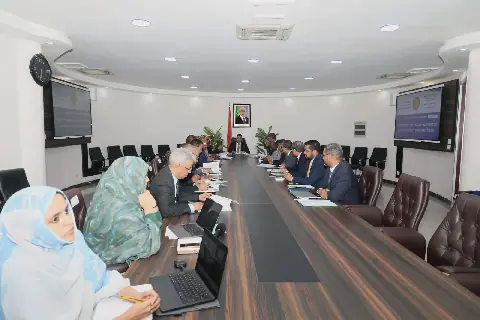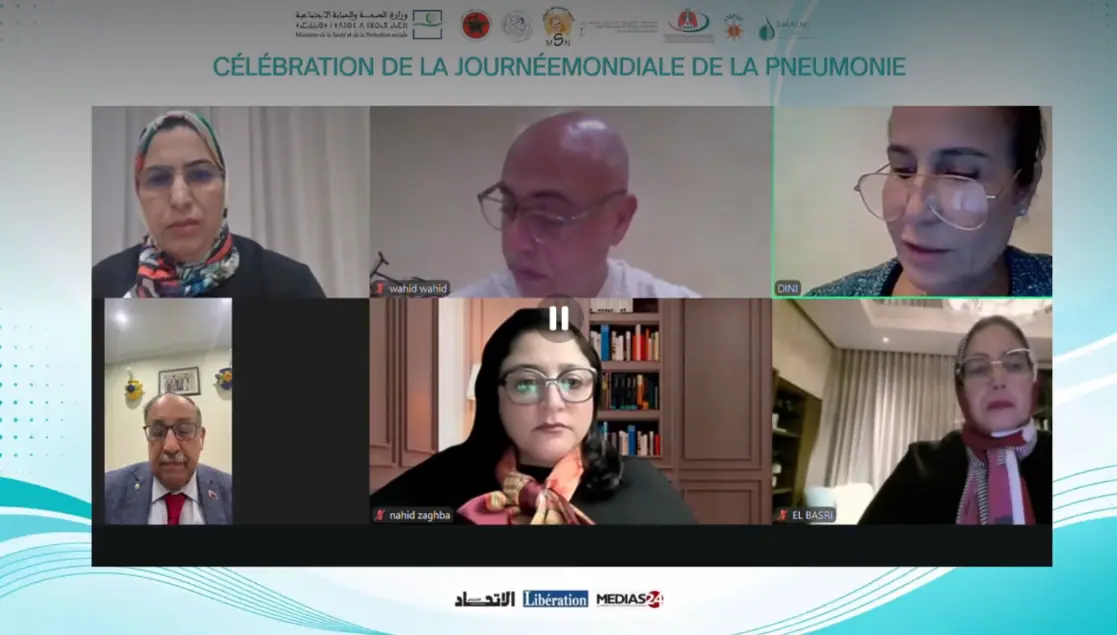
Pneumonia remains a significant public health concern in Morocco, particularly among children under five years old. Despite progress in vaccination and treatment, the disease continues to cause high morbidity and mortality rates. Experts and specialists in health gathered for a web conference organized by the Infovac Scientific Association and the Moroccan Society of Medical Sciences to discuss prevention and treatment strategies. The conference aimed to optimize care for Moroccan children from prevention to diagnosis.
The representative of the Ministry of Health and Social Protection, Dr. Abdelhakim Yahyane, emphasized the importance of fighting pneumonia, which remains a major public health issue. He noted that despite progress, pneumonia continues to cause high morbidity and mortality rates, but that many of these consequences can be prevented with timely and appropriate interventions. Vaccination is one of the most effective means of prevention, significantly reducing the risk of pneumonia and its complications.
The Moroccan national immunization program has played a crucial role in reducing severe forms of pneumococcal pneumonia. According to Professor Nezha Dini, a specialist in pediatrics and neonatology, the program has led to a regression of severe pneumococcal pneumonia cases. However, she stressed the importance of combating self-medication to prevent antibiotic resistance and avoid complications. The evolution of bacterial strains and new generations of vaccines also pose challenges in preventing and treating pneumonia.
The conference also addressed the issue of bronchiolitis, a frequent pathology in pediatrics. Professor Bouchra Basri, a specialist in pediatrics, noted that while bronchiolitis is a common disease, its evolution can be unpredictable, and it can lead to severe complications. Professor Amina Barkat, head of the neonatal medicine and resuscitation service at Rabat Children's Hospital, discussed the protocol for managing bronchiolitis, highlighting good practices, support measures, and treatments to prioritize or avoid.
Professor Barkat emphasized that respiratory syncytial virus (RSV) is the leading cause of acute lower respiratory infections in infants, responsible for millions of episodes and hospitalizations worldwide. In Morocco, a study of 739 patients showed that RSV is present in vulnerable populations, particularly infants under six months old. The study identified warning signs, including high respiratory frequency, wheezing, cyanosis, and feeding difficulties.
The conference also explored the long-term consequences of RSV infection. Professor Barkat noted that data suggest that children who contract RSV at a young age may be at increased risk of developing asthma later in life. She called for the availability of maternal vaccination and long-acting antibodies, which could be more economically viable. The experts also emphasized the need to generalize maternal immunization during pregnancy to other antigens, such as whooping cough, flu, and COVID-19.
Dr. Robert Cohen, a renowned expert in pediatrics, infectious diseases, and vaccinology, highlighted the importance of pneumococcal vaccination in reducing pneumonia cases. He noted that the introduction of pneumococcal vaccines has led to a significant decrease in pneumonia cases. The conference concluded that prevention and timely interventions are crucial in reducing the burden of pneumonia in Morocco.
Key points
- Vaccination is a key strategy in preventing pneumonia and its complications in Morocco.
- The country has made progress in reducing severe forms of pneumococcal pneumonia through its national immunization program.
- Experts are calling for the generalization of maternal immunization during pregnancy to other antigens, such as whooping cough, flu, and COVID-19.