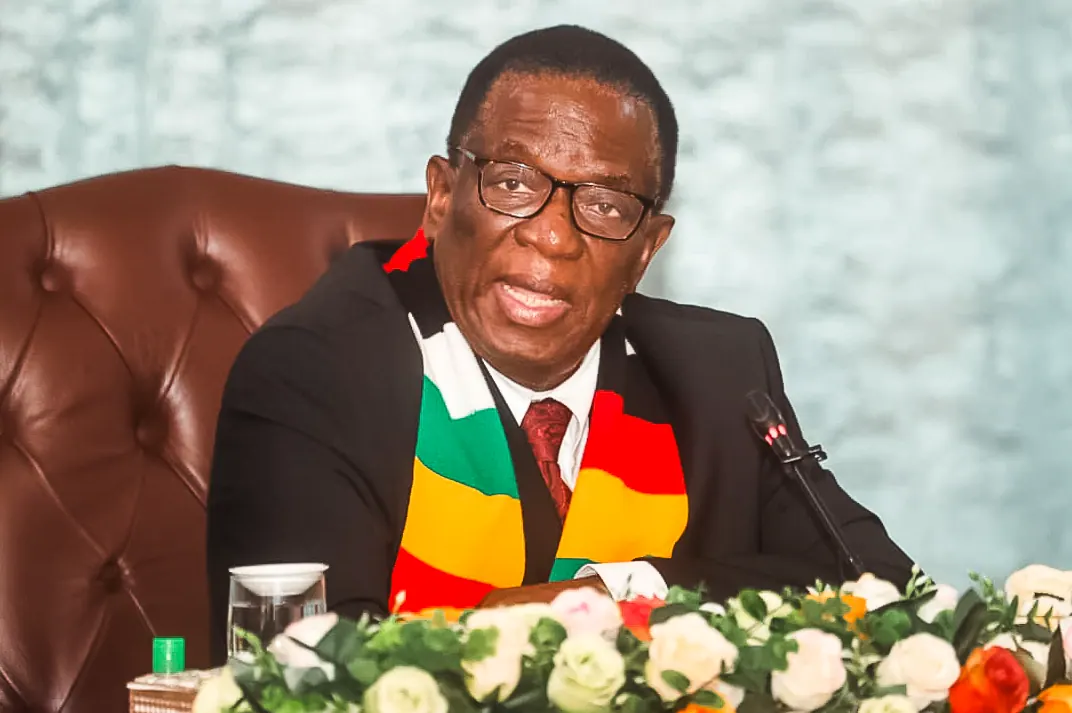
President Emmerson Mnangagwa of Zimbabwe is under growing pressure to explain why the full Uchena Commission report on land allocation irregularities remains hidden from the public. The report, completed in 2019, was handed to Mnangagwa on December 9 of that year and reportedly uncovered illegal transactions that prejudiced the State of nearly US$3 billion. A High Court order and a presidential publication directive have not been fulfilled, fueling suspicions that the document could implicate politically connected land barons, government officials, and ruling-party figures.
The Uchena Commission, chaired by Justice Tendai Uchena, was appointed by Mnangagwa in January 2018 to investigate the unlawful and chaotic allocation and sale of State land in and around urban areas from 2005. The commission's findings were expected to shed light on the corrupt allocation of land and identify those responsible. However, despite the court's order, only a partial report was gazetted on May 1, 2026, through General Notice 608 of 2026. Critics argue that this partial report does not meet the court's requirements.
Engineer and businessman Jacob Kudzayi Mutisi has challenged councillors and Members of Parliament to demand the release of the full report. Mutisi argues that it is unacceptable for the authorities to demolish people's homes while withholding a report that could establish how illegal settlements were created, who sold or allocated the land, and which public officials enabled the corruption. However, responsibility ultimately rests with Mnangagwa, who appointed the commission, received its findings, and was personally ordered by the High Court to make them accessible to the public.
The continued secrecy surrounding the report has raised questions about whose names appear in it and why successive promises to release it have not produced the complete document. Critics are entitled to suspect political protection, but the government could address that suspicion immediately by complying fully with the High Court order. If legal or administrative obstacles remain, Mnangagwa's administration must identify them publicly.
Recent demolitions have intensified public anger because the homes of ordinary residents are being destroyed while many of those accused of creating, approving, or profiting from illegal settlements appear to have escaped accountability. The government's previous arrests of a limited number of alleged land barons do not substitute for disclosing the commission's complete findings. Those suspects have since been released, according to reports.
The inquiry reportedly recommended investigations and prosecutions of people who unlawfully subdivided and sold State land. Research on urban land governance has also documented corruption involving politically exposed people, housing cooperatives, property developers, and officials across several State institutions. The public is demanding accountability, and the release of the full report is seen as a crucial step towards achieving that.
As the central question remains why President Mnangagwa has not ensured that Zimbabweans can read the report, Mutisi emphasized that the report concerns issues of public interest, including the administration and allocation of urban land, and citizens have a legitimate interest in knowing its findings. With the government's inaction, the pressure on Mnangagwa to release the report continues to mount.
Key points
- President Mnangagwa's administration has been accused of withholding the full Uchena Commission report to protect politically connected figures.
- The report's release could shed light on the corrupt allocation of land and identify those responsible for the irregularities.
- The government's inaction has intensified public anger, particularly in light of recent demolitions of homes in illegal settlements.