A dispute over the verification and re-tallying of presidential election results has escalated to the Court of Appeal. Busia Senator Okiya Omtatah filed a notice of appeal against High Court Judge Gregory Mutai's finding, which rejected a bid to scrap the process. Omtatah claimed that the judgment was inconsistent and that the judge erred regarding the status of the national tallying centre and the Independent Electoral and Boundaries Commission (IEBC) chairman.
Omtatah cited at least 12 grievances against the High Court judgment, including an alleged error in the application of the Maina Kiai judgment on the finality of the results announced at the constituency level. In his judgment, Justice Mutai clarified that the exercise is not a one-man affair or simply the chairman's exercise, but a collective Commission's task. He declared that Sections 39 (1) (c) and (b) of the Elections Act, 2011, and Regulation 32 of the Elections General Regulations are constitutional.
The judge recommended that Parliament should streamline the election law to ensure that the tally is tightly bound and seamless. He insisted that the Maina Kiai case made it clear that the constituency tally is final and cannot be varied unless there is an order from a court of law. The judge's ruling stated that the results of the presidential election declared uncertified at the constituency level are final and may only be challenged before the Election Court.
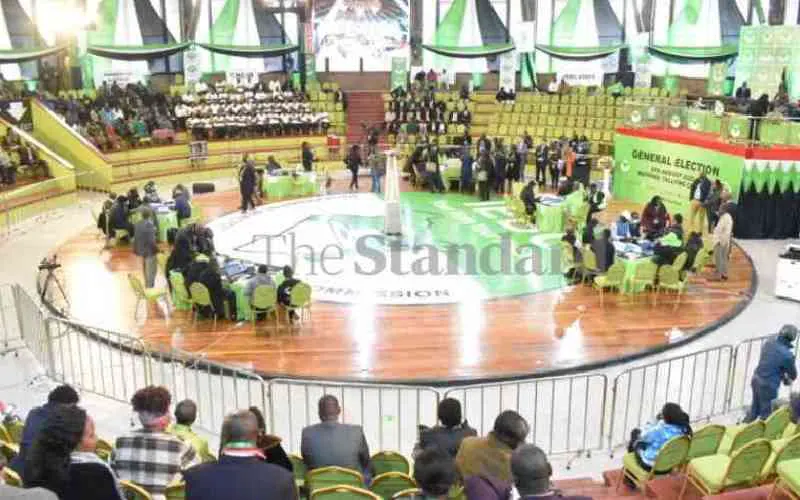
At the heart of the case was whether IEBC can verify, recount, and/or alter results at the National Tallying Centre at Bomas. Senator Omtatah, United Opposition Coalition leaders Kalonzo Musyoka, Rigathi Gachagua, Fred Matiang'i, Mithika Linturi, and Justin Muturi, urged the High Court to abolish the recount and verification of the presidential election at the National Tallying Centre. They argued that there is no law to establish such a mechanism.
Omtatah asserted that only an Election Court has the power to reopen or scrutinise the results declared by the returning officer at the constituency level. He insisted that the avenue used for rigging is the creation of a separate level for reopening the results and re-tallying at the Bomas. According to him, the exercise at the National Tallying Centre is illegal as it amounts to the commissioners and the IEBC chair usurping the powers of the constituencies' returning officers.
Omtatah argued that Section 39 of the Elections Act, Article 86, and Article 138 of the Constitution indicate that the results from the constituency level are final and binding. He added that the role of the IEBC chair is almost ceremonial, as he is only required to announce the total results from the constituencies. According to him, centralisation of tallying and verification of results violates the finality of results as required by the Constitution.
Omtatah's case is the second contest filed against the commission in a bid to ring-fence the presidential contest to the constituencies. The dispute will now be heard at the Court of Appeal, where a decision is expected to be made on the verification and re-tallying of presidential election results.
Key points
- The Court of Appeal will determine whether IEBC can verify, recount, and/or alter results at the National Tallying Centre.
- The dispute centres on the interpretation of Sections 39 (1) (c) and (b) of the Elections Act, 2011, and Regulation 32 of the Elections General Regulations.
- The outcome of the case may impact the integrity of the electoral process in Kenya.