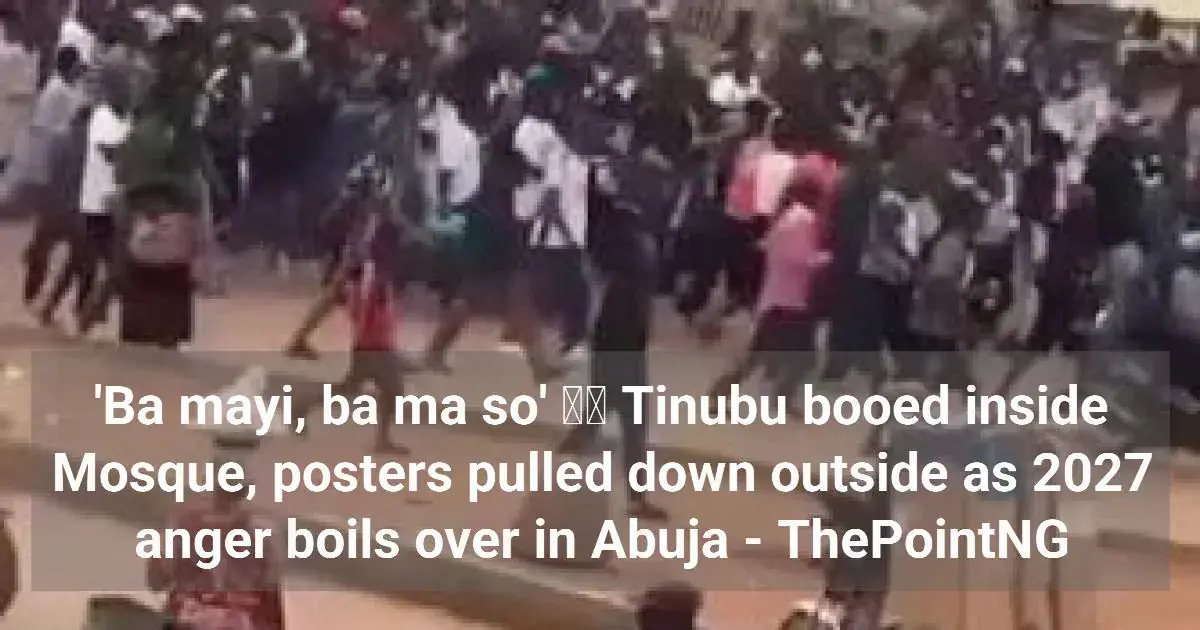
President Bola Tinubu's visit to the Shehu Shagari Central Mosque in Abuja on Friday turned into a dramatic scene, as he was openly booed by worshippers after Juma'at prayers. The incident occurred amid growing anger over hardship, hunger, insecurity, and heavy-handed security restrictions in the country. Eyewitnesses reported that the protest may have been triggered by the restrictions imposed on worshippers due to the president's visit. Security operatives prevented people from entering the mosque after the president arrived, and worshippers were not allowed to leave until he departed.
The booing started when some people expressed their frustration by chanting "Ba mayi, ba ma so," a Hausa expression meaning "We are not supporting you." Others chanted "Tinubu Must Go," a slogan associated with opposition to the president's re-election bid. The Chief Imam of the mosque, Rabiu Suleiman, had delivered a sermon based on lessons from Surah Al-Fatihah, urging Muslims to uphold the oneness of Allah and seek steadfastness through Him. He also prayed for peace and the president's good health, asking Allah to grant Tinubu greater wisdom and guide him towards leading Nigeria to prosperity.
The incident at the mosque was followed by another wave of anger on the streets of Area 1, where angry protesters, mostly youths, stormed the area and tore down posters and banners bearing the image of President Tinubu. Footage of the incident showed the protesters pulling down the campaign materials, stepping on them, and chanting "Tinubu Must Go" as onlookers watched. The protesters also complained about hardship, hunger, and insecurity in the country. The incident comes at a time when similar videos of youths tearing down Tinubu's posters and billboards have been circulating from different parts of the country.
The presidency has yet to officially react to the development. The incident occurred as President Tinubu faces growing political contestation ahead of the next presidential election, where he is expected to face major challenges from opposition figures, including Atiku Abubakar of the African Democratic Congress, and Peter Obi of the Nigeria Democratic Congress. On the eve of the 2023 general elections, Tinubu observed Friday prayers at various mosques, including the Berger Mosque and the National Mosque, without any unpleasant incidents.
The contrast between 2023 and 2026 could not have been starker, from warm reception then to open rejection now. The double embarrassment in Abuja - booed in a mosque, posters torn on the street - has been interpreted by many political observers as a warning sign for the Tinubu campaign. Just hours earlier, President Tinubu had issued a statement condemning political violence and ordering security agencies to confront thuggery "with full force" ahead of the 2027 elections.
Analysts say Friday's events in Abuja were not thuggery in the conventional sense, but expressions of popular discontent, from worshippers who felt locked out of their own mosque, and from youths who are frustrated with the current state of the country. The Inspector-General of Police had warned against the deliberate destruction, defacement, or unlawful removal of political campaign materials, saying such acts are criminal offences punishable by law. Despite that warning, the Abuja youths went ahead, tearing the materials in broad daylight, in full view of onlookers and cameras.
The incidents in Abuja have sparked widespread debate about the state of the country and the Tinubu administration's handling of the economy, security, and other critical issues. As the 2027 presidential election approaches, it remains to be seen how President Tinubu will address the growing concerns of Nigerians and respond to the backlash against his re-election bid. The events of Friday in Abuja have set the stage for what promises to be a contentious and closely contested election.
Key points
- President Tinubu was booed inside a mosque in Abuja on Friday, amid growing anger over hardship, hunger, insecurity, and heavy-handed security restrictions.
- Posters and banners bearing the image of President Tinubu were torn down by angry youths in Abuja, with chants of "Tinubu Must Go" echoing through the streets.
- The incidents in Abuja have sparked widespread debate about the state of the country and the Tinubu administration's handling of the economy, security, and other critical issues.