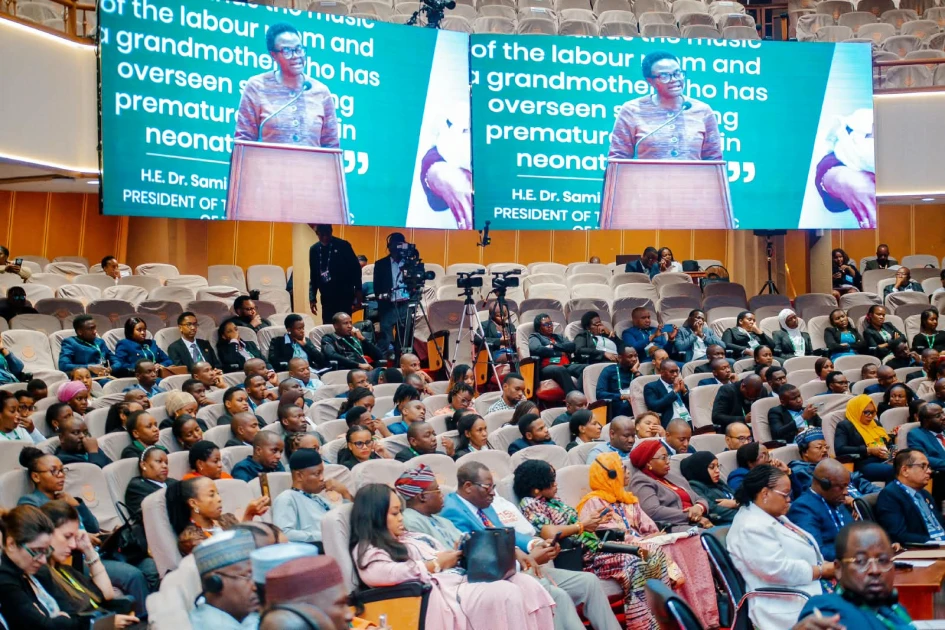
African legislative representatives gathered at the 153rd Inter-Parliamentary Assembly in Arusha, Tanzania, to discuss women, children, and adolescent health. The meeting emphasized the need for stronger legislation, adequate financing, and effective oversight of health services to reduce preventable maternal, newborn, and child deaths. President Samia Suluhu Hassan of Tanzania, represented by Presidential Adviser on Reproductive and Maternal Health, Ummy Mwalimu, called on African legislators to move beyond political commitments and take concrete actions.
According to Mwalimu, Africa has made progress in reducing maternal mortality, with a 42% decline in maternal mortality in African Union member states between 2000 and 2023. However, Africa still accounts for about 70% of global maternal deaths. The current pace of reduction is insufficient, and at this rate, Africa would not reach the Sustainable Development Goal target of 70 maternal deaths per 100,000 live births until around 2050.
Mwalimu highlighted President Samia's role as African Union Champion for Maternal and Child Health, with a roadmap to accelerate action on reproductive, maternal, newborn, child, and adolescent health across the continent. The continent has the capacity to make interventions needed to prevent maternal and child deaths, but the major challenge is translating knowledge and commitments into financed programs, functioning health services, and measurable results.
Speaker of the National Assembly of Tanzania, Mussa Hassan Zungu, emphasized that the health and wellbeing of women and children remain a priority. He noted that preventable deaths are often linked to barriers to accessing quality healthcare. Zungu stressed that parliament has vital responsibilities to support legislation, secure adequate and predictable financing, and oversee implementation to ensure resources reach health facilities and vulnerable communities.
Chair of the IPU African Geopolitical Group, Ali Kolotou Tchaïmi, said parliamentarians have a responsibility to ensure that health commitments reach ordinary citizens. He emphasized that lawmakers are responsible for passing laws, approving budgets, and overseeing governments, particularly in protecting vulnerable populations. South African National Assembly Speaker Angela Thokozile Didiza also called for stronger political leadership to address maternal deaths and childhood immunization.
Health experts, including Africa CDC's Head of Maternal, Newborn, Child and Adolescent Health and Sexual Reproductive Health, Professor Diana Nambatya Nsubuga, presented evidence that many maternal and newborn deaths are preventable. She identified major causes of maternal deaths, including hemorrhage, hypertensive disorders of pregnancy, and anemia, while prematurity and birth asphyxia remain significant causes of newborn deaths.
The meeting concluded with a renewed call for African parliaments to strengthen oversight, increase health financing, and ensure that commitments on maternal, newborn, and child health produce measurable results for communities. Newborn health advocate Doris Mollel urged parliamentarians to strengthen laws and budgets supporting premature and sick newborns, citing Tanzania's parliamentary action on parental leave and increased funding for newborn care as examples of effective action.
Key points
- African legislators urged to take action on maternal, child health
- Maternal mortality in African Union member states declined by 42% between 2000 and 2023
- Africa still accounts for about 70% of global maternal deaths