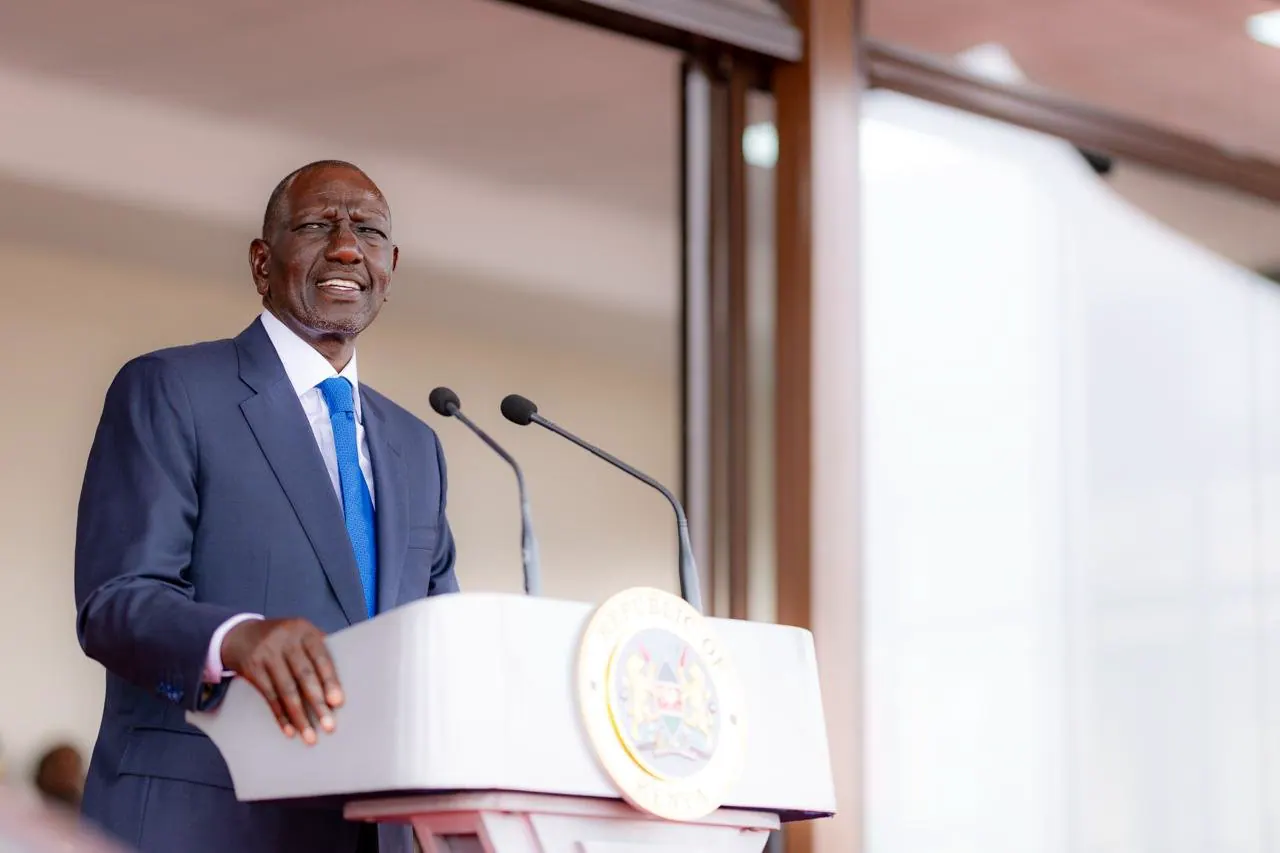
President William Ruto has defended the Government-to-Government (G-to-G) fuel importation deal signed between Kenya and three state-owned firms, saying it has helped cut out middlemen in the trade. Speaking in New York to Kenyans living in the United States, Ruto emphasized that the arrangement has been a vital stabilizer of supply and foreign exchange. The deal, signed in March 2023, has ensured a consistent and reliable fuel supply, he added.
Ruto dismissed claims that handpicked local marketers under the arrangement act as costly middlemen. He stated that the G-to-G model is currently the best model for Kenya to import fuel, eliminating brokers and ensuring a stable supply. When he took office, Kenya faced a fuel shortage, and the G-to-G model helped resolve the issue. The President also mentioned that Uganda's claims of importing fuel from Kenya through middlemen occurred seven years ago, before the introduction of the G-to-G model.
Kenya entered into Master Framework Agreements (MFAs) with Aramco Trading Fujairah FZE, Abu Dhabi National Oil Company Global Trading Ltd, and Emirates National Oil Company (Singapore) Private Limited in March 2023. The three International Oil Marketers (IOCs) were required to source local suppliers to help with fuel logistics. Six Oil Marketing Companies have been involved in the arrangement: Gulf Energy Limited, Galana Energies Limited, Oryx Energies Kenya Limited, One Petroleum Limited, Asharami Synergy Limited, and BE Energy Limited.
According to Energy and Petroleum Cabinet Secretary Opiyo Wandayi, the G-to-G arrangement has ensured stability and eased pressure on the country's forex market. The deal aimed to alleviate US Dollar liquidity challenges by accumulating additional foreign reserves of $500 million per month. The extended credit terms have helped ease the demand for US Dollars.
Wandayi stated that a further renegotiation of the deal in March 2025 guaranteed the supply of super petrol at $84 per metric ton, diesel at $78 per metric ton, and Jet A1 at $97 per metric ton. These premiums have remained fixed even during the height of the Middle East crisis. The payment for refined petroleum products using Kenya shillings backed by a 180-day Letter of Credit has ensured accumulation of forex reserves and stabilized the US dollar-Kenya shilling exchange rate.
The G-to-G arrangement has come under focus following claims by President Yoweri Museveni that Uganda was importing fuel from Kenya through middlemen. However, Ruto emphasized that the arrangement has eliminated brokers and ensured a stable fuel supply. The deal has been crucial in ensuring a consistent and reliable fuel supply, and the government maintains that it is the best model for Kenya.
The ministry noted that the G-to-G arrangement has ensured stability and eased pressure on the country's forex market. The deal has accumulated additional foreign reserves and stabilized the US dollar-Kenya shilling exchange rate. With the G-to-G model, Kenya has sorted out its fuel supply problem in a permanent way, according to President Ruto.
Key points
- The G-to-G fuel importation deal has eliminated brokers and stabilized supply.
- The deal has accumulated additional foreign reserves of $500 million per month.
- The arrangement has ensured a consistent and reliable fuel supply in Kenya.