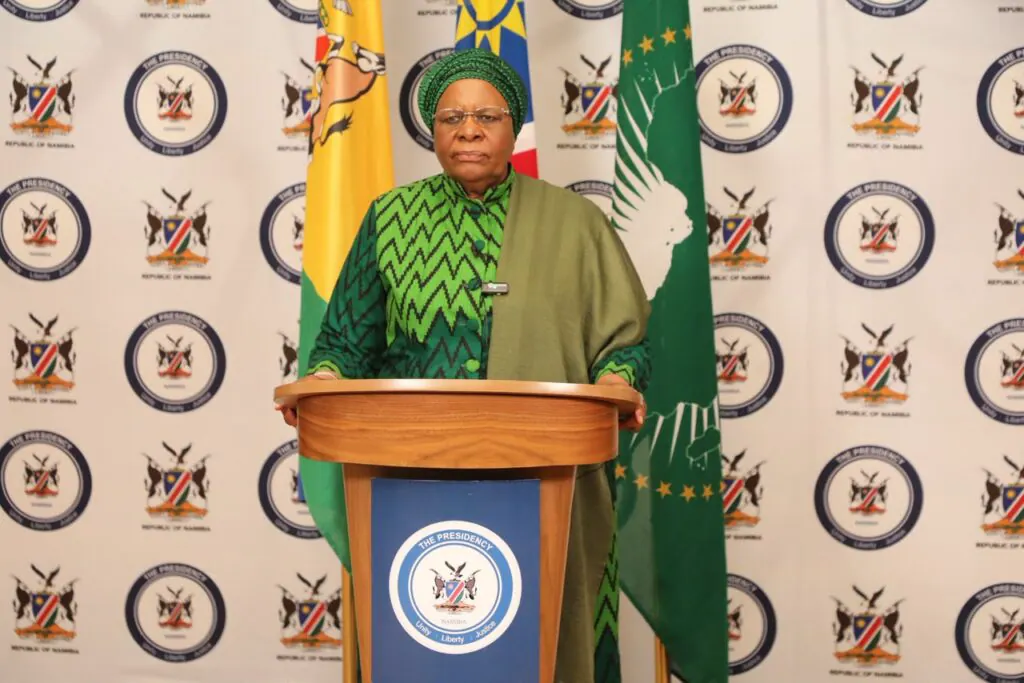
On October 5, 2026, Namibian President Dr Netumbo Nandi-Ndaitwah delivered a high-level address to the nation regarding the outbreak of foot-and-mouth disease in the Karasburg Veterinary District of the //Kharas Region. The disease has caused uncertainty and distress among farmers, workers, and businesses across the livestock industry, putting livelihoods at stake. The President emphasized the importance of the livestock and meat industry as a cornerstone of Namibia's economy, sustaining families and communities beyond the affected areas.
The outbreak was confirmed on September 23, 2026, through laboratory testing of samples collected during veterinary surveillance. President Nandi-Ndaitwah noted that Namibia has experience in responding to foot-and-mouth disease, particularly in the zone north of the Veterinary Cordon Fence. The government has activated response mechanisms, and the President has thanked the Acting Minister of Agriculture, Fisheries, Water and Land Reform, Dr. Charles Mubita, and veterinary officials for their prompt action.
As of October 5, 2026, surveillance teams have inspected 29,313 animals across 68 farms, with 127 confirmed positive cases across 15 farms. The government has constituted 20 surveillance teams and established 10 roadblocks across the //Kharas Region to support the response. The President directed the Joint Cabinet Committee to convene urgently on October 3, 2026, which led to Cabinet meeting on October 4 to assess the situation and determine interventions under the Animal Health Act.
The Cabinet has directed the immediate implementation of the relevant provisions of the Animal Health Act and the strengthening of disease-control and biosecurity measures. The Critical Containment Response Plan, approved by Cabinet on October 4, 2026, includes establishing a containment buffer zone in the Karasburg Veterinary District to prevent the disease from spreading to unaffected regions. The plan also provides for repairs to the Namibia–Botswana border fence and the erection of veterinary cordon fencing in high-risk areas along the border with South Africa.
President Nandi-Ndaitwah recognized the strain that movement restrictions and disruptions to trade are placing on farmers, workers, and businesses. She acknowledged that many families are concerned about their next income and ability to sustain their livelihoods due to the uncertainty caused by the outbreak. The President called on every Namibian to support the effort to contain the disease, emphasizing that protecting the livestock and meat industry's value chain is a national responsibility.
The President's address aimed to assure the nation that the government is acting to contain the disease and prevent its spread. She highlighted the importance of cooperation and coordination among institutions to contain the outbreak. The government has been working under difficult conditions, and the President expressed gratitude to all personnel involved in the response efforts.
The foot-and-mouth disease outbreak has significant implications for Namibia's economy and the livelihoods of those dependent on the livestock industry. The President's call for national cooperation and support aims to mitigate the impact of the outbreak and ensure a swift return to normal production and trade. The government's response efforts will continue to focus on containing the disease, preventing its spread, and protecting unaffected herds.
Key points
- The Namibian government has activated response mechanisms to contain the foot-and-mouth disease outbreak, including surveillance teams and roadblocks.
- The outbreak has caused uncertainty and distress among farmers, workers, and businesses across the livestock industry, putting livelihoods at stake.
- President Nandi-Ndaitwah has called on every Namibian to support the effort to contain the disease, emphasizing that protecting the livestock and meat industry's value chain is a national responsibility.