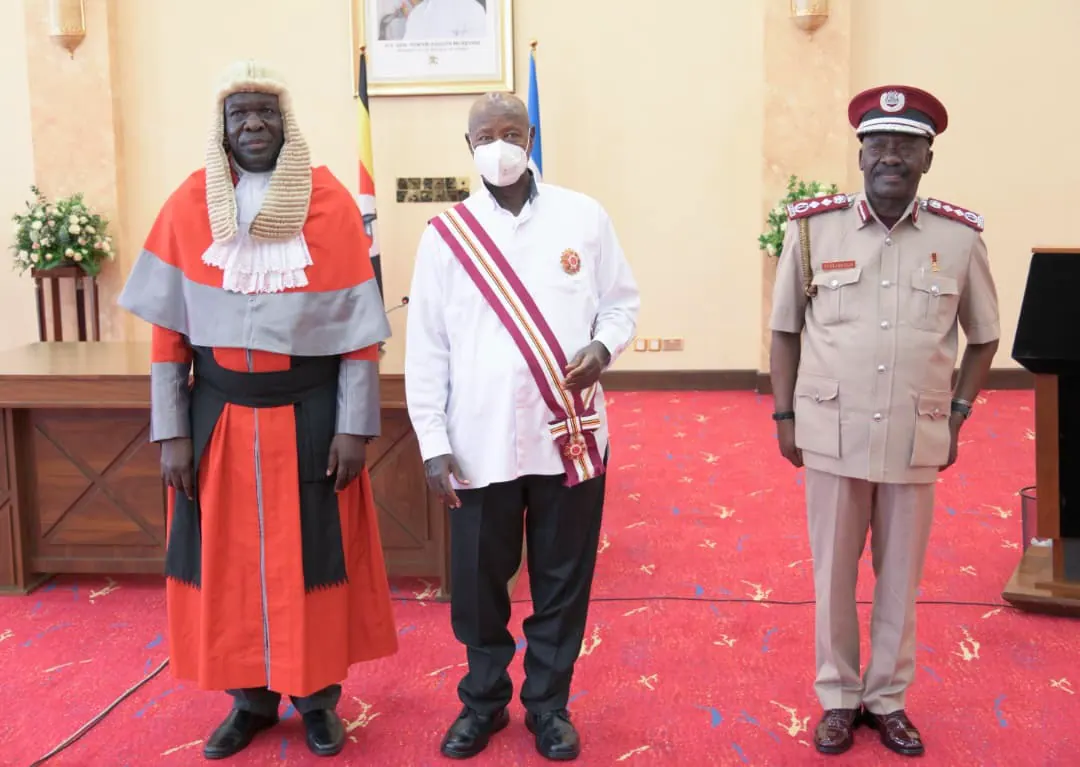
President Yoweri Kaguta Museveni has highlighted Uganda's economic recovery journey since 1986, from an economy valued at approximately $3.9 billion to $69.3 billion. Speaking during Uganda's 64th Independence Day celebrations on October 9, 2026, President Museveni emphasized the need for accelerated industrialization, value addition, and household wealth creation. The celebrations were held virtually from State House, Entebbe, under the theme: "Embracing Our Sovereignty with Hope and Visionary Leadership."
Uganda attained independence from Britain on October 9, 1962. President Museveni reflected on the country's journey, stating that 24 of the 64 years had been lost to political instability, conflict, and economic decline before the National Resistance Movement (NRM) government took power in 1986. He noted that the economy had contracted to approximately $3.9 billion by 1986, requiring a phased recovery strategy that has since expanded the country's productive base.
President Museveni projected that Uganda's economy would reach nearly $74 billion by June 2027, driven by industrialization, value addition, the anticipated contribution of oil production, and the growth of new sectors. He cited the recovery of tea production, which increased from three million kilogrammes to 60 million kilogrammes, alongside the revival of coffee, cotton, and tourism. Coffee production rose from approximately three million bags to nine million bags.
The President identified value addition as a crucial priority in Uganda's pursuit of economic independence, arguing that exporting raw materials deprives producers of substantial earnings. He noted that Uganda had made progress in processing cotton, milk, bananas, coffee, and fruits but needed to expand these activities to capture more value locally. President Museveni used coffee as an example, explaining that a kilogramme of raw coffee could fetch approximately $2, while processed coffee products could command significantly higher prices.
President Museveni emphasized the need for changing attitudes towards agricultural products that colonial economic structures had largely treated as subsistence goods rather than commercial opportunities. He questioned why milk, fruits, maize, beans, bananas, millet, and fish had not been fully developed as income-generating commodities. The President recalled seeing imported milk products in shops in Ntungamo in the early 1950s while local milk producers struggled to access commercial markets.
The President outlined the NRM government's five phases of economic transformation: minimum recovery, expansion, diversification, value addition, and the development of a knowledge-based economy. He cited fruit growing and other agricultural activities as examples of products that could contribute more significantly to the economy when farmers were organised, supported, and connected to markets. The diversification strategy aimed to reduce dependence on a narrow range of traditional exports and broaden the country's productive capacity.
President Museveni urged Ugandans to see industrial processing not merely as an economic activity but as a strategic priority for retaining wealth, creating jobs, and strengthening the country's ability to finance its own development. He identified the knowledge economy as the fifth phase of Uganda's economic transformation, emphasising the growing role of science, technology, and innovation in wealth creation. The President cited electric vehicle manufacturing and pharmaceuticals, alongside computers and other knowledge-intensive products, as areas in which Uganda was seeking to expand its capabilities.
Key points
- President Museveni aims to grow Uganda's economy to $74 billion by June 2027.
- The President emphasizes the need for value addition to capture more value locally.
- Uganda's economic transformation involves five phases, including minimum recovery, expansion, diversification, value addition, and the development of a knowledge-based economy.