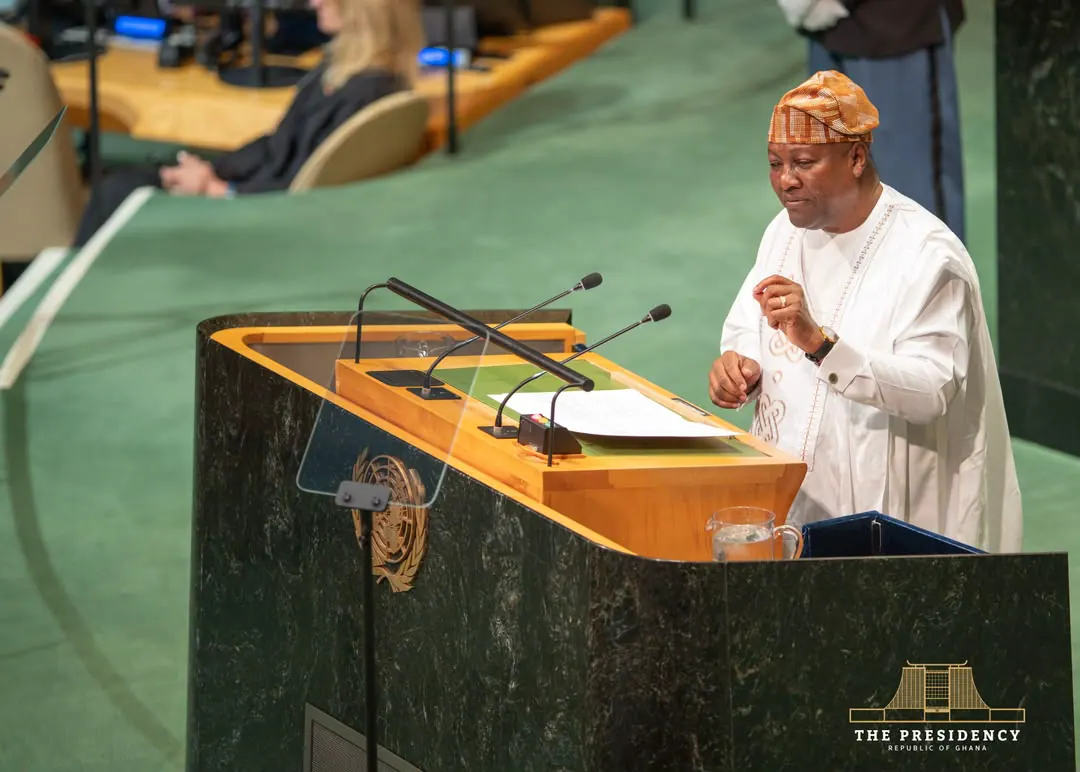
On Thursday, September 24, President John Dramani Mahama of Ghana addressed the 81st Session of the United Nations General Assembly, emphasizing the need for deeper international action on reparatory justice. He highlighted the historical crimes of the transatlantic slave trade and its ongoing impact on Africa and people of African descent. President Mahama recalled Ghana's role in advancing international recognition of this trafficking and enslavement.
President Mahama pointed to the adoption of a Ghana-led resolution at the UN in March 2026 as a crucial step towards acknowledging historical injustice and its continuing consequences. He stressed that addressing historical atrocities requires honesty and accountability, stating that "true healing requires truth; truth requires acknowledgement; and acknowledgement must lead to meaningful repair." This approach is fundamental to pursuing truth and meaningful repair for past injustices.
The President argued that the effects of slavery and the transatlantic slave trade extend beyond the loss of lives and communities to include enduring economic and structural consequences that continue to affect Africa. He emphasized that meaningful repair should involve comprehensive reforms to international trade, financing, and resource extraction systems. These reforms aim to ensure that African countries retain more value from their natural resources.
President Mahama highlighted systemic barriers facing the continent, including unfair global trade regimes, predatory resource extraction, discriminatory credit ratings, unsustainable debt burdens, and the export of raw materials from Africa without real value addition and job creation. He stated that real repair demands structural transformation and dismantling the persistent engines of exploitation that perpetuate these inequalities.
The President noted that Ghana welcomes moves by countries such as the Netherlands, Germany, and France to engage in discussions on reparatory justice and restitution. However, he stressed that Africa's ultimate objective is not simply financial compensation but a fundamental transformation of the structures shaping economic relations between Africa and the developed world.
President Mahama emphasized that bridging historical accountability with contemporary economic equity is essential for establishing a balanced, resilient framework for international cooperation and sustainable development. This approach aims to address the historical injustices while promoting equitable economic relationships and sustainable development for all parties involved.
By calling for deeper international action on reparatory justice, President Mahama reinforced Ghana's commitment to pushing for African integration, peace, and equitable global systems. His address at the UN General Assembly underscored the importance of collective action and cooperation in addressing historical injustices and promoting a more equitable world order.
Key points
- President Mahama calls for deeper international action on reparatory justice.
- Ghana-led resolution adopted at the UN in March 2026 acknowledges historical injustice and its consequences.
- Meaningful repair requires structural transformation of global systems, including trade, financing, and resource extraction.