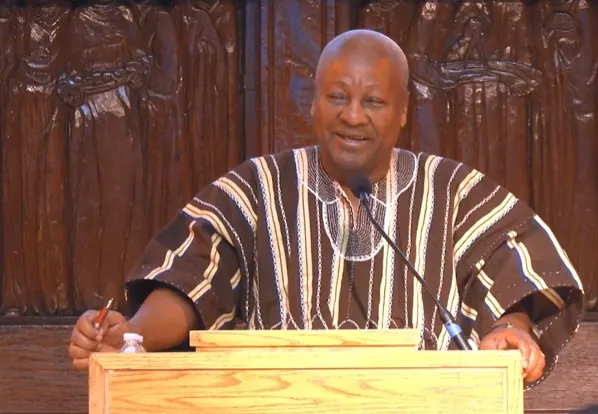
On September 25, former Ghanaian President John Dramani Mahama spoke at a town hall meeting with the Ghanaian community in New York, highlighting the need for a broader conversation on regulating new media platforms like TikTok. He emphasized that the rapid democratization of information, where anyone with a mobile phone can publish content, has created challenges that traditional media regulation was not designed to address. This shift has raised concerns about information integrity, anonymous content, and balancing free expression with harmful or misleading material.
President Mahama pointed out that new media differs significantly from traditional journalism, where professional journalists and established media organizations have reputations to protect. In contrast, anyone with a phone can publish content without accountability, and algorithms can amplify this content rapidly. He cited examples of traditional media outlets like the Daily Graphic and Channel One, where journalists put their professional credibility behind the stories they publish. This difference has made it difficult to regulate new media platforms effectively.
The President expressed concern about the use of anonymous accounts to publish insulting and vile content. He noted that his call for a discussion on regulation was not motivated by a desire to shield himself from criticism or insults, as he claimed to have a "tough skin." However, he was aware of recent arrests linked to social media activity, including cases where people were allegedly arrested for insulting him. These incidents have raised questions about the limits of free expression and the role of the police in regulating online content.
President Mahama emphasized that determining where legitimate freedom of expression ends and conduct that requires intervention begins is a significant challenge. He suggested that the government could instruct the police not to arrest people for anything they say online, but questioned whether that would reflect the position Ghanaians want to adopt. He also noted that police intervention could go to extremes, making it difficult to determine where to draw the line once arrests for social media activity begin.
To address these concerns, President Mahama proposed that the Ghana Journalists Association (GJA), Media Foundation for West Africa (MFWA), and other stakeholders come together to examine the issue and make recommendations. He suggested that a collective decision should be made on regulating new media, rather than leaving it to the government alone. This forum would discuss whether the police should get involved in regulating online content and how to balance free expression with the need to prevent harm.
President Mahama stressed that while Ghanaians value freedom of expression, it is not an absolute license. He cited the consequences that could follow a threat against the President of the United States as an example of the limits of free speech. He emphasized that the recommendations from the forum would be placed before the government to guide how such matters should be handled. This approach aims to find a balance between protecting freedom of expression and preventing harm.
Ultimately, President Mahama's call for a discussion on regulating new media platforms like TikTok reflects a broader concern about the impact of these platforms on society. As the use of social media continues to grow, governments and stakeholders must work together to find effective solutions that balance competing interests. By engaging with stakeholders and exploring different approaches, Ghana can develop a more nuanced understanding of the challenges and opportunities presented by new media platforms.
Key points
- President Mahama emphasizes the need for a collective decision on regulating new media platforms.
- The rapid democratization of information has created challenges that traditional media regulation was not designed to address.
- President Mahama proposes a forum with stakeholders to examine the issue and make recommendations on regulating new media.