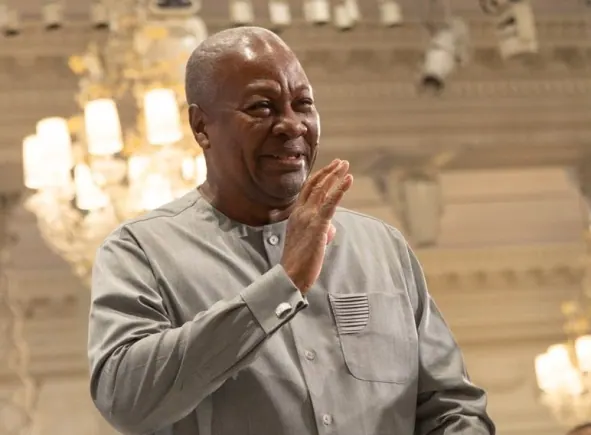
President John Dramani Mahama of Ghana is set to address the 81st Session of the UN General Assembly today. His speech is expected to focus on reparatory justice, a topic he has been closely involved with. As the former chair of the 24-member Global Advisory Panel for Reparatory Justice, President Mahama has been working to advance the cause of reparations for Africans and people of African descent.
President Mahama's address will report on the significant progress made since the passage of a historic Ghana-led resolution on reparatory justice. The resolution, which was passed earlier this year, has already yielded concrete actions from former colonial powers and institutions. Sources close to the President's delegation said that he will outline the next steps and strategy for the global reparations movement.
The President's message will emphasize that reparatory justice is not about retribution, but about building a fair and just world without racism and discrimination. He will frame the issue as part of a broader effort to create a world of inclusivity, where individuals are not judged by their skin color or place of origin. This approach is expected to resonate with the international community.
The reparatory justice effort has already seen significant developments. France has repealed its 17th-century Code Noir, a law that legalized slavery and codified Africans as property. The French government has also expressed its desire to collaborate with Ghana on establishing a scientific commission to research and build a basis for reparatory justice.
Faith-based institutions have also been making amends. Pope Leo XIV has apologized on behalf of the Catholic Church, acknowledging the role of previous papal bulls that justified enslavement. The Church of England has also apologized for its role and pledged 100 million pounds towards reparatory efforts. These developments indicate growing support for the reparations movement.
European countries that abstained from the vote on the resolution have since begun engaging with Ghana on how to atone for their historical roles. The UK and Portugal have signaled their support, and many European countries have started returning African heritage and spiritual objects held in their museums and institutions.
President Mahama's address will also touch on the issue of global health and development. He will argue that the Global South must gain control over its health and development destiny, citing the need for a new approach that prioritizes country ownership and sovereignty. The President will formally present the outcomes of the Accra Reset process, which aims to address the challenges faced by the Global South.
Key points
- President Mahama's address will focus on reparatory justice and the need for a fair and just world without racism and discrimination.
- The President will outline the next steps and strategy for the global reparations movement.
- European countries have begun engaging with Ghana on how to atone for their historical roles, indicating growing support for the reparations movement.