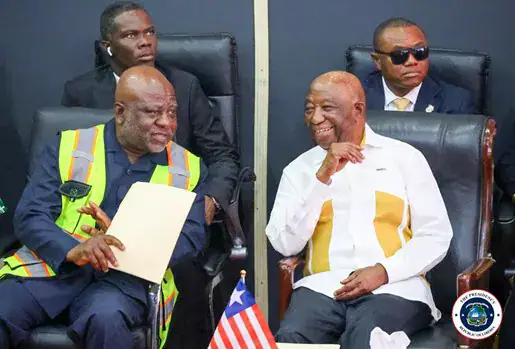
On November 16, 2026, President Joseph Nyuma Boakai officially launched the deployment of 285 heavy earthmoving and support machines, known as the "Yellow Machines," across all 15 counties of Liberia. This move aims to break decades of rural isolation in Liberia, particularly during the rainy season when roads become impassable. The rollout marks the largest decentralized procurement of road construction equipment in the nation's history.
The fleet of Yellow Machines is organized into 19 strategically positioned operational hubs serving all 15 counties. According to President Boakai, the machines represent a direct lifeline to rural farmers, students, and patients. He stated that poor road conditions have remained one of the greatest obstacles to development in rural communities, causing food prices to rise and agricultural produce to be lost during the rainy season.
Deputy Minister of Public Works for Technical Services Prince Tamba noted that a recent national survey mapped approximately 43,000 kilometers of roads nationwide, with 60% being secondary and feeder roads. The new fleet is tasked with rehabilitating and maintaining more than 8,000 kilometers of critical feeder and farm-to-market corridors. Tamba emphasized that the project will help decentralize work and address challenges on feeder and secondary roads.
President Boakai issued a stern directive establishing a "maintenance-first" approach as the non-negotiable standard for the project. He charged the Special Presidential Project Coordinating Committee (SPPCC), the Ministry of Public Works (MPW), and the Yellow Machines Board of Authority (YMBOA) with enforcing strict preventive maintenance schedules and performance monitoring. Boakai warned that history will judge the initiative by the durability of Liberia's rural road network five years from now.
The President announced plans to introduce performance incentives, including rewarding counties that demonstrate exemplary equipment upkeep. He emphasized that the machines must be operated responsibly, maintained professionally, and managed efficiently. Boakai also paid tribute to Vice President Jeremiah Kpan Koung and other officials who contributed to the procurement of the Yellow Machines.
The ceremony, moderated by LBS Director General Eugene L. Fahngon, featured a live, county-by-county roll call, which stretched from Grand Kru County in the southeast to Lofa County in the north. Local authorities and jubilant citizens stood beside the newly stationed machines in every county capital, marking a historic moment in Liberia's infrastructure development.
The launch of the Yellow Machines is a flagship pledge of the Boakai administration to rescue interior communities cut off by impassable roads. The initiative aims to transform rural infrastructure, strengthen the agricultural economy, and improve the daily lives of Liberians across the country. The President's administration has taken a significant step towards building a more connected, productive, and prosperous nation.
Key points
- The deployment of 285 Yellow Machines aims to improve over 8,000 kilometers of rural roads in Liberia.
- The project adopts a "maintenance-first" approach to ensure the durability of the equipment and the road network.
- The initiative is expected to transform rural infrastructure, strengthen the agricultural economy, and improve the daily lives of Liberians.