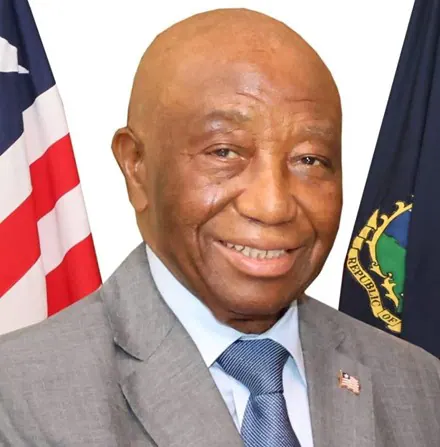
On Thursday, September 24, President Joseph Nyuma Boakai, Sr. of Liberia addresses the 81st Session of the United Nations General Assembly. This marks a significant shift for Liberia, as the country now sits on the UN Security Council, a position no Liberian leader has held in over six decades. The country secured its non-permanent seat on June 3, 2025, with 181 votes, far above the 128 required.
Liberia's presence on the Security Council is a notable achievement, especially considering the country's history. Two decades ago, Liberia was the subject of UN Chapter VII mandates and hosted thousands of foreign troops under the UN Mission in Liberia (UNMIL). The country has since made significant progress, and its seat on the Council is seen as a testament to its diplomatic evolution and foreign policy vision.
President Boakai's address to the General Assembly is expected to focus on Liberia's priorities, including peace and security, climate action, youth, women's leadership, and reform of the multilateral system. As a member of the Security Council, Liberia will play a direct role in shaping international decisions on various fronts. The country will also take the Council's rotating presidency in December, giving it charge of the Council's program of work for the month.
Liberia's return to the Security Council is seen as a restoration of its heritage as a pillar of pan-Africanism and multilateralism. The country was a founding member of both the United Nations and the Organization of African Unity, now the African Union. By reclaiming a Security Council seat, the Boakai administration aims to re-establish Liberia as a serious force in global governance.
The seat on the Security Council also has implications for Liberia's economy. Government officials believe that nations with a strong international presence are more likely to attract foreign direct investment, infrastructure partnerships, and bilateral economic agreements. The seat is seen as a mark of institutional stability and lower sovereign risk, which can open funding channels for domestic projects.
The administration argues that Liberia's steady governance offers a model of stability and constructive regional diplomacy, particularly in the Economic Community of West African States (ECOWAS) region. The region has faced democratic setbacks, security threats, and constitutional crises, and Liberia's presence on the Council is seen as a positive development.
Critics often question what a seat in New York means for ordinary Liberians. The government responds that global standing translates into priority access to multilateral funds, climate financing, and strategic trade partnerships. This, in turn, can feed directly into the administration's development agenda, from roads and agriculture to education and the rule of law.
Key points
- President Boakai addresses the 81st Session of the United Nations General Assembly as Liberia sits on the UN Security Council.
- Liberia secured its non-permanent seat on June 3, 2025, with 181 votes.
- The country will take the Council's rotating presidency in December.