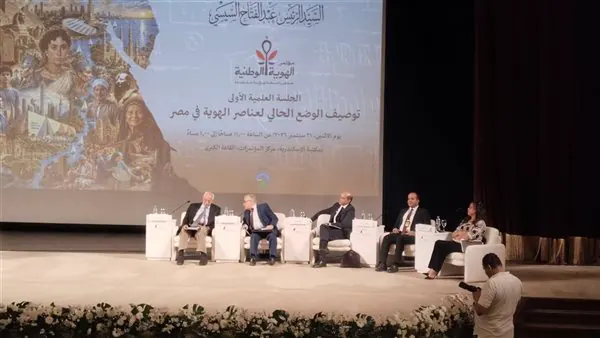
Egypt's national identity has become a necessity linked to national security and sustainable development, according to Khaled Foda, a senior advisor to the Egyptian President. Foda emphasized the importance of protecting national identity and promoting a sense of belonging among citizens to their cultural and historical roots. He made these remarks at the opening of a conference titled "National Identity: Rooted in the Past, Vision for the Future," held at the Bibliotheca Alexandrina under the auspices of President Abdel Fattah El-Sisi.
The conference, which runs from September 21 to 23, brings together prominent figures, thinkers, and specialists to discuss the significance of national identity. Foda expressed his delight in participating in the event, noting that the Bibliotheca Alexandrina is a cultural and scientific institution that symbolizes Egypt's national and human memory. He highlighted the city's historical significance as a meeting point for various civilizations and cultures throughout the ages.
Foda stressed that the discussion of national identity comes at a critical time, given the rapid regional and international challenges facing the world. He described Egypt's national identity as a diverse historical and cultural product shaped by the interactions of various civilizations, including the Pharaonic, Greek, Roman, Coptic, and Islamic civilizations. This diversity has created a unique national fabric, he added.
According to Foda, national identity is not a static concept, but a living entity that can grow and evolve while preserving its original roots. He emphasized that true national identity gives citizens a sense of belonging and pride in their roots, while also allowing them to interact with the modern world, technology, and globalization without losing their cultural distinctiveness.
Foda highlighted that national identity is not limited to intellectual or academic discussions, but is shaped in everyday life, in streets, villages, cities, and centers. He noted that local development goes beyond infrastructure projects, such as building roads and improving public services, and also involves rediscovering and developing Egypt's cultural identity in various regions.
Foda outlined five key areas for addressing national identity, including building digital awareness among new generations, promoting cultural economy and heritage industries, and supporting local institutions and community leaders. He emphasized that preserving national identity requires a collective effort from government, civil society, and individuals.
The advisor to the Egyptian President called on participants to take responsibility for producing practical outcomes from the conference, rather than just issuing recommendations. He stressed that the goal is to develop implementable solutions that can contribute to consolidating national identity and supporting Egypt's development efforts.
Key points
- National identity is crucial for Egypt's security and sustainable development.
- Preserving national identity requires a collective effort from government, civil society, and individuals.
- Egypt's national identity is a diverse historical and cultural product shaped by the interactions of various civilizations.