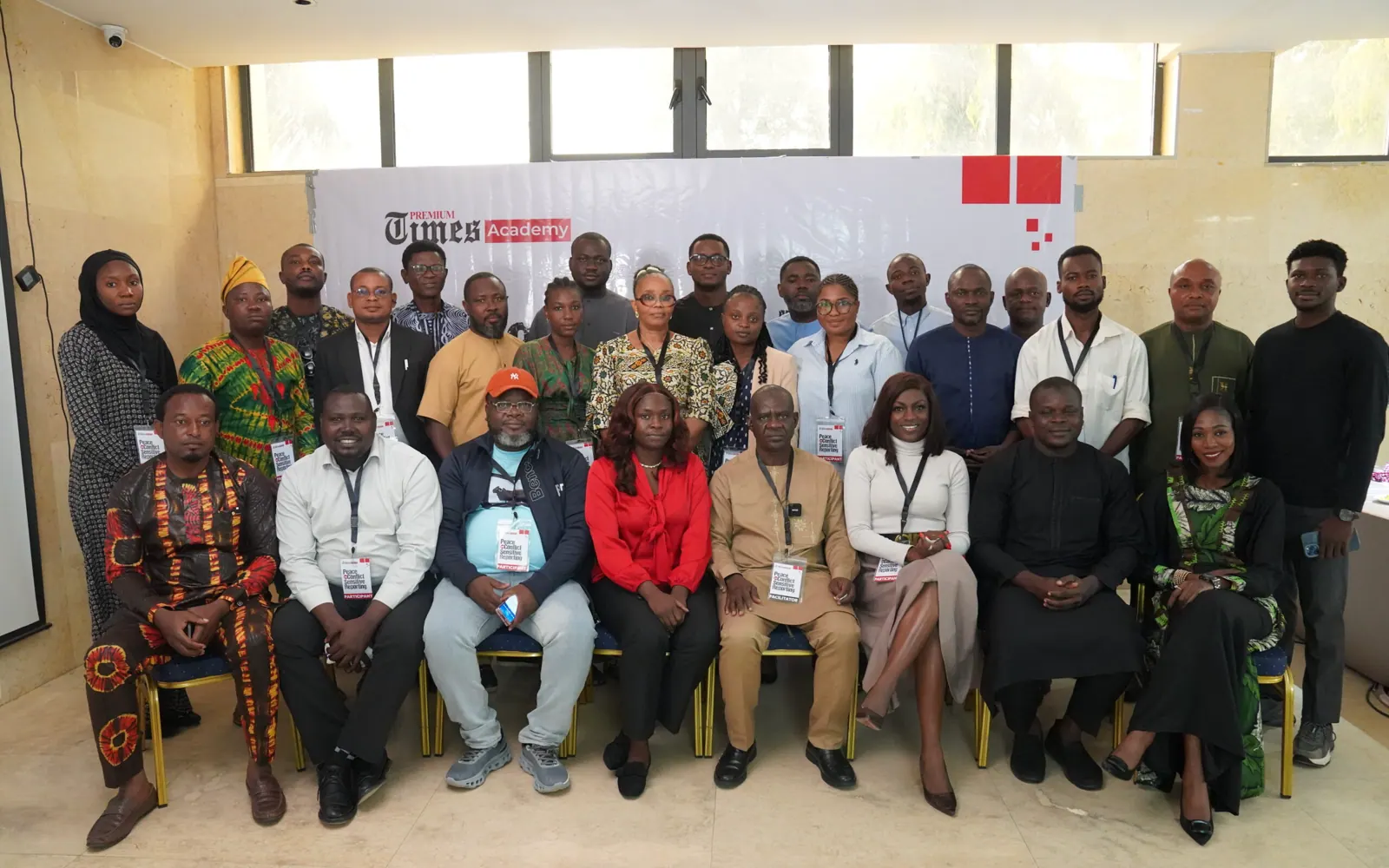
The Premium Times Academy, a capacity-building arm of the Premium Times Group, recently conducted a two-day training for journalists from various media outlets in Abuja. The training focused on peace and conflict-sensitive reporting, emphasizing factual and accurate reporting. The program included sessions on understanding the nature, causes, and dynamics of conflicts, as well as ethical standards for reporting on hate speech and fake information. The training aimed to equip journalists with the skills needed to report on conflicts effectively.
The training featured facilitators from academic and media backgrounds, including Professor Isaac Albert, a Professor of African history, peace, and conflict studies. Professor Albert helped participants understand the nature, causes, and dynamics of conflict, stressing the importance of investigative journalism in reporting accurately. He advised journalists to dig deep beyond the surface to report the actual conflict and avoid sensationalism, unverified claims, and hate speech. According to Professor Albert, such practices can escalate conflicts in society.
Associate Professor Joan Hassan, a communication and media studies expert, also emphasized the importance of objectivity, avoiding hate speech, and refraining from circulating fake news. She encouraged news organizations to condemn hate speech, particularly during electioneering seasons. With Nigeria preparing for its 2027 general elections, public figures have made controversial remarks, highlighting the need for responsible reporting. Professor Hassan encouraged journalists to condemn such rhetoric and free their reporting from bias.
The Managing Editor of PREMIUM TIMES, Idris Akinbajo, led a discussion on applying conflict-sensitive principles to practical reporting scenarios. He emphasized the fundamental principle of accuracy in journalism, stressing that journalists should report facts. Mr. Akinbajo and Professor Albert highlighted the importance of understanding the cycles of conflict and recognizing its early stages. They urged journalists to focus on the root problems and not just violence, as this can help send early warning signals about impending confrontations.
Musikilu Mojeed, the editor-in-chief of PREMIUM TIMES, shared insights on sourcing relevant humanitarian information. He explained that humanitarian crises create a need for urgent information for affected populations, responders, and decision-makers. Reliable information supports humanitarian response, and Mr. Mojeed urged journalists to focus on solution-based journalism in humanitarian crises. He stressed the importance of data in humanitarian reports, highlighting its role in indicating trends, exposing gaps in humanitarian responses, and verifying claims.
Mr. Mojeed also emphasized the need for journalists to fact-check data, as it can be manipulated. He encouraged journalists to go beyond reporting on casualties and impact, instead exploring how communities are trying to resolve their issues. Oluwaseyi Ayeni, Standard Editor at PREMIUM TIMES, discussed guidelines for sourcing news from social media, reminding media practitioners that their role has evolved from gatekeepers to gatecheckers. She stressed the verification and authentication of content through source, content, and permission checking.
The Premium Times Academy's training aimed to upskill journalists in reporting on conflicts, verifying news sourced from social media, and gathering humanitarian information. The program's focus on peace and conflict-sensitive reporting is particularly relevant in Nigeria's current context, with the country preparing for its 2027 general elections. By equipping journalists with the necessary skills, the training seeks to promote responsible reporting and mitigate the spread of hate speech and fake information.
Key points
- The Premium Times Academy trained journalists on peace and conflict-sensitive reporting in Abuja.
- The training emphasized factual and accurate reporting, as well as understanding the nature, causes, and dynamics of conflicts.
- Journalists were encouraged to focus on solution-based journalism in humanitarian crises and to verify information sourced from social media.