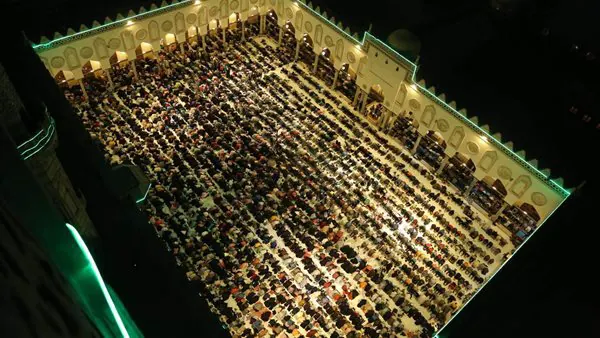
In Egypt, Muslims prepare for another day of worship and reflection as they observe the five daily prayers. The relationship between a servant and their Lord is strengthened through prayer, which is a fundamental aspect of Islam. By performing the five daily prayers, Muslims renew their covenant with Allah and demonstrate their need for Him. Prayer teaches humility and submission to Allah, reminding believers of His greatness and power.
Prayer times vary across different cities and governorates in Egypt. On Wednesday, September 23, 2026, the Fajr azan will be at 5:17 am in Cairo, 5:21 am in Alexandria, 5:15 am in Aswan, and 5:12 am in Ismailia. These times are based on data from the Egyptian General Survey Authority. The five daily prayers are a fundamental aspect of Islamic worship, and adhering to their designated times helps Muslims maintain discipline and balance in their lives.
The five daily prayers have specific times, and Muslims are expected to perform them accordingly. In Cairo, the prayer times are as follows: Fajr at 5:17 am, Dhuhr at 12:47 pm, Asr at 4:14 pm, Maghrib at 6:51 pm, and Isha at 8:08 pm. Similarly, in Alexandria, the prayer times are: Fajr at 5:21 am, Dhuhr at 12:53 pm, Asr at 4:19 pm, Maghrib at 6:56 pm, and Isha at 8:14 pm.
The call to prayer, or azan, is an essential part of Islamic worship. Muslims are encouraged to respond to the azan by repeating the phrases uttered by the muezzin. The Prophet Muhammad (peace be upon him) emphasized the importance of responding to the azan and even ordered Muslims to say the same phrases as the muezzin. This practice fosters a sense of unity and community among Muslims.
In addition to Cairo and Alexandria, prayer times vary in other cities and governorates across Egypt. In Aswan, the prayer times are: Fajr at 5:15 am, Dhuhr at 12:41 pm, Asr at 4:06 pm, Maghrib at 6:44 pm, and Isha at 7:57 pm. In Ismailia, the prayer times are: Fajr at 5:12 am, Dhuhr at 12:43 pm, Asr at 4:10 pm, Maghrib at 6:47 pm, and Isha at 8:04 pm.
The importance of prayer in Islam cannot be overstated. Prayer serves as a reminder of Allah's greatness and power, and it helps Muslims maintain a strong connection with their Lord. By performing the five daily prayers, Muslims demonstrate their commitment to their faith and their desire to lead a righteous life.
As Muslims in Egypt and around the world prepare for another day of worship, they are reminded of the significance of prayer in their lives. By adhering to the designated prayer times and responding to the azan, Muslims can strengthen their relationship with Allah and cultivate a sense of community and unity.
Key points
- Prayer times in Egypt vary across different cities and governorates.
- The five daily prayers are a fundamental aspect of Islamic worship.
- Responding to the azan is an essential part of Islamic worship.