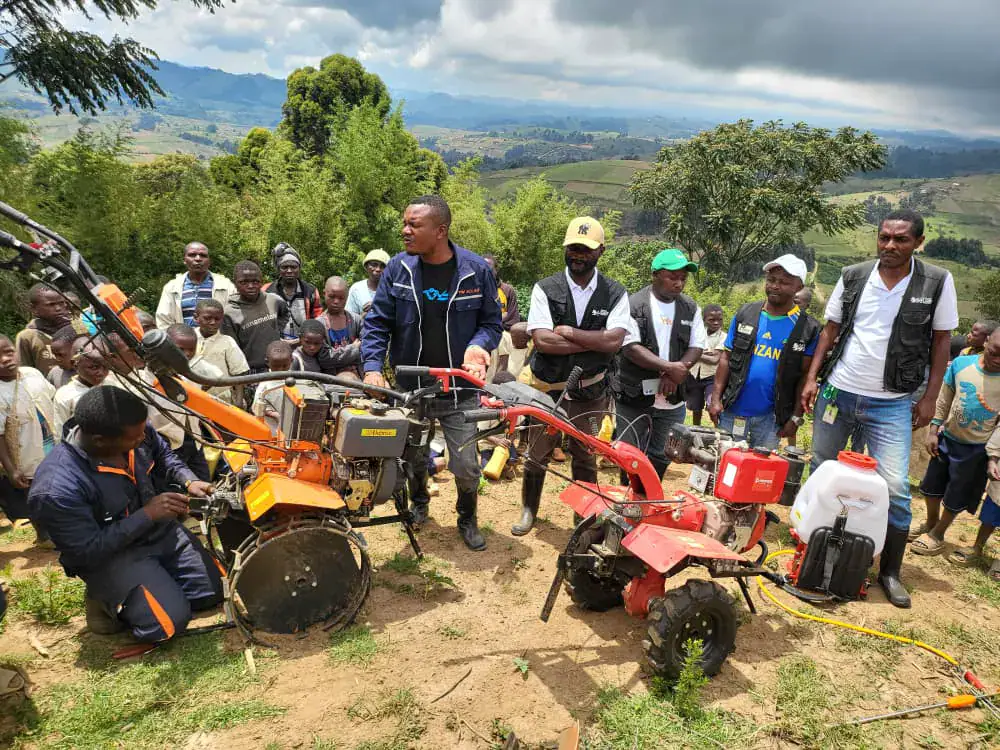
A practical training program for small-scale wheat producers in mechanization has been launched in Lubero, North Kivu, in the Democratic Republic of Congo. The training, which began on October 30, 2026, in Kipese, Lubero territory, aims to modernize agricultural practices, reduce labor drudgery, and improve farm productivity. The program is organized by the African Agricultural Leadership Institute (AALI) through its youth brigade, in partnership with the International Institute of Tropical Agriculture (IITA) and the Virunga Foundation.
The training program, led by agronomist Ruphin Mukarani, focuses on the use of machinery such as motoculters, weeding hoes, sprayers, and threshers. Participants were also educated on the importance of wearing personal protective equipment, including gloves, ear protection, and masks, to minimize the risk of accidents and exposure to hazardous substances. This initiative seeks to equip small-scale producers, particularly young people and women, with the necessary skills to adopt modern, productive, and economically viable agricultural practices.
The program aims to provide small-scale producers with the skills needed to increase their yields, incomes, and economic autonomy. Beneficiaries have welcomed the commitment of the Youth Brigade to strengthening their capacities and promoting agricultural practices that can improve their livelihoods. The training will be gradually extended to 16 intervention sites of the pilot wheat project in Lubero territory, North Kivu, with the establishment of agricultural mechanization pools.
The partnership between AALI, IITA, and the Virunga Foundation aims to make agriculture a viable economic activity that can contribute sustainably to the fight against hunger and poverty. AALI's main objective is to accelerate Africa's agricultural transformation by stimulating agro-industrialization, creating decent jobs for young people and women, and ensuring food and nutritional security. In Lubero, AALI's activities include reviving wheat cultivation, supporting and extending producer networks, and promoting integrated soil fertility management.
The project also focuses on small-scale mechanization and innovation, crop rotation, and local processing. By providing small-scale producers with the necessary skills and equipment, the project aims to improve their productivity and competitiveness in the market. The initiative is expected to have a positive impact on the livelihoods of small-scale producers and their communities.
The launch of the training program is part of AALI's efforts to support small-scale producers in the Democratic Republic of Congo. The program is expected to be replicated in other parts of the country, with the aim of improving agricultural productivity and food security. The partnership between AALI, IITA, and the Virunga Foundation is critical to achieving this goal.
The training program is a significant step towards achieving sustainable agricultural development in the Democratic Republic of Congo. By equipping small-scale producers with the necessary skills and equipment, the program aims to improve their livelihoods and contribute to the country's economic growth. The program's impact is expected to be felt in the long term, with improved agricultural productivity and food security.
Key points
- The training program aims to modernize agricultural practices and improve farm productivity among small-scale wheat producers in Lubero, North Kivu.
- The program focuses on the use of machinery such as motoculters, weeding hoes, sprayers, and threshers, as well as personal protective equipment.
- The initiative seeks to equip small-scale producers with the necessary skills to adopt modern, productive, and economically viable agricultural practices.