The city of Kinshasa is experiencing difficulties in electricity supply, with several neighborhoods and communes facing repeated power outages and disruptions. The situation has been attributed to a decline in the power injected into the grid, which has dropped from a peak of 700 MW to an average of 390-450 MW. This has significantly impacted the daily lives of many residents in Kinshasa.
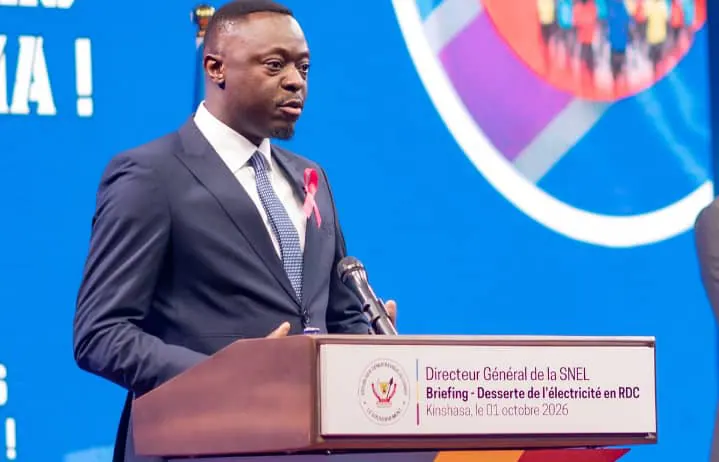
Teddy Lwamba, the director-general of the Société nationale d’électricité (SNEL), addressed the issue in a press briefing on October 1, alongside the Minister of Communication and Media, Patrick Muyaya. Lwamba explained that the peak injection of power occurred between June 11 and July 15, when the city was festive and everyone was being served, with a power supply of 700 MW.
Lwamba revealed that part of the power currently allocated to the industrial sector could be mobilized to reinforce the electricity supply to households during certain periods. He suggested that adding 50 MW from the industrial sector to the grid each evening could help alleviate the situation. This highlights the need for optimal management of available power, especially during periods of high demand.
The SNEL director-general emphasized that a sustainable improvement in electricity supply requires an increase in production capacity and investment in productive tools. He stressed that the focus should be on investing in productive tools and covering the population with additional energy. This is a critical step towards addressing the city's growing energy demands.
Kinshasa, a major metropolitan area, faces significant challenges in meeting its electricity needs. The city's population and economic activities are growing rapidly, putting a strain on the existing infrastructure. The power outages and disruptions have become a regular occurrence, affecting households and economic activities alike.
The issue of electricity availability remains a significant challenge for Kinshasa. Lwamba's comments underscore the need for a comprehensive approach to address the city's energy needs. This includes investing in new power generation capacity and upgrading the existing infrastructure to ensure a reliable and stable electricity supply.
The SNEL is working to address the current challenges and improve the electricity supply in Kinshasa. The utility company is focused on increasing its production capacity and investing in new technologies to meet the growing demands of the city. The government and other stakeholders are also expected to play a crucial role in supporting these efforts and ensuring a reliable electricity supply for the city's residents.
Key points
- The power outage in Kinshasa has been attributed to a drop in electricity supply from 700 MW to 390-450 MW.
- Part of the power currently allocated to the industrial sector could be mobilized to reinforce the electricity supply to households during certain periods.
- The SNEL director-general emphasizes the need for investment in productive tools and an increase in production capacity to improve the electricity supply in Kinshasa.