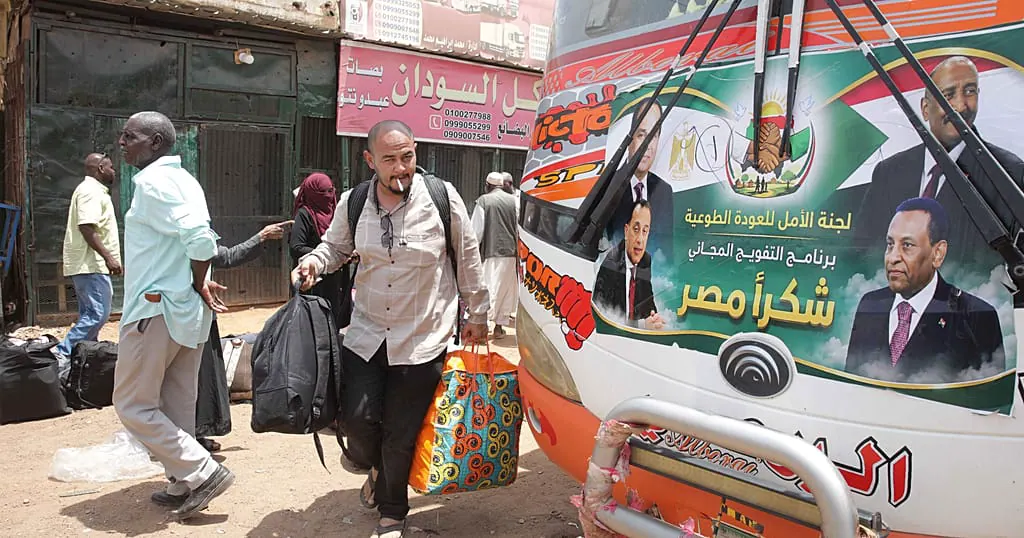
Sudanese refugees who fled to Egypt due to clashes between the Sudanese Army and the Rapid Support Forces (RSF) have returned to Khartoum, only to find the city in a state of disrepair. About four million people fled Khartoum after war broke out in 2023, but an estimated 2.7 million have returned since the army recaptured the city last year. However, they are facing significant challenges, including a chronic lack of power, water, jobs, and medicine.
The city's infrastructure is still recovering from the conflict, with electricity and water supplies often going out for days at a time. Despite efforts to rebuild and reopen infrastructure, many residents are struggling to access basic necessities. Businessman Emad Khaled said he was sending his family back to Egypt, while he remains in Khartoum for work, citing the difficulties of living in the city.
Fighting between the armed forces and paramilitary Rapid Support Forces (RSF) continues in other parts of Sudan, including Darfur, Kordofan, and Blue Nile regions. The army has encouraged residents to return to Khartoum, rebuilding the airport and reopening it for domestic flights. However, the city's working-class neighborhoods have seen the highest numbers of returnees, while upscale districts remain abandoned.
The lack of medical care is a significant concern, with many residents forced to seek treatment outside the city or go without. Physician Haifa Omar says that despite efforts to rebuild hospitals, some medicines are still not available. Patients are often required to purchase their own medication, which can be a significant burden.
The economic situation in Khartoum is also dire, with many people unemployed and struggling to afford basic necessities. Souad Mohamed, 49, had her fridge stolen by looters and couldn't afford a replacement, forcing her to buy vegetables and meat every day at increasingly high prices. The situation is particularly difficult for those who have returned from neighboring Egypt, where living costs are high and racial persecution is a concern.
The UN has declared only one percent of Khartoum safe, with dozens of children killed and injured by booby-traps and unexploded shells. Many residents are choosing to leave the city, with Thuraya Babiker, 86, planning to move to the United Arab Emirates due to the lack of medical care. Her husband and youngest daughter will accompany her, leaving behind the difficulties of life in Khartoum.
Despite the challenges, some residents remain determined to rebuild their lives in Khartoum. College professor Imam Babiker is doing his best to care for his diabetic mother, but the lack of reliable electricity and medicine is a significant challenge. As the city continues to recover, residents are hoping for improvements in the basic services and infrastructure that will allow them to live safely and securely.
Key points
- Many Sudanese who returned to Khartoum are struggling to access basic necessities like power, water, and medicine.
- The city's infrastructure is still recovering from the conflict, with electricity and water supplies often going out for days at a time.
- The lack of medical care is a significant concern, with many residents forced to seek treatment outside the city or go without.