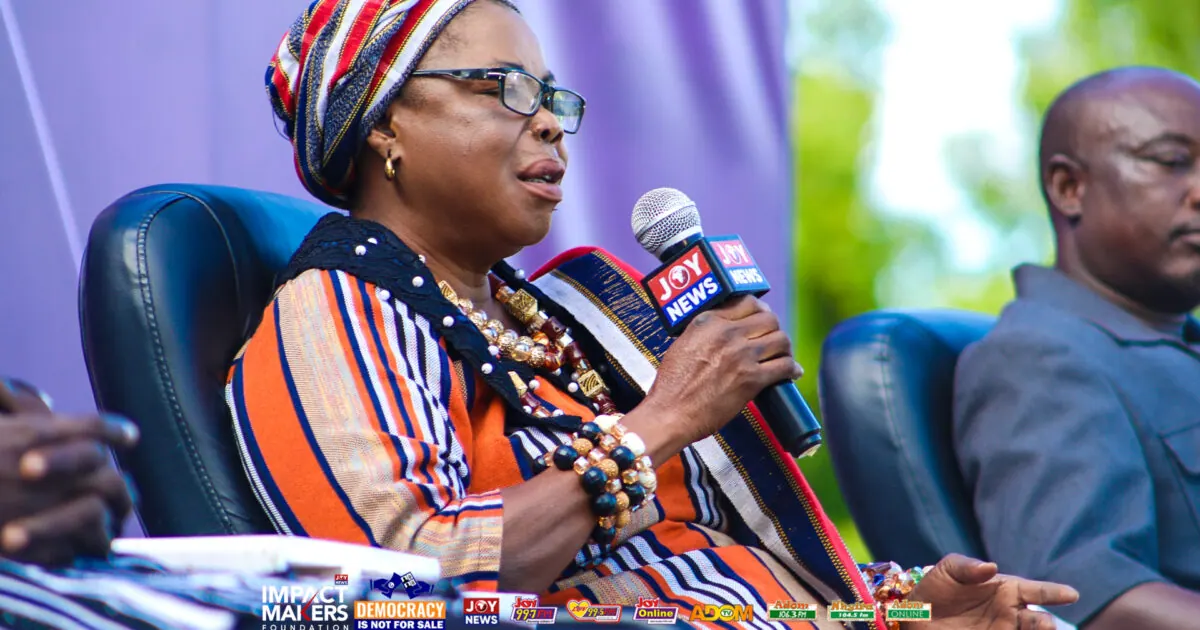
The Queen Mother of the Damongo Traditional Area, Alijata Haruna, has identified poverty, illiteracy, and limited employment opportunities as key factors contributing to the acceptance of vote-buying among women in the Savannah Region. She made these remarks at the "Democracy Is Not For Sale" forum in Damongo, organised by JoyNews on Friday, September 25. The forum aimed to encourage public discussion on electoral integrity and the factors that can undermine the democratic process.
According to Alijata Haruna, economic hardship makes some women more willing to accept money and other items offered by political actors during election periods. She noted that the immediate economic needs of some women can make it difficult for them to reject such offers. The Queen Mother emphasized that addressing the underlying socio-economic conditions affecting women would be crucial in tackling the acceptance of vote-buying.
Alijata Haruna also highlighted the high illiteracy rate among women in the Savannah Region as a contributing factor to the acceptance of vote-buying. She stated that some women may not fully understand the implications of accepting money or other items from political actors, making them more susceptible to such inducements. The Queen Mother's comments come as concerns about vote-buying and its potential impact on the democratic process continue to grow.
The "Democracy Is Not For Sale" forum forms part of efforts to encourage public discussion on electoral integrity and the factors that can undermine the democratic process. The forum provided a platform for stakeholders to discuss the issue of vote-buying and its implications for Ghana's democracy. Participants called for increased public education and awareness-raising efforts to address the root causes of vote-buying.
The Savannah Region has been identified as one of the areas with high levels of poverty and illiteracy, which can contribute to the acceptance of vote-buying. According to the World Bank, 56.4% of Ghanaians remain in poverty despite economic growth. The Bank's findings also highlight the need for targeted interventions to address poverty and inequality in the country.
Alijata Haruna's comments have sparked a renewed call for action to address the root causes of vote-buying. Stakeholders are urging policymakers to prioritize poverty reduction, education, and employment creation to reduce the vulnerability of women to vote-buying. The issue of vote-buying is expected to continue to be a major concern in the lead-up to future elections.
The Government of Ghana has been working to address poverty and inequality through various initiatives, including the Livelihood Empowerment Against Poverty (LEAP) programme. The programme aims to provide support to vulnerable households and help them graduate from extreme poverty. However, more needs to be done to address the scale of poverty and inequality in the country.
Key points
- Poverty, illiteracy, and limited employment opportunities are driving the acceptance of vote-buying among women in the Savannah Region.
- Addressing the underlying socio-economic conditions affecting women is crucial in tackling the acceptance of vote-buying.
- The "Democracy Is Not For Sale" forum aims to encourage public discussion on electoral integrity and the factors that can undermine the democratic process.