Russian President Vladimir Putin has recently increased his diplomatic activity, participating in several important summits to demonstrate to the world that he maintains a presence on the international stage and is not isolated as the West claims. Despite this, he has shown no signs of backing down from Russia's objectives in the Ukraine conflict. According to Grégoire Ross, director of the Europe, Russia, and Eurasia program at London's Chatham House, Putin's strategy of combining diplomatic impassivity with calibrated escalation may be more solid than it appears.
Ross mentioned recent talks between Putin and US envoys Steve Witkoff and Jared Kushner in Moscow on September 5, which the Kremlin described as "very useful" but showed no willingness to soften its demands. The same approach was seen when Russia rejected Ukrainian President Volodymyr Zelensky's offer for Putin to meet at the G20 summit in Miami in December. Meanwhile, Russian attacks on Ukraine have intensified, including a drone strike on a railway infrastructure near Yahodyn on September 13, which occurred shortly after a train carrying former British Prime Minister Boris Johnson and other dignitaries had passed through.
Many European officials believe Russia's behavior indicates it is in a stalemate in Ukraine, suffering significant losses and making slow and costly territorial gains. Ukrainian forces have also regained ground. However, concluding that Russia's escalation is a sign of desperation is more of a wish than a reality. Putin seems to believe he can still count on time and maintain maneuvering room. His recent diplomacy offers a relevant framework for interpretation. Putin can afford to ignore friendly advice, as seen in his response to Kazakh President Kassym-Jomart Tokaïev's initiative in July to freeze the conflict and restart negotiations.
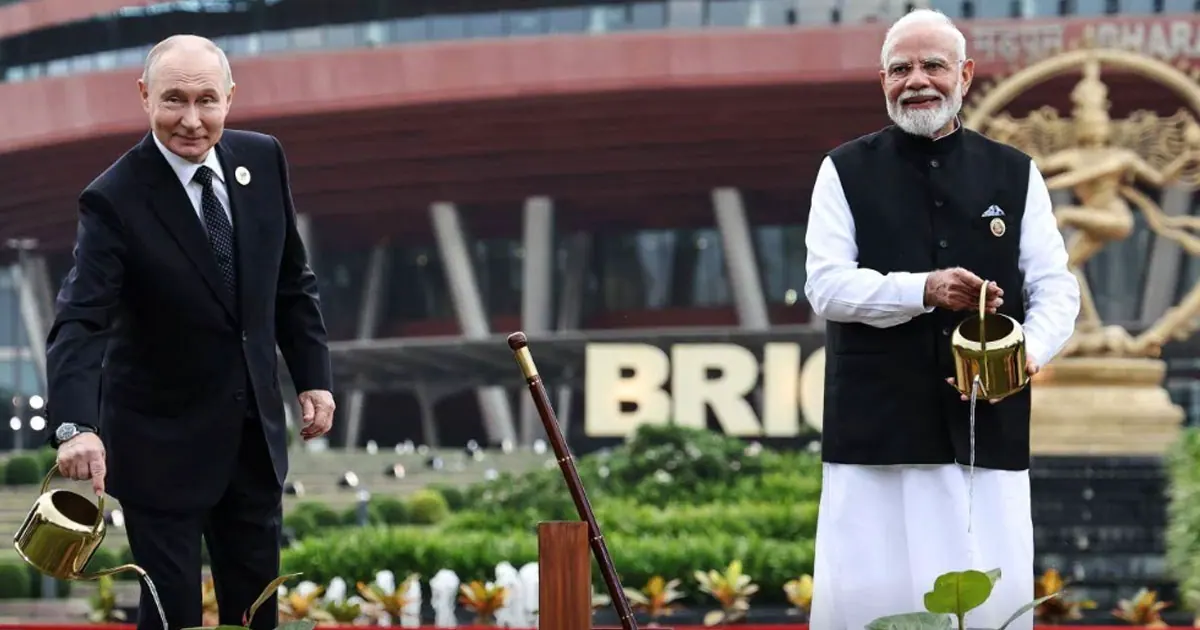
Tokaïev's proposal was swiftly rejected by the Kremlin. Indian Prime Minister Narendra Modi also made a public statement to Putin at the Shanghai Cooperation Organization summit on August 31, urging the world to "move from an endless war to the end of the war." However, Modi addressed Putin as "my friend" and praised the solidity of bilateral relations. This nuance explains much of Putin's confidence. Despite criticism, India continues to view Russia as a key strategic partner. Kazakhstan has also preserved close ties with Moscow while diversifying its external relations.
The BRICS declaration in New Delhi criticized unilateral sanctions and trade restrictions but avoided directly opposing Russia over Ukraine. These enduring partnerships could provide Moscow with vital elements, such as economic integration in Asia, diplomatic legitimacy, and a respected role in influential international groupings. The importance of Russia to China was also highlighted at the Shanghai Cooperation Organization summit, where Chinese President Xi Jinping stated that the foundations of bilateral relations between the two countries would strengthen.
Europeans often perceive Russia as a "vassal state" of China, reflecting a real economic disparity, with China's economy about eight times larger than Russia's. However, this view overlooks a crucial aspect of the partnership, which is not solely measured by bilateral trade. Beijing has an interest in maintaining a strong enough Moscow to remain an independent power. Russia possesses a nuclear arsenal, a permanent seat on the UN Security Council, vast energy and raw material resources, and a strategic position spanning Central Asia and the Arctic.
The involvement of China in the Russian war economy demonstrates that the relationship between the two countries is more stable than many in Europe think. Documents revealed this month by Politico indicate that a Chinese state-owned enterprise delivered carbon fiber used in Geran attack drones to a sanctioned subsidiary of Russia's state nuclear corporation, Rosatom. This and other evidence show that Putin's diplomatic efforts are backed by strategic partnerships, allowing him to maintain his stance on the Ukraine conflict.
Key points
- Putin's diplomatic efforts are aimed at proving his presence on the international stage and maintaining maneuvering room in the Ukraine conflict.
- Russia's partnerships with countries like India and Kazakhstan provide it with economic integration, diplomatic legitimacy, and a respected role in international groupings.
- The relationship between China and Russia is more stable than many in Europe think, with China providing support to Russia's war economy.