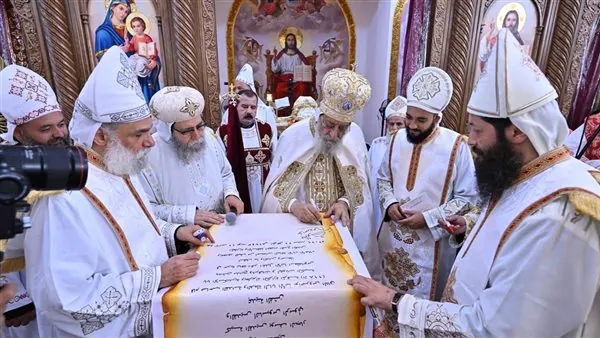
Pope Tawadros II, the head of the Coptic Orthodox Church, recently visited Upper Egypt, where he consecrated three churches and laid the foundation stone for several new projects. The visit, which lasted seven days, covered several dioceses, including Minya, Anshun, and Asyut. During his visit, the Pope performed various consecration ceremonies, which are an essential part of the Coptic Orthodox tradition.
In the Coptic Orthodox Church, consecration is not just a formal opening of a church after construction or renovation but a sacred ritual that dedicates the church to worship. The ceremony involves the consecration of altars, icons, and baptismal fonts. Pope Tawadros II has described the day of consecration as the "day of the church's birth," comparing it to a birth certificate that proves a person's existence.
The consecration ceremony begins with a prayer of thanksgiving, followed by psalms, readings from the Holy Bible, and prayers of consecration. One of the most recognizable parts of the ritual is the progression of the congregation's responses in three stages: "Kyrie Eleison" (Lord, have mercy), "Amen," and "Hallelujah." These stages represent a journey of mercy, response, and joy.
During the ceremony, the Pope and bishops pray for the church and its congregation, and the congregation responds with "Kyrie Eleison," asking for mercy. The second stage involves the anointing of the altar with holy oil, and the congregation responds with "Amen," signifying their acceptance. The third stage involves the completion of the consecration ritual, and the congregation responds with "Hallelujah," expressing joy and gratitude.
Consecration is not limited to altars but can also include baptismal fonts, icons, and other sacred objects. During one of the consecration ceremonies led by Pope Tawadros II, three altars, a baptismal font, and several icons were consecrated. The consecration of these sacred objects is a vital part of the Coptic Orthodox tradition and is performed to ensure that the church is a place of worship and spiritual growth.
The consecration ceremony is a unique and significant event in the life of a church, and it is not repeated annually. However, the anniversary of the consecration is celebrated every year as a local feast day. The date of consecration becomes an integral part of the church's history and is passed down to future generations.
The visit of Pope Tawadros II to Upper Egypt highlighted the importance of consecration in the Coptic Orthodox Church. The Pope's visit and the consecration ceremonies that took place during it demonstrated the church's commitment to its traditions and its role in the spiritual lives of its congregation.
Key points
- The consecration ceremony involves the progression of the congregation's responses in three stages: "Kyrie Eleison" (Lord, have mercy), "Amen," and "Hallelujah."
- Pope Tawadros II described the day of consecration as the "day of the church's birth," comparing it to a birth certificate that proves a person's existence.
- The consecration ceremony is a unique and significant event in the life of a church, and it is not repeated annually.