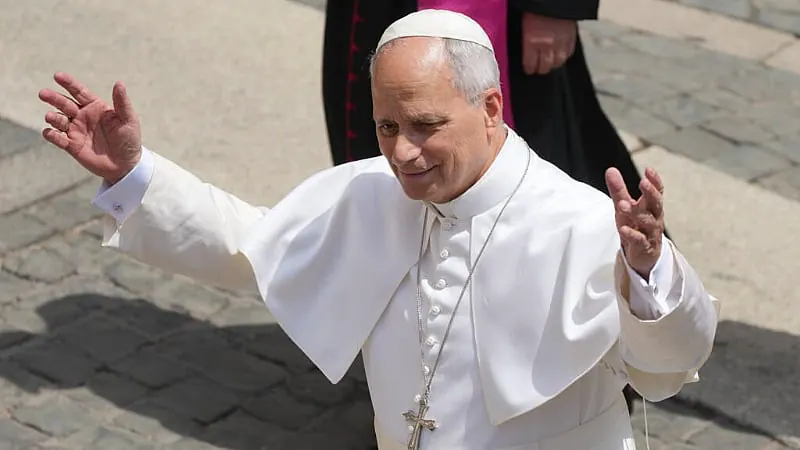
Pope Leo XIV is set to embark on a four-day visit to France, a country where Catholicism has coexisted with strict secularism for centuries. The Pope's programme includes large public gatherings, processions, and an open-air Mass in central Paris, which will take place in a country whose constitution defines France as a secular, democratic, and social Republic. This principle, known as laïcité, guarantees freedom of belief while requiring the state and public institutions to remain neutral towards religion.
The foundations of France's modern secular system were laid by the landmark 1905 law separating the Church and the state. This law guarantees freedom of conscience and religious practice, while ending formal state recognition and financing of religion. As a result, many Catholic churches built before 1905 belong to municipalities or the state, and public money can be used to maintain these buildings. However, the majority of religious buildings constructed since then are financed and maintained by religious organisations.
Despite a decline in religiosity in France, Catholic traditions, architecture, and institutions remain woven into French public life. A national survey carried out in 2019 and 2020 found that 51 percent of people aged 18 to 59 in metropolitan France said they had no religious affiliation. Catholicism remained the largest religious affiliation at 29 percent, followed by Islam at 10 percent. The country's rich Catholic heritage is visible in its Romanesque churches, Gothic cathedrals, private Catholic schools, and public holidays rooted in the Christian calendar.
During his visit, Pope Leo will travel to Paris, Saint-Denis, Lourdes, and Metz, where he will be received by President Emmanuel Macron at the Élysée Palace on Friday. The encounter between the two heads of state will take place in the Pope's capacity as the head of Vatican City, rather than as a religious ceremony. The Pope's visit will highlight the delicate balance between France's secular institutions and its longstanding Catholic cultural inheritance.
One notable exception to mainland France's secular framework is the Alsace-Moselle region, where the 1905 law separating church and state does not apply. In this region, a separate local system allows several recognised religions a formal status, with some clergy's salaries paid by the state and religious instruction provided in schools. Pope Leo's visit to Metz, which is located in this region, will provide an opportunity to observe this unique arrangement.
The Pope's programme includes a large open-air Mass at Paris's Place de la Concorde, with crowds expected along the Champs-Élysées. Under French law, allowing a religious gathering in a public space does not amount to state endorsement, provided the authorities remain neutral. This event will give the Catholic ceremony high visibility in the heart of the capital, while also demonstrating the country's commitment to secularism.
Abuse survivors have set out demands before meeting Pope Leo in France, highlighting the need for greater accountability and transparency within the Catholic Church. The Pope's visit will provide an opportunity for him to engage with these survivors and to address the complex issues surrounding the Church's handling of abuse cases. The visit will also be seen as a test of France's ability to balance its secular values with its rich Catholic heritage.
Key points
- The Pope's visit will highlight the delicate balance between France's secular institutions and its longstanding Catholic cultural inheritance.
- The 1905 law separating the Church and the state laid the foundations of France's modern secular system.
- The Alsace-Moselle region has a unique arrangement allowing several recognised religions a formal status.