Director of the Regional Transport, Research and Education Centre (TRECK) at KNUST, Professor Helen Michelle Korkor Essandoh, has observed that many people in Ghana are being impoverished by the failure to properly acquire land and resettle inhabitants for development projects. She notes that development projects are being executed across the country, but some developers fail to properly acquire lands and resettle affected persons, preventing such projects from yielding their maximum benefits.
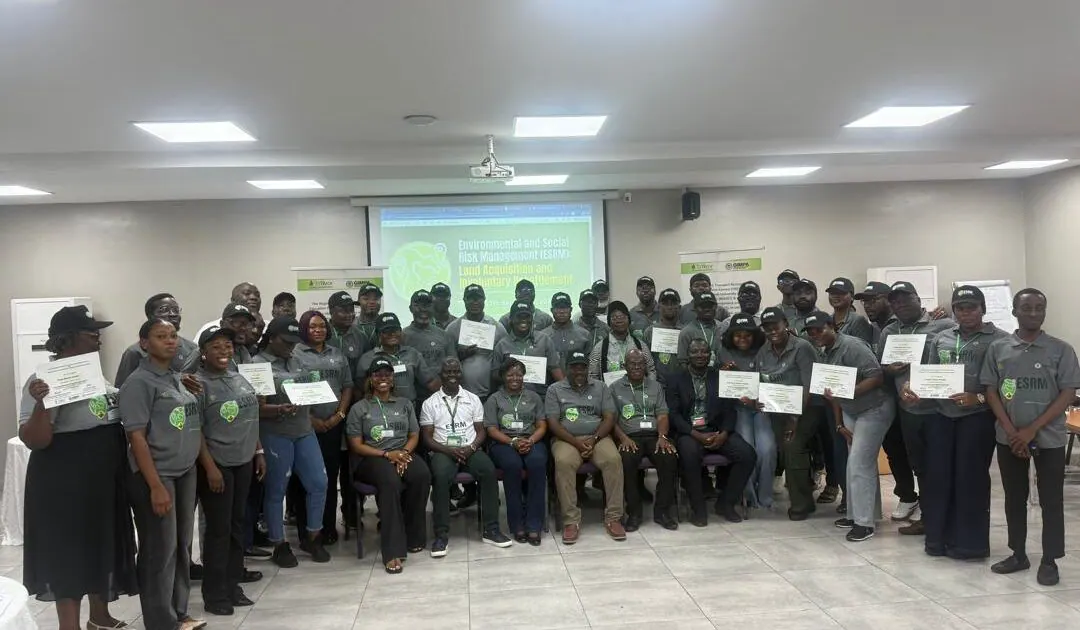
Prof. Essandoh spoke on the sidelines of a training program organised by TRECK in collaboration with Ghana Institute of Management and Public Administration (GIMPA), with support from the World Bank. The professional certificate course was on Environmental and Social Risk Management, with a focus on Land Acquisition and Involuntary Resettlement. She emphasized that people's lives are tied to land, and when their lands are taken for projects, they often lose more than just shelter.
According to Prof. Essandoh, people whose lands are taken for projects often lose businesses, farmlands, resources, and social networks that sustain them. She explained that when people need to be relocated, it is essential to minimize the impact on them, as they can become worse off if their livelihoods are negatively impacted. Prof. Essandoh noted that the challenge is widespread in developing countries where rapid infrastructure expansion inevitably encroaches on inhabited communities.
Prof. Essandoh stressed that it is a problem that exists in developing countries, where governments are always bringing in new projects, expanding infrastructure, and improving the lives of the people. However, this often leads to conflicts with inhabitants, reducing the benefits that are supposed to be gained from the project. To deal with the gaps, participants were taken through eight modules, including land acquisition for development projects, legal and institutional frameworks, and livelihood restoration and entitlements.
The training program aimed to equip participants with the skills and knowledge necessary to manage environmental and social risks associated with land acquisition and involuntary resettlement. The representative of GIMPA, Dr. Paul Rex Dankwah, encouraged participants to put the training into practice, stressing that such knowledge is critical to enhancing sustainable development. He emphasized that the skills acquired would help participants review and institute proper resettlement plans in their respective countries.
Participants on their part lauded the programme for the insights gained, expressing confidence that the skills acquired would help them review and institute proper resettlement plans in their respective countries. The program was a collaboration between TRECK, GIMPA, and the World Bank, highlighting the importance of partnerships in addressing the challenges of land acquisition and involuntary resettlement. The training program is expected to have a positive impact on the lives of people affected by development projects in Ghana and other developing countries.
The issue of land acquisition and involuntary resettlement is a critical one in Ghana, where many development projects are being executed. Prof. Essandoh's observations highlight the need for proper planning and implementation of land acquisition and resettlement processes to minimize the negative impacts on affected communities. The government, developers, and other stakeholders must work together to ensure that the rights of affected persons are protected and that they are adequately compensated and resettled.
Key points
- Prof Helen Essandoh warns that poor land acquisition for development projects is pushing people into poverty in Ghana.
- The challenge of land acquisition and involuntary resettlement is widespread in developing countries.
- A training program was organised to equip participants with skills to manage environmental and social risks associated with land acquisition and involuntary resettlement.