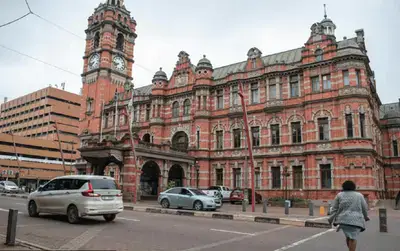
As the November 4 elections approach, South African political parties are focusing on winning strategic councils in KwaZulu-Natal. The Msunduzi local municipality, which serves as the capital city of KwaZulu-Natal, is a key target. Currently governed by an ANC majority, the council has 81 municipal seats, with the ANC controlling 40, the DA 16, EFF 10, and the IFP 8 seats. The remaining seats are held by smaller parties.
The Msunduzi municipality has a budget of just over R10 billion but has failed to be declared a metro multiple times. According to Professor Musa Xulu, a KwaZulu-Natal-based social researcher, indications suggest that the municipality will be governed by a coalition. Xulu believes that the KZN Metro of eThekwini and its two major cities, uMhlathuze and uMsunduzi, are unlikely to have a single party scoring an outright majority.
Professor Xulu also noted that the MK party's internal instability and dictatorial tendencies have made some voters skeptical, fearing that these negative tendencies may spill over into municipalities. He added that the leadership of the MKP is highly unlikely to attract investors due to their association with State Capture, which keeps them in courts.
The ANC, after suffering a blow in 2024 with the emergence of the MKP, seems to be on the upward trajectory but is unlikely to command an absolute majority. According to Xulu, while the Democratic Alliance (DA) has been conducting internal polls that appear to show growth, it is unlikely to materialize into votes. Xulu stated that perceptions of white supremacy limit the DA's ability to grow in real terms.
Other key municipalities closely watched include the ANC-led KwaDukuza local municipality, which has a budget of nearly R4 billion and covers prime residential areas such as Ballito and Zimbali. The council has been plagued by internal skirmishes between ANC factions, resulting in two mayoral changes in the current term.
The city of uMhlathuze, a former ANC-led council snatched by the IFP during the last local government elections, is also expected to be a contentious battle. The IFP solicited the assistance of the DA and EFF to govern the municipality, which has an allocated budget of about R6.4 billion and houses key economic hubs such as the Richards Bay ports and heavy chemical and metal industries.
Dr. Zakhele Shamase, a University of Zululand contemporary politics expert, believes that there will be no outright winner in the council. He stated that the IFP remains strong, but the emergence of the MK party also poses a danger for them, and a coalition led by the IFP or MK party is likely in the municipality.
Key points
- The Msunduzi local municipality is a key target for South African political parties ahead of the November 4 elections.
- The ANC currently governs the Msunduzi municipality but is unlikely to command an absolute majority.
- A coalition government is likely to be formed in the Msunduzi municipality.