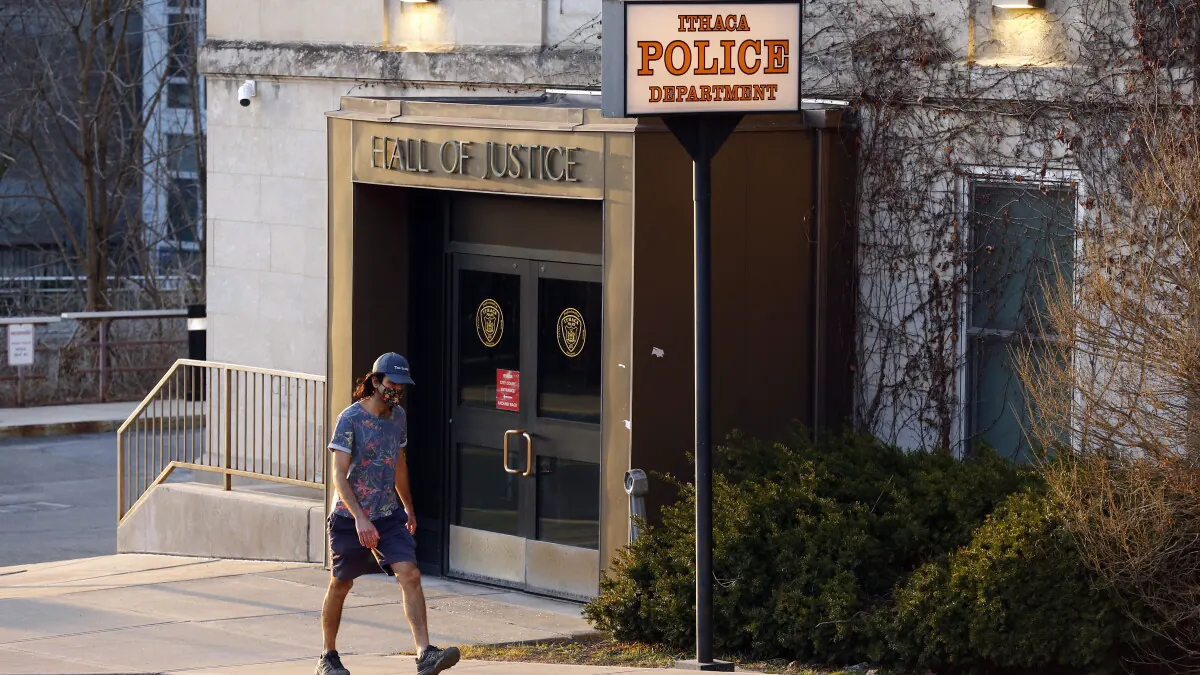
A recent case involving a former Cornell University student who alleges she was drugged and gang-raped at the school in 2024 has raised questions about how police handle initial investigations. The woman, known as Jane Doe, filed a civil lawsuit detailing allegations against seven men she said assaulted her. Prosecutors have subsequently reopened the investigation.
According to Tompkins County District Attorney Matthew Van Houten, details in Doe's lawsuit differed from a statement she provided to Cornell University Police following the alleged attack in 2024. Van Houten said that Doe's 2024 statement "did not allege that she was drugged against her will or gang raped" and "described her participation in drug use and sexual conduct as voluntary, conscious, and consensual."
However, trauma researchers and advocates for sexual assault victims say an initial statement like Doe's often cannot be taken at face value and more investigating needs to be done. Gaps and inconsistencies in an assault survivor's police statement are often a product of a victim's trauma and of how officers question them – not evidence that she's unreliable, according to Dave Thompson, a certified forensic interviewer.
Many police lack training on sexual assault victim response, with most U.S. police not trained in a trauma-informed approach. For nearly 30 years, psychology professor Rebecca Campbell has studied trauma and sexual assault. She said that police often treat the victim as the subject to be interviewed and interrogated, which impacts how comfortable victims are with sharing necessary information to investigators.
A study by the Bureau of Justice Statistics found that police recruits received on average seven hours of training on sexual assault and six hours of training on victim response. In lieu of meaningful training, Campbell explained that responding officers and detectives will often treat the victim with blame and skepticism, which can lead to a vicious dynamic of more blame and withdrawal.
Scientists and researchers have examined how survivors of serious trauma and especially sexual assault can frequently struggle to remember the events leading up to, during and after the event. Thompson said that investigators should allow victims a safe space to remember and recall details that may be most relevant or present in their state of mind, rather than dismissing memory lapses as falsified details.
Advocates are pushing for changes in police questioning techniques, including the creation of special police interrogation rooms to make the environment for victims reporting a traumatic event more calming and conducive to this approach. Tracy Matheson established a foundation, Project Beloved, to create such rooms across the country, driven by her own experience of losing her daughter to rape and murder in 2017.
Key points
- Most U.S. police are not trained in a trauma-informed approach to questioning sexual assault victims.
- Gaps and inconsistencies in an assault survivor's police statement are often a product of a victim's trauma and of how officers question them.
- Police questioning techniques can be ineffective and even re-traumatizing for victims, leading to a low rate of reported sexual assault cases.