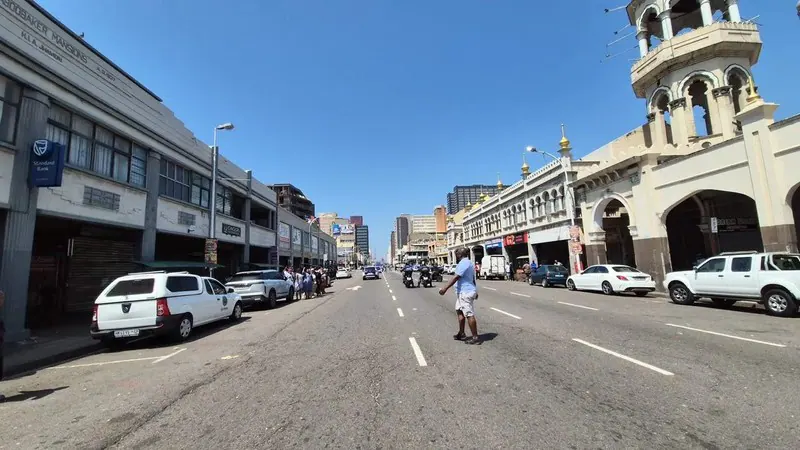
Police in KwaZulu-Natal have deployed Public Order Management units to various parts of Durban in anticipation of any disruptions or protests. The deployment comes as shops, particularly foreign-owned shops from neighbouring African countries, shut their doors on Saturday in anticipation of any looting and protests. The protests, which started on Tuesday, October 6, are in response to a Constitutional Court judgment on asylum seeker applications.
Fifteen suspects were arrested on Friday night following violent protests that engulfed the city of Durban and surrounding suburbs. This brings the number of arrested suspects to 19, including four arrested on Thursday for attempted murder and discharging a firearm in public. The suspects will face charges of public violence and malicious property damage, with the possibility of other charges being added.
Police spokesperson Colonel Robert Netshiunda said they have tactics and techniques to manage large crowds that have swamped streets of Durban. He added that police intelligence officers, together with detectives, are continuing the search for those responsible for burning vehicles and buildings. The majority of the arrested suspects are students.
On Friday, several shops were looted, and at least three houses suspected to be drug dens and brothels were set alight in the Umbilo area of Durban. None of the anti-immigration groups took responsibility for the looting or the setting alight of the houses. On Thursday, 14 vehicles were set alight along Dr Pixley KaSeme Road after South Africans and suspected foreign nationals clashed.
A government delegation, led by the Acting Minister of Police Firoz Cachalia, visited Durban on Friday to assess the situation. The delegation, which included the Premier of KwaZulu-Natal Thami Ntuli and the Provincial Commissioner of KwaZulu-Natal Lieutenant General Nhlanhla Mkhwanazi, walked along Dr Pixley KaSeme Street where the protest had taken place. They saw first-hand the burnt-out vehicles, damaged shop fronts, and spoke with bystanders.
The Portfolio Committee on Home Affairs has welcomed the withdrawal of the Department of Home Affairs’ directives following the Constitutional Court judgment on asylum seekers. The committee has resolved to convene an urgent, in-person meeting to interrogate further the implementation of the Constitutional Court judgment on asylum applications. The committee will also consider an oversight visit to refugee reception centres.
The protests have raised concerns about the impact on businesses and the community. Shop owners, both local and foreign, have expressed concern about the financial strain caused by the lost business. The situation remains volatile, with police using minimum legal force, such as stun grenades, tear gas, and rubber bullets, to manage the crowds.
Key points
- 19 suspects have been arrested in connection with the violent protests in Durban.
- The protests were sparked by a Constitutional Court judgment on asylum seeker applications.
- The government has deployed public-order management units to maintain order in Durban.