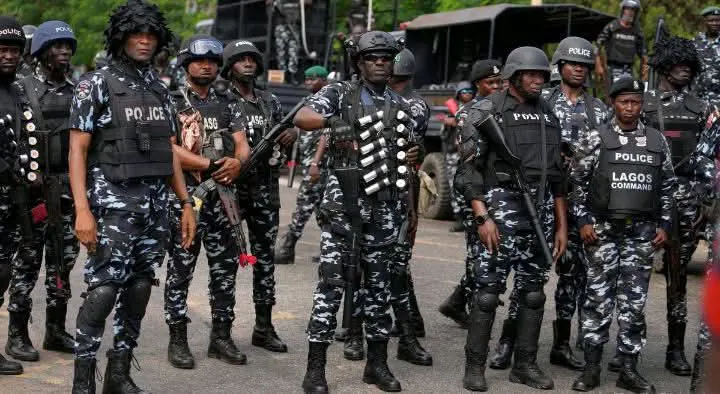
The Lagos State Police Command has arrested six suspected members of a syndicate allegedly involved in the diversion of imported goods worth over N20 billion over the past 19 years. The suspects, including alleged gang leaders Jamiu Lateef and Abubakar Amadu, were arrested by operatives of the command's anti-kidnapping unit following complaints from importers over the disappearance of consignments. The syndicate reportedly targets consignments valued at millions and billions of naira, using legitimate-looking transportation arrangements to gain access to imported goods.
According to a police source, the syndicate was one of two highly organised groups allegedly involved in large-scale goods diversion in Nigeria, with the second group reportedly operating from Kaduna. The suspects allegedly positioned themselves around Lagos ports and monitored requests from importers and transport companies looking for trucks to move consignments. They also joined WhatsApp platforms operated by transporters and logistics companies at the ports, where transportation jobs are advertised.
The source said some members of the syndicate had previously been arrested and prosecuted over similar offences, but allegedly returned to the business after their release. Four members, including Jamiu and Amadu, were released from prison in February 2026, while some of their drivers regained their freedom about two months later. Police reportedly recovered 11 mobile phones and eight SIM cards from Amadu during his latest arrest, and he had previously been arrested in 2023 with 49 phones and 188 SIM cards.
In their latest alleged operation, the syndicate reportedly diverted consignments, including forklifts, fabrics, and imported plates, valued at about N3 billion. The suspects allegedly collected the goods from the port after agreeing with an importer to transport them to Kano but diverted the consignment to Ojota, Lagos, where the goods were allegedly offloaded and sold to receivers. Jamiu reportedly admitted during interrogation that the goods were loaded for transportation to Kano but were instead diverted to Ojota.
Amadu, according to police, said he began diverting goods with Jamiu about 19 years ago after they met while working as truck drivers for their former employers. He reportedly told investigators that he had investments in Niger Republic and allegedly travelled there after successful operations in Nigeria. Jamiu, an indigene of Ibadan, Oyo state, also reportedly disclosed that he travelled frequently between Nigeria and the Republic of Benin, where he allegedly had investments.
Police investigations into the latest case reportedly led operatives to a market in Agege, where some of the diverted fabrics were recovered and identified by the importer. Further investigation allegedly led to the arrest of the suspected receivers and truck drivers, as well as the two alleged leaders of the syndicate. The suspects had reportedly told the importer that the truck conveying his goods had broken down in Mokwa, Kogi state, and allegedly collected money from him under the pretence of repairing the vehicle.
Confirming the arrests, the Lagos State Police Command's spokesperson, SP Abimbola Adebisi, described the operation as a major breakthrough by the anti-kidnapping unit. Adebisi said investigation was ongoing, adding that the Command was working to apprehend other suspected members of the syndicate and recover more goods allegedly diverted during previous operations. The police are yet to reveal the fate of the suspects and the recovered goods.
Key points
- The Lagos State Police Command arrested six suspects for allegedly diverting over N20 billion worth of imported goods over 19 years.
- The syndicate used legitimate-looking transportation arrangements to gain access to imported goods and sold them to receivers after diverting them from their agreed routes.
- The police recovered some of the diverted goods, including fabrics, and arrested suspected receivers and truck drivers.