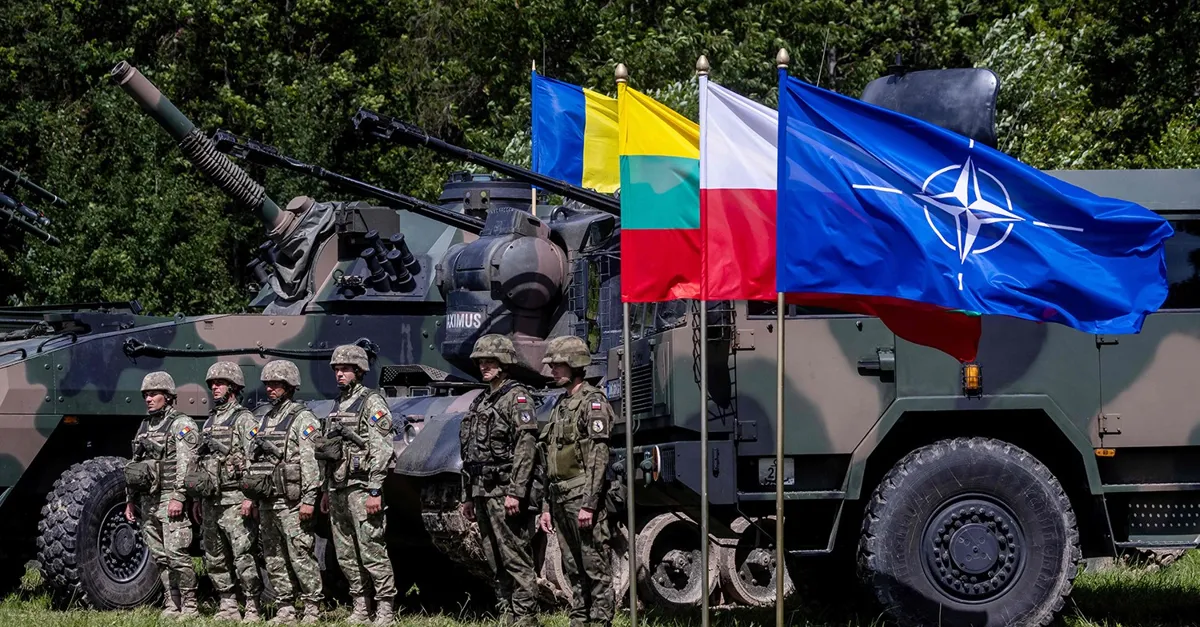
Poland and Lithuania have announced efforts to develop joint evacuation plans for civilians in the event of a military crisis or significant security threat. The plans focus on the Suwałki corridor, a critical border region between Poland and Lithuania that connects the Baltic states to the rest of NATO and the European Union. This move reflects growing concerns among Eastern NATO countries about potential threats from Russia.
The Suwałki corridor is considered a point of significant military and logistical importance. It is a vital land bridge between Poland and Lithuania, situated between Belarus, a Russian ally, and the Russian region of Kaliningrad. This location makes it a constant focus in European defense calculations. The evacuation plans include using this corridor to transfer civilians and resources in emergency situations.
Lithuania has begun nationwide drills, called "Vyčio Skliautas 2026," to test its crisis response and mobilization systems. The exercises involve around 3,000 officials, employees, and individuals from local institutions and organizations, as well as about 1,000 volunteers. The drills simulate various scenarios, including cyberattacks, sabotage, and disruptions to power, communications, and critical infrastructure.
The joint evacuation plan between Poland and Lithuania focuses on cross-border coordination, including the reception of civilians from the Baltic states if necessary. Lithuania has already prepared an internal plan for evacuating populations in emergency situations. The countries are assessing the capacity of roads, bridges, and transportation points to handle large numbers of people.
Lithuanian authorities are also discussing the possibility of tightening border controls in the event of a security threat. This would ensure that individuals in critical roles can continue working and that those in essential positions do not leave during a crisis. The plans involve managing the flow of people and resources, including the exit of civilians from danger zones and the continued passage of workers, equipment, and essential supplies.
These developments coincide with growing European concerns about Russian activities, described by regional governments as part of a hybrid war. This includes drone flights, sabotage, cyberattacks, and attempts to influence critical infrastructure. Recent incidents in European countries have involved airspace violations and attacks on vital facilities.
The NATO alliance continues to emphasize the importance of protecting its eastern flank and connecting the Baltic states to the rest of its territory. The evacuation plans demonstrate that European governments are considering the possibility of crises extending beyond traditional military conflicts. This includes disruptions to electricity and communication networks, roads, and cyberattacks.
Key points
- Poland and Lithuania are developing joint evacuation plans for civilians in case of a military crisis or significant security threat.
- The plans focus on the sensitive Suwałki corridor, a critical border region between Poland and Lithuania.
- The developments reflect growing concerns among Eastern NATO countries about potential threats from Russia.