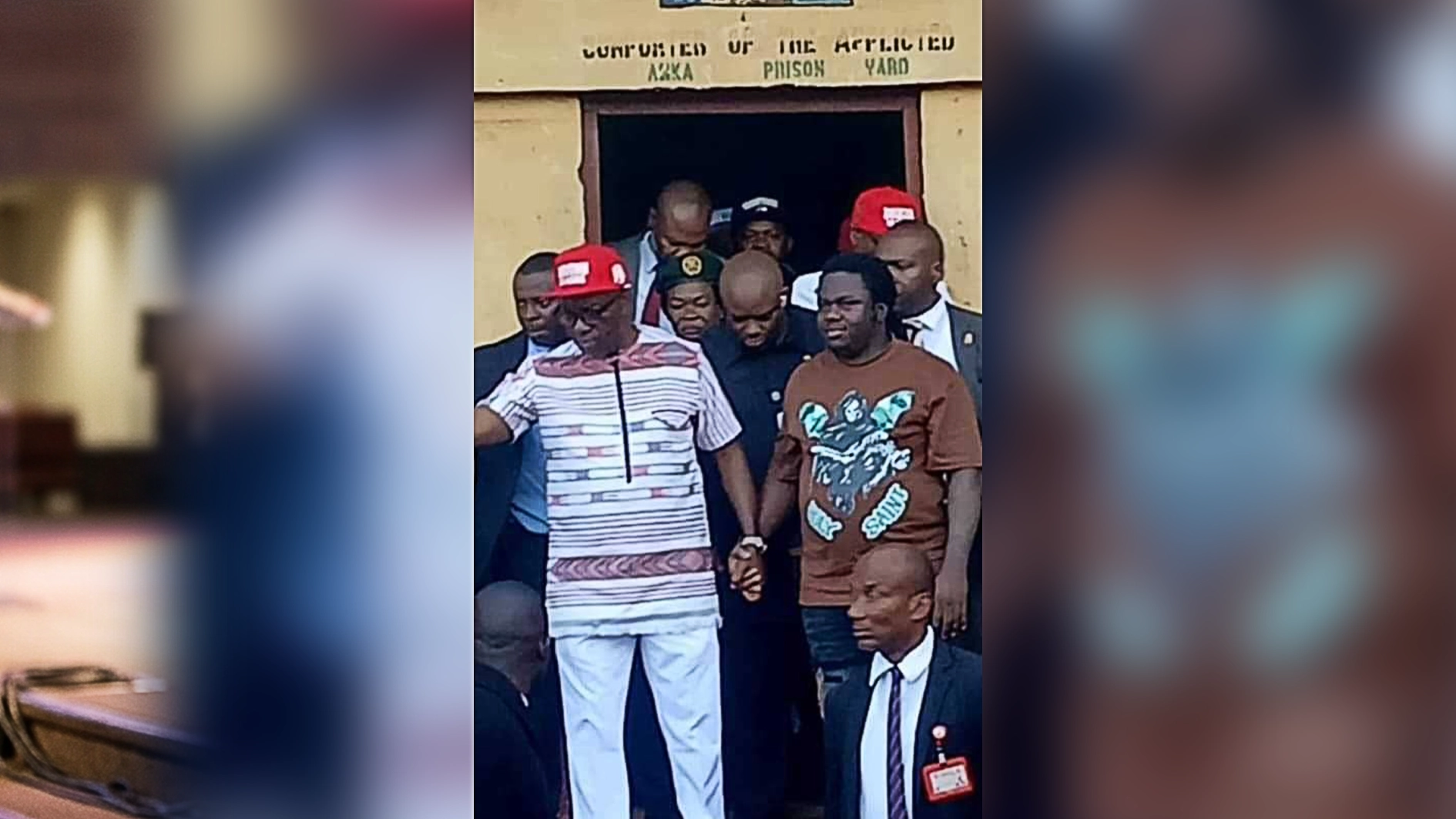
The Attorney General of Anambra State, Mr. Tobechukwu Nweke, has disclosed that the early release of Chidozie Nwangwu, popularly known as Akwa Okuko, was made possible through a combination of plea bargain proceedings and the Governor's prerogative of mercy. Nweke described Nwangwu's case as an example of the benefits of plea bargaining. He urged inmates in the state who are satisfied of their guilt to consider the arrangement.
According to Nweke, Nwangwu's remorse and the relatively short period remaining on his sentence made him suitable for executive clemency. The plea bargain indirectly led to the prerogative of mercy, which Nweke described as a remote benefit of the arrangement. Under plea bargain agreements, convicted persons can receive non-custodial sentences or reduced prison terms.
Nweke explained that plea bargain agreements typically require offenders to make restitution or compensate victims of the offences, where applicable. In Nwangwu's case, his early release was tied to his agreement to support the state government's campaign on youth reformation and reorientation. This campaign aims to reform and reorient youths in the state.
The administration of Governor Chukwuma Soludo has prioritized the decongestion of correctional centers and is mainstreaming plea bargaining as a judicial tool to reduce pre-trial detention and overcrowding. The Ministry of Justice launched a public awareness campaign on plea bargaining two months ago, receiving about 150 applications currently under consideration.
Nwangwu was sentenced to 11 months' imprisonment in February by Justice Jude Obiorah of Anambra State High Court after pleading guilty to charges relating to money rituals. The court held that Nwangwu admitted to engaging in money ritual practices and preparing protective charms for criminals.
Akwa Okuko's release enables him to immediately join the state government's campaign on youth reformation and reorientation. The state government is committed to using plea bargaining as a tool for reducing crimes and promoting restorative justice.
With this development, the Anambra State government is expected to continue exploring alternative justice mechanisms to decongest correctional facilities and promote rehabilitation of offenders. The use of plea bargaining is seen as a positive step towards achieving this goal.
Key points
- The Attorney General of Anambra State, Mr. Tobechukwu Nweke, attributed Akwa Okuko's early release to a combination of plea bargain proceedings and the Governor's prerogative of mercy.
- The Anambra State government has prioritized the decongestion of correctional centers and is mainstreaming plea bargaining as a judicial tool.
- About 150 plea bargain applications have been submitted to the Anambra State Ministry of Justice since the launch of a public awareness campaign two months ago.