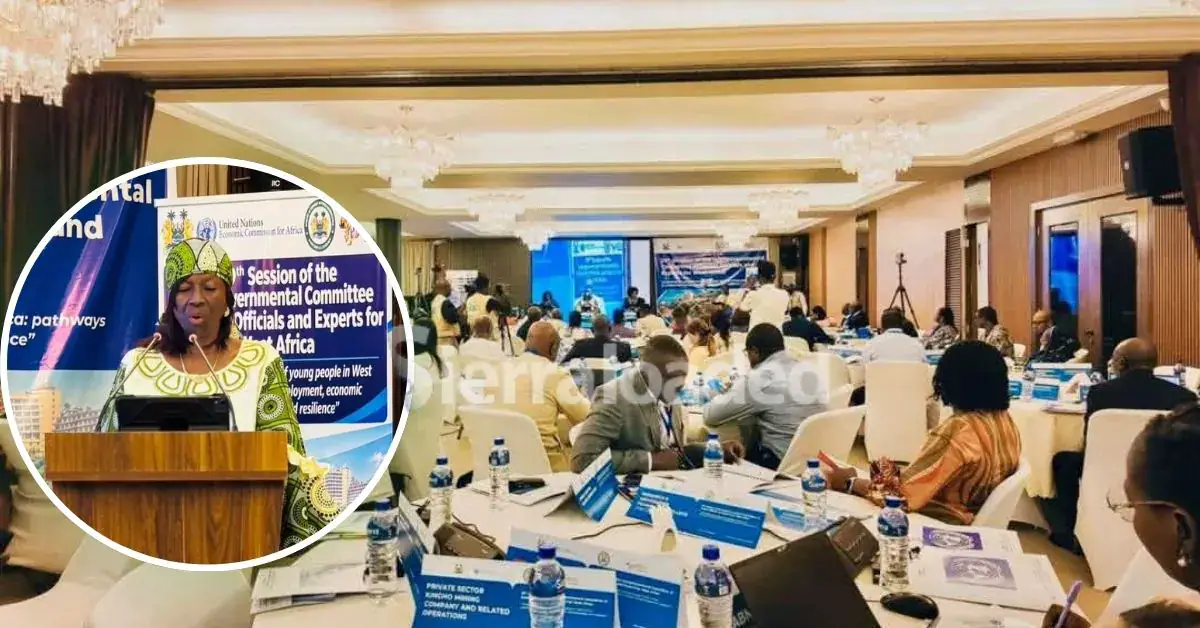
Sierra Leone's Minister of Planning and Economic Development, Kenyeh Barlay, has reaffirmed the government's commitment to creating at least 500,000 jobs for young people by 2030 through its Youth Employment Scheme. This initiative aims to tackle unemployment and expand economic opportunities in the country. The minister made this statement while delivering the keynote address on behalf of Vice President Dr. Mohamed Juldeh Jalloh at the 29th Session of the Intergovernmental Committee of Senior Officials and Experts for West Africa in Freetown.
Barlay emphasized that youth employment remains a central priority under the government's Medium-Term National Development Plan 2024–2030. The plan focuses on developing young people's skills and expanding opportunities for them to contribute to national development. She cited the Free Quality School Education programme as a foundation for long-term employment, which brought more than one million additional children into school between 2019 and 2023. This initiative is expected to help prepare young people for future employment, entrepreneurship, and leadership.
The minister also highlighted the Feed Salone initiative, which focuses on agriculture and fisheries, as part of the government's efforts to promote economic transformation and create employment opportunities. Additionally, she disclosed that 15,000 young people obtained short-term employment through the National Commission for Social Action in 2024. These beneficiaries participated in rehabilitating community schools, health centers, vocational centers, and grain stores, gaining practical experience and developing useful skills.
Despite these efforts, Barlay acknowledged that significant challenges remain, including underemployment, insecure and low-paid jobs, limited access to finance, and mismatches between educational qualifications and labor-market requirements. She stressed that investment in education must be complemented by technical and vocational training, enterprise development, and access to productive employment if young people are to benefit meaningfully from economic opportunities.
Director of the Economic Commission for Africa's Subregional Office for West Africa, Ngone Diop, also underscored the need to link investment in human capital with economic diversification, private-sector development, and the creation of sustainable jobs. Diop noted that informal employment accounted for an estimated 91.6 percent of total employment in West Africa in 2025, highlighting the need for improved job security, better incomes, and greater opportunities for career advancement.
The meeting in Freetown is expected to contribute to regional policy recommendations aimed at advancing youth employment, economic transformation, and resilience across West Africa. The summit brings together senior officials and experts to discuss strategies for addressing the challenges facing young people in the region. The government's commitment to creating 500,000 youth jobs by 2030 is seen as a crucial step towards reducing unemployment and promoting economic growth.
The Youth Employment Scheme is part of the government's broader efforts to promote economic development and reduce poverty. By investing in education, vocational training, and entrepreneurship, the government aims to equip young people with the skills and knowledge needed to compete in the labor market. The scheme is also expected to contribute to the country's economic growth and development, as young people become productive members of society.
Key points
- The government of Sierra Leone aims to create at least 500,000 jobs for young people by 2030 through its Youth Employment Scheme.
- The scheme is part of the government's Medium-Term National Development Plan 2024–2030, which focuses on developing young people's skills and expanding opportunities for them to contribute to national development.
- Informal employment accounts for an estimated 91.6 percent of total employment in West Africa, highlighting the need for improved job security and better incomes.