Kevin Lazarus, a 49-year-old Pietermaritzburg resident, has learned to adapt to his new reality after losing his sight three years ago due to diabetes complications. He can perform daily tasks such as making tea by relying on his other senses. Lazarus knows exactly when the water is ready, judging by the sound of the kettle boiling and the texture of the teabag. His story is a testament to his resilience and determination to rebuild his life.
Before losing his sight, Lazarus spent over a decade working in skills development and business support in Johannesburg. He worked with various organizations, including the Department of Trade and Industry and the National Youth Development Agency, to help young people establish small businesses and create employment opportunities. Lazarus was also a disc jockey and owned an events company, with his mixes aired regularly on a national radio station.
Lazarus's eyesight began to deteriorate due to diabetic retinopathy, a complication of diabetes that damages the tiny blood vessels in the retina. He had not tested for sugar or high blood pressure and was unaware of his condition until it was too late. Today, Lazarus cannot drive, use a computer, or recognize a face, describing his vision as completely black at night.
The adjustment to blindness was not immediate for Lazarus, who went through a period of anger and depression. However, with the support of his family, including his mother, Selvie Lazarus, and his uncles, he began to adapt to his new reality. Lazarus learned to rely on his other senses, including his hearing and touch, which became increasingly important in his daily life.
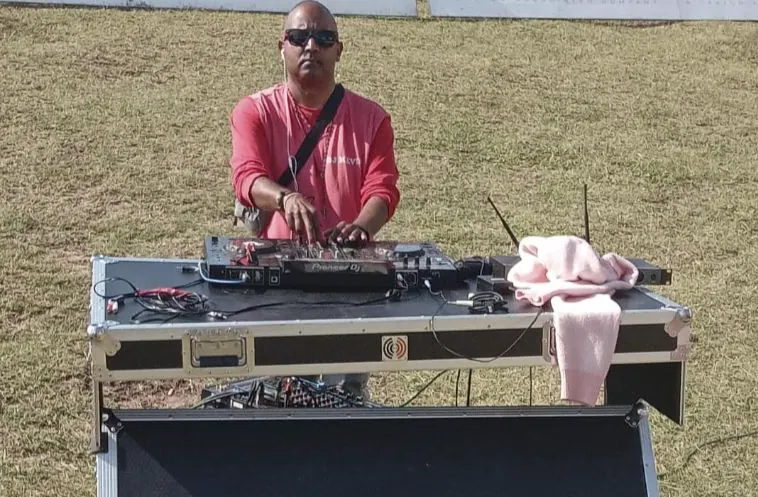
Lazarus has adapted his disc jockeying skills to his new circumstances and recently got behind the decks again at an "Eye Can Walk" event hosted by the KwaZulu-Natal Blind and Deaf Society. He now wants to take another step and get into radio, pushing to pursue this new opportunity. Lazarus's ambitions extend beyond himself, as he wants to create more opportunities for the blind and visually impaired to develop skills and enter the workplace.
KZNBDS president Veetha Sewkuran highlighted the challenges faced by people with visual disabilities in South Africa, including limited access to education, employment, and technology. She emphasized the need for skills training, assistive technology, and job placement to enable people with visual disabilities to participate independently and meaningfully in society. Lazarus believes there are opportunities in call centers, switchboards, basic computer work, radio, and entrepreneurship, but workplaces need to be adapted to accommodate the visually impaired.
As World Sight Day is observed, Lazarus's story raises awareness about vision loss and the importance of eye health. His journey serves as an inspiration to others, demonstrating that with determination and support, it is possible to rebuild a life after losing one's sight. Lazarus's efforts to create opportunities for the blind and visually impaired will continue to make a positive impact in his community.
Key points
- Kevin Lazarus lost his sight due to diabetes complications three years ago and has since learned to adapt to his new reality.
- Lazarus wants to create more opportunities for the blind and visually impaired to develop skills and enter the workplace.
- KZNBDS president Veetha Sewkuran emphasized the need for skills training, assistive technology, and job placement to enable people with visual disabilities to participate in society.