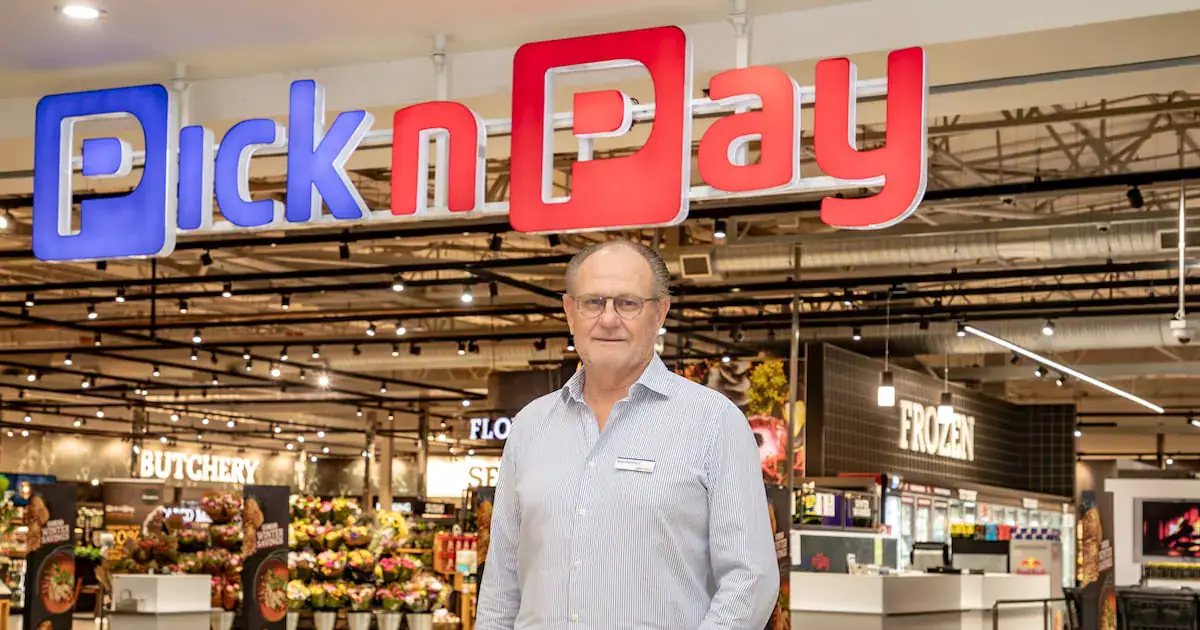
Three years after Sean Summers returned to rescue Pick n Pay, the retailer is finally showing signs that its turnaround strategy is working. The company's latest interim results reveal that losses are narrowing, margins are improving, costs are coming under control, and the balance sheet has been rebuilt. However, the results also highlight how far the retailer remains from restoring sustainable profitability. The core supermarket business is still loss-making, and sales growth remains subdued.
The six months to August showed progress in many areas that management can directly control. Gross margins improved, expenses were tightly managed, and losses narrowed materially. Justin Hollis, portfolio manager at Abax Investments, said the results provided evidence that the recovery was gaining traction. He noted that improved gross margins, disciplined cost control, and a narrower core supermarket loss were key positives. However, he also highlighted that growth remains heavily reliant on Boxer, while the legacy supermarket business continues to struggle.
Boxer has become the group's earnings engine and has played a pivotal role in restoring financial stability. Net cash has climbed to about R10bn, compared with net debt of roughly R11.5bn three years ago. One of the most significant takeaways from the results is that most of the improvement came from cost control and margin expansion rather than stronger sales. Stephan Erasmus, investment analyst at Anchor Capital, said investors should not overlook that distinction. He noted that Pick n Pay's half-year performance was "better, but Pick n Pay is still losing money".
Summers maintained that underlying sales trends were more encouraging than headline numbers suggest. He said Pick n Pay's like-for-like sales continued to outperform the broader market despite pressure on household spending and geopolitical uncertainty. The conflict in the Middle East had a negative impact on sales growth, costing the retailer about three percentage points of sales growth. Summers estimated that for every 1% of top-line sales that the company loses, it loses about R140m-R150m of income.
Another significant development was the conclusion of labour negotiations and the withdrawal of the Section 189 consultation process. Management has argued that the exercise was not designed to cut jobs but to address inefficiencies in a labour model that had become increasingly inflexible. The revised agreement will allow experienced permanent employees to be deployed when customer demand is highest. Erasmus said the benefits are expected to emerge gradually, with meaningful savings only beginning to flow through from March 2027.
Store economics are also a major focus area for Pick n Pay. The retailer is seeking to reduce space in outlets that have become too large for current trading levels, negotiating with landlords to reconfigure stores as leases expire. Rather than pursuing aggressive expansion, management is focusing on improving existing stores. Summers said the company has endured a heavy onslaught from competitor openings but has managed to show like-for-like growth despite having fewer stores.
To drive customer loyalty, Pick n Pay is investing heavily in fresh food and digital channels. The retailer is rebuilding relationships with farmers and suppliers while upgrading produce, bakery, and butchery offerings. Erasmus believes fresh food offers the greatest opportunity to regain market share. The retailer is also increasing the proportion of supermarkets it operates directly, moving away from its roughly 50-50 split between corporate and franchise stores.
Key points
- Pick n Pay's turnaround strategy is showing signs of working, with losses narrowing and margins improving.
- The retailer still faces significant challenges, including a loss-making core supermarket business and subdued sales growth.
- Boxer has become the group's earnings engine and has played a pivotal role in restoring financial stability.