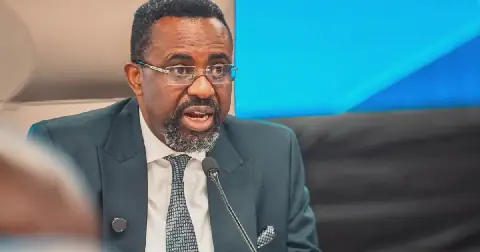
Dr. Mathews Phosa, a former ANC Treasurer-General and business leader, has urged South Africans to unite against gender-based violence (GBV). His call comes as the nation mourns the death of Elizabeth Tsontso Moselakgamo, one of nine women killed in Ekurhuleni over two months. Phosa made the remarks at a church Jubilee celebration, emphasizing the need for collective action to prevent and stop GBV. He reminded the congregation that behind every statistic is a person of immeasurable value.
Phosa's intervention comes at a time of shock and deep anger over the killings. He drew a direct line between faith and public responsibility, stating that faith must compel people not only to pray but also to speak, protect, and intervene. Phosa did not point fingers at any single institution, instead arguing that a crisis of this scale demands a collective response from churches, communities, families, businesses, and individuals. He emphasized that when people of goodwill work together, extraordinary things become possible.
Phosa tied the fight against GBV to the theme of the evening, "Giving Today, Building Tomorrow". He stated that if people truly believe in giving today and building tomorrow, then part of what they must build is a society where women and children can live without fear. The value of Phosa's call lies in who is making it and where. South Africa has heard many pledges on GBV, but the killings continue, and communities are left asking whether the promises ever reach their streets.
Phosa's appeal shifts part of the burden from the state to institutions closest to people's daily lives, such as churches. Churches have moral authority, weekly access to families, and the trust of communities, and can reach men and boys in ways that state campaigns often struggle to. His insistence that each person has something to give also widens the circle of responsibility. Phosa's call is not a program, and he offered no specific mechanism, such as a coalition or timetable.
The deaths in Ekurhuleni also raise hard questions that a moral appeal cannot answer, such as how quickly the cases were investigated and whether there are links between them. These questions belong to the authorities, and they should be pressed. There is also a fair critique of leadership by exhortation, as Phosa comes from the political and business establishment that has presided over the crisis.
Phosa used the occasion to announce a R200,000 pledge to the church through the Phosa Legacy Foundation. This reflects his argument that change is built through many hands. He stated that a strong future is rarely built by one extraordinary act but through thousands of faithful acts performed by ordinary people who care.
The effectiveness of Phosa's call remains to be seen, and the public will judge his appeal by what follows it. Key points to watch include whether other church, business, and political leaders take up the call publicly, progress on arrests and prosecutions in the nine cases, and whether local government and the police in Ekurhuleni respond with visible, measurable action.
Key points
- Dr. Mathews Phosa calls for a united national effort to prevent and stop gender-based violence.
- Phosa's appeal shifts part of the burden from the state to institutions closest to people's daily lives.
- The effectiveness of Phosa's call remains to be seen, and the public will judge his appeal by what follows it.